
Alberta · Canadian Rockies
First-Time Jasper National Park Guide
Jasper remains a place to visit thoughtfully. Begin with the current official map and notices, support an unhurried local stay, and let open areas—not an old bucket list—shape the trip.
- Region
- Jasper National Park, Alberta
- Best for
- First-time Rockies visitors arriving from Edmonton, Banff or the Icefields Parkway
- Season
- Year-round; recovery, access and services continue to change
- Time
- 2–4 days
By Horizon Outdoor Editorial TeamPublished 2026-08-29Updated 2026-08-31
Quick facts
- First action
- Open the current Parks Canada access map
- Comfortable first stay
- Two to four days in one base
- Arrival corridors
- Edmonton, Banff or the Icefields Parkway
- Planning rule
- Confirm open areas and services close to travel
Let current notices replace the old itinerary
Recovery work and access continue to change, so a saved list from before the 2024 wildfire is not a reliable day plan. Begin with Parks Canada’s current open-area map, important bulletins and trail report. Build the visit from places confirmed open for the travel dates rather than trying to reproduce an older list.
The park recovery page explains what work remains and which facilities, roads or day-use areas need more time. Read it as practical context, not as sightseeing material. Respect every closure and work zone, and expect current signs and staff direction to take priority over a route saved earlier in the planning process.
- Review what is open, current bulletins and trail conditions
- Check the park recovery page for context
- Respect every closure even when an older guide describes the location
Choose Jasper for space, not for a longer checklist
Jasper suits travellers who are comfortable making fewer daily commitments across a large national park. The scale rewards early route decisions, a stable base and room for wildlife, parking or weather to change the order of the day. It is not improved by adding every place remembered from a pre-wildfire itinerary.
A first visit can be complete with townsite orientation, one lake or valley corridor and one shorter scenic or walking day. Choose activities from current information and the group’s mobility, weather tolerance and driving comfort. The goal is a coherent stay in Jasper, not proving that every famous location was reached.
- A first Rockies stay with one base and flexible park days
- An Edmonton arrival with a protected travel day
- A Banff connection that gives the Icefields Parkway its own day
- A return visit willing to discover currently open areas
Choose one arrival day, not two trips at once
Long mountain drives need fuel, daylight and disruption margin before any major stop is added. From Edmonton, protect the highway day and keep arrival simple. From Banff or Lake Louise, treat the Icefields Parkway as a full scenic corridor with its own weather, service and park checks rather than a short transfer between two busy itineraries.
Save the map and accommodation details before leaving reliable service, and check Alberta 511 for the active approach. Resupply before the least-serviced part of the drive. If the arrival day becomes longer than planned, use town orientation and move the first major park outing to the next morning instead of driving deeper into the park late.
- From Edmonton: protect time for the highway and an easy arrival
- From Banff: treat the Icefields Parkway as its own scenic day
- Resupply and save maps before relying on park-road connectivity
Use one base and confirm the services it can support
One Jasper-area base makes it easier to respond to current access and weather. Confirm accommodation or camping through the responsible booking channel and read the latest facility information. A reservation secures only what it describes; it does not guarantee that a preferred trail, road, parking lot or day-use area will be available.
Handle ordinary needs before the scenic plan. Keep fuel, meals, medication and phone power from becoming deadlines, and carry enough water and food for the chosen day. Recovery continues to affect parts of the community and park, so use open businesses respectfully and allow service staff the same patience you would want during a changing local season.
- Keep accommodation, campground and check-in details offline
- Confirm fuel, food and medication needs before the long day
- Check current campground, parking and facility information
- Avoid changing accommodation to chase distant stops
Use a two-to-four-day open-area rhythm
Build each day from places officially open during the stay and keep the schedule modest. Start with a townsite or nearby orientation day, make one confirmed open corridor the second-day anchor, and add another area only after reviewing current notices. This structure leaves a natural place for a changed route without losing the entire visit.
Within each day, choose one longer stop and several optional short ones in the same direction. Avoid crossing the park repeatedly or combining a full Icefields Parkway drive with a second major outing. A fourth day is best used for slower exploration, rest or the weather alternative rather than for extending the checklist.
- Day 1: townsite orientation and a nearby open walk
- Day 2: one open lake, valley or scenic corridor
- Days 3–4: add a second area only after current access is confirmed
Keep wildlife encounters uneventful
Animals may be present near roads, town edges and trails; space and food control matter everywhere. Use designated pullouts, remain in the vehicle when required and never approach or feed wildlife. A cluster of vehicles does not make a roadside stop safe, and no photograph is worth blocking traffic or changing an animal’s behaviour.
Secure food, garbage and scented items at campgrounds, picnic stops and accommodation. Carry the safety knowledge and equipment appropriate to the planned activity, and follow closures or posted direction. Wildlife planning begins before the sighting by leaving enough time to slow down and continue without rushing the rest of the drive.
- Use designated pullouts and remain well clear
- Never feed wildlife or leave attractants accessible
- Carry the official safety knowledge appropriate to the activity
Check the road that connects the plan
A place may be open while the most convenient approach is restricted, busy or affected by changing conditions. Check both the park notice and the highway service before departure. Vehicle-size restrictions, seasonal roads and work zones need their own review; a general map cannot show whether the day’s exact vehicle and route are suitable.
Set a return point before the final optional stop, particularly after a long arrival or parkway day. If smoke, weather, construction or a recovery closure changes the road, use the official alternative and remove an activity. Do not turn an advisory into a navigation experiment on an unfamiliar secondary road.
- Use Alberta 511 for current highway conditions
- Use Parks Canada for park-road restrictions and seasonal closures
- Keep fuel and daylight margin for the return to base
- Do not improvise through a closed or unsigned road
Prepare for weather and recovery changes
An excellent Jasper day can be shorter and quieter than the original plan. Keep a town-based stop, visitor-centre conversation, scenic pullout or shorter open walk ready for a low-visibility or disrupted day. Confirm the alternative that morning rather than assuming it remains unaffected simply because it is easier.
Carry weather layers and a simple day bag even for a drive-focused plan, and move to the alternative before conditions create pressure. Recovery-aware travel is practical and respectful: follow closures, use services patiently, avoid photographing active work as an attraction and let current local capacity shape the day.
- Keep a town-based or lower-commitment option
- Check road, smoke, weather and area notices on departure morning
- Support local services patiently and avoid treating recovery as a visitor attraction
Common planning mistakes
- Assuming a pre-wildfire itinerary still describes current access
- Combining a full Icefields Parkway drive with a crowded Jasper activity list
- Treating recovery work, closed places or community disruption as sightseeing content
Printable companion
Download the Canada road trip checklist
A printable list for documents, driving, weather layers, park days and the essentials worth keeping within reach.
Download the free PDFQuestions travellers ask
Is Jasper open to visitors?
Many areas may be open while recovery work continues elsewhere. Use the current Parks Canada map, bulletins and closures for your exact dates.
How should I plan from Banff?
Give the Icefields Parkway its own driving day with fuel, food, weather and daylight margin rather than treating it as a short transfer.
Can I rely on an old attraction list?
No. Current official access and safety information must override saved posts, videos and older itineraries.
What does recovery-aware travel mean?
Respect closures, keep plans flexible, use local services patiently and avoid turning community loss or reconstruction into an attraction.
Sources and currency
Conditions change. Confirm dynamic details again before departure; each source shows its own last-checked date.
Continue planning
Related field guides
Canada · Family park planning
Best Canadian National Parks for Families
The best family national park is not always the most famous. It is the one your group can reach, understand and enjoy without turning every day into a test of endurance.
Open the guide
Canadian Rockies · Parkway planning
Banff to Jasper Road Trip Stops
The drive between Banff and Jasper is not a transfer day to rush through. Choose fewer stops, check the official conditions and leave enough daylight for mountain weather, wildlife and return-plan changes.
Open the guide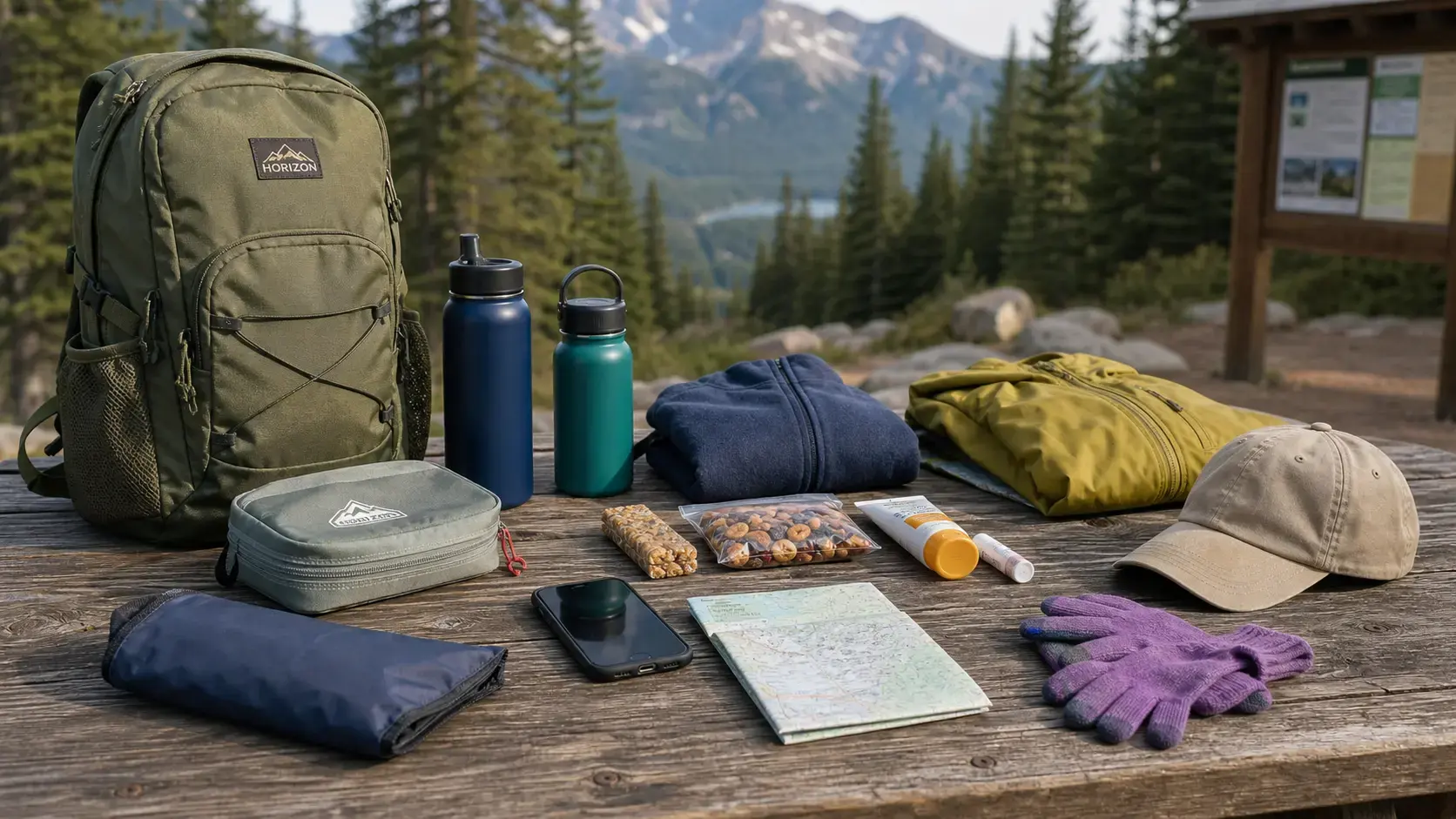
National parks · Day bag system
Canada National Park Day Bag Checklist
A good national park day bag is small enough to carry and organized enough to solve the ordinary problems that end good days early.
Open the guide