
Canada · Family park planning
Best Canadian National Parks for Families
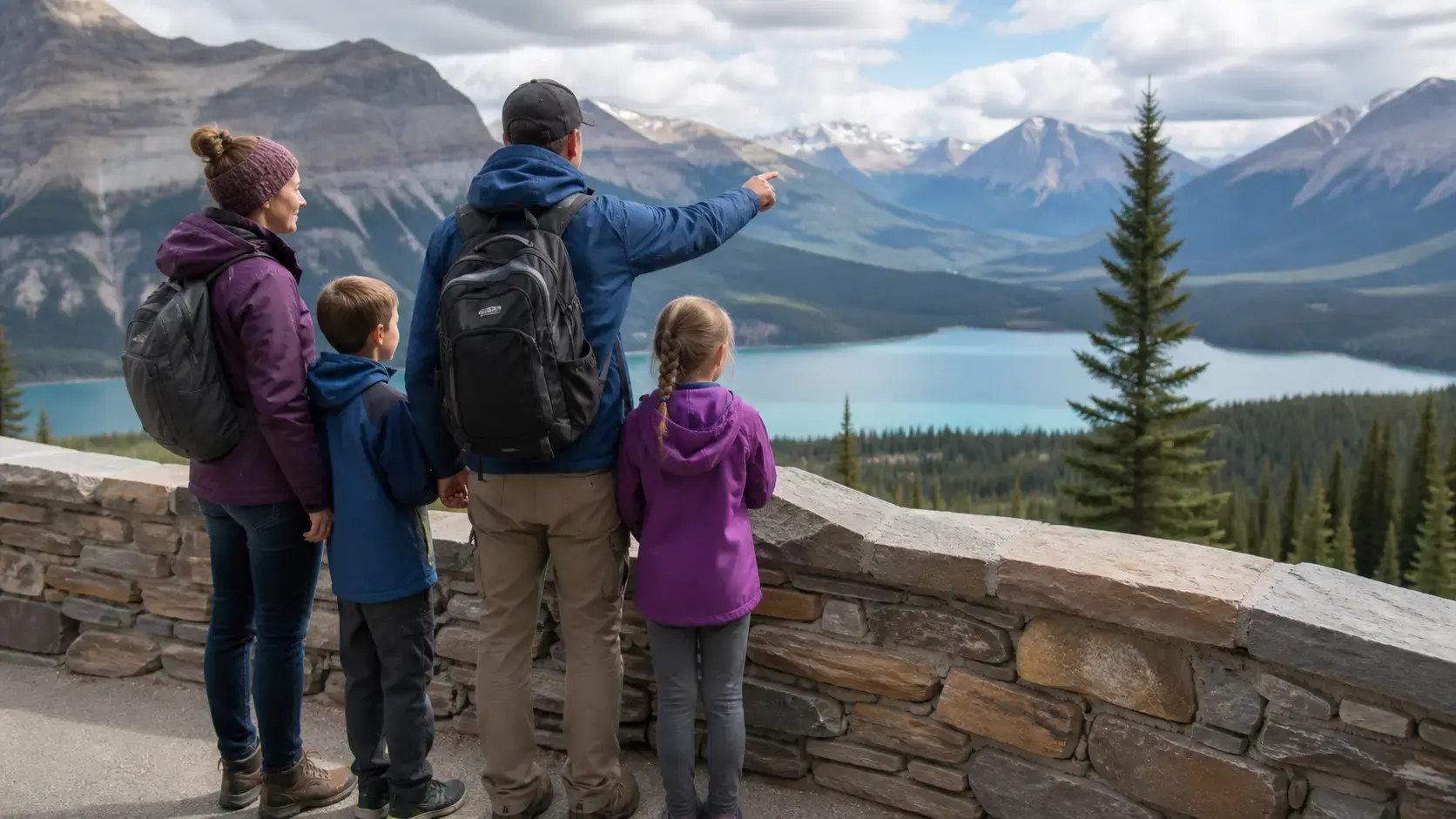
The best family national park is not always the most famous. It is the one your group can reach, understand and enjoy without turning every day into a test of endurance.
- Region
- Canada
- Best for
- Families planning a first national park trip in Canada
- Season
- Late spring through early autumn for easiest planning; winter and shoulder seasons require more checks
- Time
- One day to one week, depending on park and route
By Horizon Outdoor Editorial TeamPublished 2026-08-30Updated 2026-10-02
Quick facts
- Best first filter
- Access, facilities and realistic day length
- Good first parks
- Banff, Pacific Rim, Fundy, Cape Breton Highlands or Riding Mountain depending on region
- Before booking
- Check Parks Canada passes, reservations, bulletins and seasonal services
- Family rule
- One anchor activity plus one easy backup per day
Define family-friendly before choosing a park
A family-friendly national park has more than a beautiful viewpoint. It has a manageable arrival plan, clear official information, enough facilities for your group and activities that can shrink when weather, energy or timing changes.
For first visits, choose a park where you can build a day around short walks, scenic pullouts, visitor information, picnic space and a town or accommodation base nearby. Remote backcountry ambition can come later.
- Choose parks with clear official visitor information
- Prefer short, flexible activities over one demanding objective
- Check reservations, passes, bulletins and seasonal services before booking
- Keep food, water, layers and child essentials reachable
Western Canada parks with strong first-trip appeal
Banff is famous for a reason: it offers dramatic scenery, visitor infrastructure and many ways to keep a day simple. The challenge is popularity. Parking, shuttles, reservations, wildlife rules and seasonal closures need more attention than the postcard suggests.
Pacific Rim suits families who want beaches, rainforests and a slower coastal rhythm. It also requires respect for tides, waves, cold water, drift logs and changing beach conditions. This is a strong park for families who are willing to choose safety over a fixed beach plan.
- Banff: best for first Rockies scenery with strong planning infrastructure
- Jasper: best for a quieter Rockies feeling when current access and recovery context fit
- Pacific Rim: best for coastal beaches, rainforest walks and flexible rainy days
- Waterton Lakes: best for a compact mountain-and-lake park when seasonal conditions align
Eastern and Atlantic parks that can work well for families
Cape Breton Highlands is useful when the family wants a road-trip park experience, with coastal viewpoints and short walks connected by a strong driving route. The same rule still applies: choose a few stops well instead of trying to complete every viewpoint.
Fundy can be memorable because tides shape the day. That makes official timing and safety information essential. Gros Morne offers powerful landscapes and learning value, but its distance and route planning ask for more time.
- Cape Breton Highlands: best for coastal road-trip pacing
- Fundy: best for tide-aware family learning with official checks
- Gros Morne: best for families with more days and a slower Newfoundland itinerary
- Prince Edward Island National Park: best for beach-and-community pacing when seasonal services fit
Build the first day around orientation
The first day in a national park is not the time to prove the itinerary. Use it to find the visitor information point, understand road and trail notices, test the family’s layers and learn how far the group moves comfortably.
Pick one anchor: a short walk, a scenic viewpoint, a beach edge, a visitor centre or a picnic. If the day still has energy, add one small extra. If not, stop while everyone still feels positive about the park.
- Start with a visitor information or official notice check
- Choose one low-risk anchor activity
- Keep the day close to food, washrooms and the route back
- Save longer hikes or drives for a day with better context
Treat wildlife, water and weather as planning inputs
Families often remember animals and water, but those are also the areas where casual behaviour creates risk. Parks Canada guidance should lead the decision: give wildlife space, follow closures, never feed animals and keep children within active supervision near water.
Weather can change the park more quickly than a city day. Mountain parks can become cold or stormy, coastal parks can become wet and windy, and prairie or lake parks can expose families to sun, insects or smoke. Check the official forecast and park notices before committing to the day.
- Stay well back from wildlife and never use food to attract animals
- Use tide, surf, cold-water and posted warning information near the coast
- Carry layers even when the town forecast looks comfortable
- Shorten the day when weather, water or visibility no longer fit your group
A practical family shortlist
Use the park list as a matching tool. Banff and Jasper suit families who want mountain scenery and can handle popularity, reservations and road checks. Pacific Rim suits coastal families who respect water safety. Fundy and Cape Breton Highlands suit Atlantic road trips. Riding Mountain and Prince Edward Island can work well when you want a gentler base.
No park is automatically easy in every season. The right choice is the one where your family can protect sleep, meals, driving time and one realistic outdoor anchor per day.
- Best first Rockies park: Banff
- Best Rockies road-trip pair: Banff and Jasper with enough days
- Best Pacific coast family park: Pacific Rim
- Best Atlantic road-trip park: Cape Breton Highlands
- Best tide-learning park: Fundy
- Best gentler base-style options: Riding Mountain or Prince Edward Island
Common planning mistakes
- Choosing the most famous park before checking the family’s daily pace
- Assuming a short trail, beach or viewpoint is safe in every condition
- Booking accommodation before checking reservations, passes and seasonal services
- Planning one major hike and one long drive on the same family day
- Treating wildlife sightings as photo opportunities instead of distance decisions
Printable companion
Download the family road trip checklist
A printable family list for car comfort, weather changes, food stops, simple outdoor days and backup plans.
Download the free PDFQuestions travellers ask
What is the best Canadian national park for a first family trip?
Banff is the easiest first answer for many visitors because it has strong infrastructure and iconic scenery, but Pacific Rim, Fundy, Cape Breton Highlands, Riding Mountain and PEI can be better fits depending on region, season and family pace.
How many days should a family spend in a national park?
Two to four days is a useful first range for many families. One day can work near a base city, while a week is better for parks that require a long drive, ferry or multi-stop route.
Do families need a park pass?
Use Parks Canada’s current pass and fee information for the park and dates you plan to visit. Do not rely on old screenshots or third-party summaries.
What should families check the morning they enter a park?
Check official park bulletins, road or trail conditions, weather alerts, reservation requirements and any wildlife or water-safety notices that affect the day’s plan.
Sources and currency
Conditions change. Confirm dynamic details again before departure; each source shows its own last-checked date.
- Parks Canada: Plan your national park visit (2026-08-30)
- Parks Canada: Parks Canada reservations (2026-08-30)
- Parks Canada: Visitor safety in national parks (2026-08-30)
- Parks Canada: Banff National Park visitor information (2026-08-30)
- Parks Canada: Jasper National Park visitor information (2026-08-30)
- Parks Canada: Pacific Rim National Park Reserve visitor information (2026-08-30)
- Parks Canada: Pacific Rim water and shoreline hazards (2026-08-30)
- Parks Canada: Waterton Lakes National Park visitor information (2026-08-30)
- Parks Canada: Cape Breton Highlands National Park visitor information (2026-08-30)
- Parks Canada: Fundy National Park visitor information (2026-08-30)
- Parks Canada: Gros Morne National Park visitor information (2026-08-30)
- Parks Canada: Prince Edward Island National Park visitor information (2026-08-30)
- Parks Canada: Riding Mountain National Park visitor information (2026-08-30)
- Environment and Climate Change Canada: Weather forecasts and active alerts for Canada (2026-08-30)
Continue planning
Related field guides
Canada · First national park trip
Canada National Parks First-Time Guide
A first national park visit works best when the logistics are visible before the scenery takes over: entry, reservations, roads, weather, wildlife and a day plan that can shrink.
Open the guide
Canada · Drive-in park planning
Canadian National Parks by Car
A drive-in national park trip still needs real planning. The car gets you close, but passes, roads, shuttles, parking, wildlife and weather decide how the day actually works.
Open the guide
Alberta · Canadian Rockies
First-Time Banff National Park Guide
Banff is easier to enjoy when the famous places are anchors, not a race. Build the trip around arrival rhythm, official checks and enough room for mountain weather to change the day.
Open the guide