
Vancouver · Beginner-friendly trails
Easy Hikes Near Vancouver for Beginners
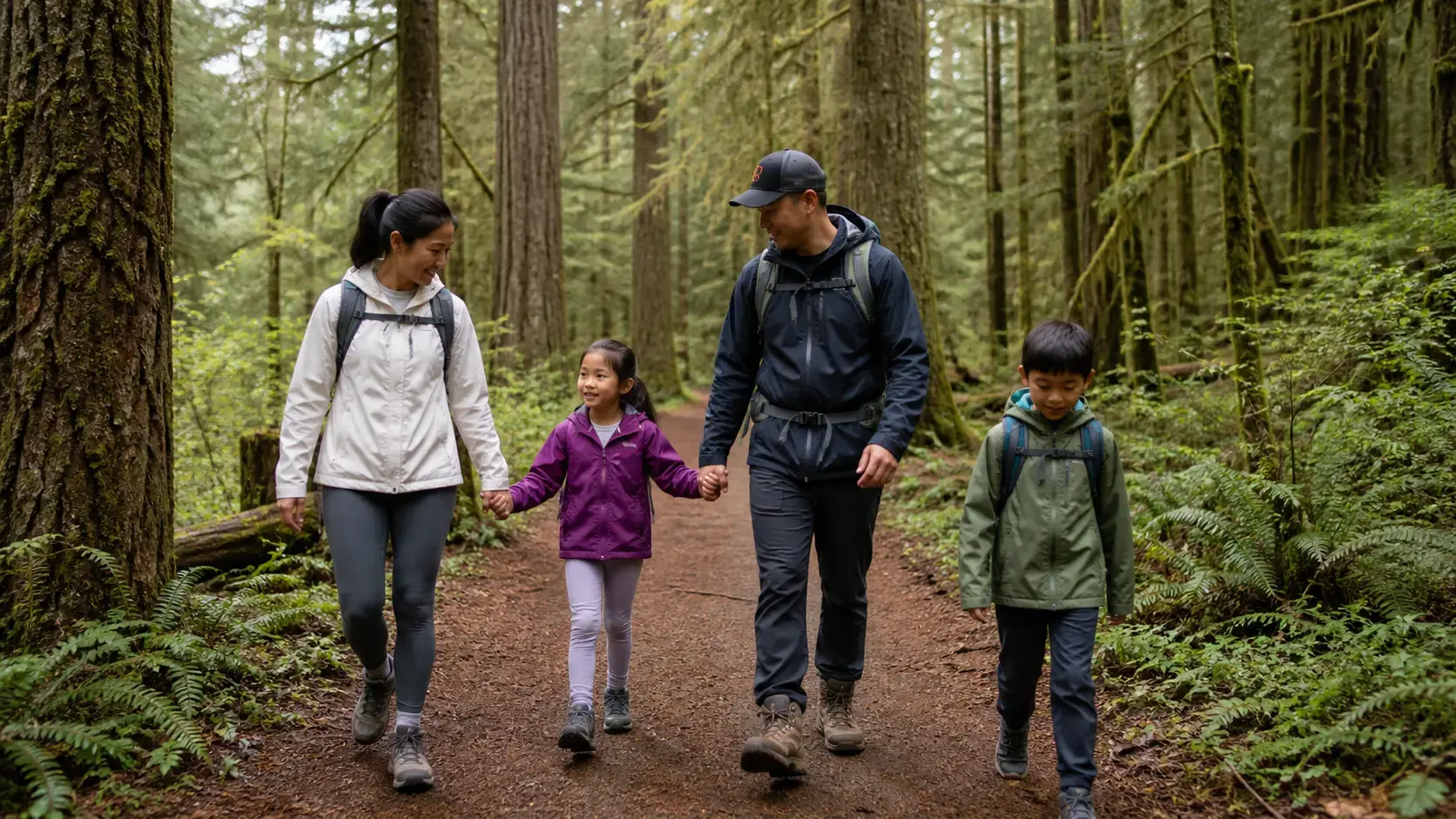
You do not need to start with a summit. Vancouver’s easiest outdoor days begin with a short trail, a realistic weather check and enough margin to turn around while everyone still feels good.
- Region
- Metro Vancouver, British Columbia
- Best for
- Beginner hikers, newcomer families, visiting relatives and anyone building confidence outdoors
- Season
- Year-round; trail surface, daylight, weather, facilities and access vary by season
- Time
- Half-day or easy day
By Horizon Outdoor Editorial TeamPublished 2026-08-30
Quick facts
- Best first choice
- Short loop, clear map and nearby facilities
- Good weather plan
- Urban forest, seawall or regional park trail
- Transit check
- Use TransLink Trip Planner before departure
- Safety habit
- Check official park notices and leave a simple plan
What makes a hike beginner-friendly near Vancouver
A beginner-friendly hike is not only short. It should be easy to understand before you arrive, forgiving if the weather changes and simple to shorten if the group gets tired. Around Vancouver, that often means a park loop, a waterfront path or a low-elevation forest trail rather than a viewpoint that depends on steep climbing.
For families and new hikers, the best first route has a visible start point, a map you can save offline, washrooms or town services nearby and enough people around that the trail does not feel remote. These details matter more than collecting a famous trail name.
Use official park pages before leaving. Conditions, construction, trail closures, fire restrictions, washroom availability and parking rules can change faster than a general guide can stay current.
- Choose low-elevation walks before mountain objectives
- Prefer loops or out-and-back routes with obvious turn-around points
- Keep the first few outings short enough to finish with energy left
- Read official park notices on the day you go
Start with the right kind of route
Vancouver gives beginners several route types that feel outdoorsy without requiring a technical plan. A seawall walk is predictable and scenic. A city park trail adds shade and forest texture. A regional park loop gives a stronger nature feel, but still keeps you close to established entrances and mapped trails.
A good first month might include one urban walk, one forest loop and one slightly longer regional park outing. That sequence builds confidence without jumping straight into steep North Shore terrain.
Avoid choosing a route only because it appears often online. A popular trail can still be too steep, too crowded, too muddy or too confusing for a first family hike.
- Urban waterfront walk: easiest navigation and most services
- City forest trail: more shade and nature, still close to town
- Regional park loop: stronger outdoor feeling, more need to check notices
- Low-elevation waterfall or creek walk: rewarding, but watch stairs, wet rock and fast water
Easy Vancouver-area choices to compare
Stanley Park is the simplest starting point for many visitors because it combines forest trails, the seawall, maps, washrooms and transit access in one familiar area. The full seawall can be longer than beginners expect, so it is better to choose one segment or a short forest-and-water combination.
Pacific Spirit Regional Park is useful when you want a quieter forest walk without driving far into the mountains. Metro Vancouver describes it as a regional park with an extensive trail network, so beginners should choose one simple loop before arrival instead of improvising at every junction.
Capilano River Regional Park and Lynn Headwaters can work for confident beginners who want a North Shore feel, but they deserve more caution. Canyon areas, wet stairs, slippery roots and fast-moving water are not the same as a flat city walk.
- Stanley Park: best for first Vancouver walk, seawall views and flexible length
- Pacific Spirit Regional Park: best for shaded forest walking near the city
- Capilano River Regional Park: best for a North Shore forest-and-river feel with official route checks
- Lynn Headwaters or Lower Seymour: good for short mapped routes, but avoid turning a first outing into a backcountry day
Treat North Shore easy with care
The North Shore can make a short walk feel more serious. Trails may be wet, rooty, stair-heavy or close to steep creek terrain. A route that looks easy by distance can feel very different with children, new shoes, rain or a late start.
Lynn Canyon is a good example. The Ecology Centre publishes trail information for short options, but the area also has stairs, canyon edges and water hazards. It is a place to slow down, stay on marked trails and avoid treating pools or cliffs casually.
West Vancouver’s Lighthouse Park also has short trails, but official pages still remind visitors that some trails are challenging and require proper footwear. Short should not be read as no preparation needed.
- Check whether the route has stairs, creek crossings, boardwalks or steep edges
- Keep children and pets close near canyon water and viewpoints
- Wear shoes with grip even on short forest walks
- Turn around early if the trail surface feels beyond the group’s comfort
Decide transit or car before choosing the hike
For beginners, access is part of the route. A short trail can become stressful if the parking lot is full, the bus connection is awkward or the return trip depends on a service you did not check. Vancouver is unusually friendly to transit-based outdoor days, but the details still matter.
Use TransLink Trip Planner before departure, especially when combining SkyTrain, SeaBus and bus routes. It can show travel time, transfers, real-time departures and transit alerts. That is more reliable than assuming a route from memory.
If driving, avoid building the day around a guaranteed parking spot. Have a second nearby option, arrive with time margin and do not park illegally near residential trailheads.
- Transit-first days work best for Stanley Park, the seawall and some city forest walks
- Car days are easier for some regional parks, but parking pressure can change the experience
- Build the return plan before leaving home
- Keep one backup route close to the same area
Plan for Vancouver weather without overcomplicating it
Beginner hikes near Vancouver are often shaped by rain more than distance. A light drizzle may be manageable on a short forest walk, while wind, heavy rain, snow, ice, smoke or heat can change the right decision entirely.
Check Environment Canada before leaving and read official park alerts when conditions look uncertain. In winter and shoulder seasons, low elevation does not automatically mean dry footing. In summer, shade, water and wildfire restrictions matter.
The practical rule is simple: pack for the day you might actually get, not the day you hoped for. A warm layer, rain shell and dry item for the car can make a short outing feel controlled.
- Check forecast, alerts and daylight before departure
- Choose lower, shorter routes in poor weather
- Avoid exposed shoreline or creek-edge routes when wind or water conditions are poor
- Carry a dry layer for children even on mild days
Pack lightly, but keep the useful things reachable
A beginner day bag should solve small problems without turning the walk into a gear project. Water, snacks, a warm layer, rain shell, simple first-aid items and a charged phone cover most easy Vancouver outings.
Families should pack for pace changes. Children may need food earlier than adults, and a damp shirt or cold hands can end the mood quickly. Keep the warm layer and snacks near the top of the bag, not buried under camera gear or picnic extras.
Horizon-style packing is about reducing friction. If the item will help you stay comfortable, dry, visible or able to turn around calmly, it earns its place.
- Water bottle for each adult, plus child-friendly access to water
- Simple snacks that can be eaten without stopping for long
- Rain shell and warm mid-layer
- Small first-aid kit, tissues and any personal medication
- Offline map or saved route screenshot
- Dry bag or pouch for phone, keys and wallet
A simple first-hike day plan
A calm first hike starts before the trailhead. Pick one route, check the official page, check the weather and decide your turn-around point before anyone is tired. If the group is new to hiking, the goal is not proving endurance; it is making the next outing feel easier to say yes to.
Start with a short walk near services, such as a Stanley Park segment, a Pacific Spirit loop or a gentle West Vancouver path. Eat before people are very hungry, add one scenic pause and leave while the day still feels good.
Afterwards, make one note: what did you wish you had packed, and what did you not use? That is how a family kit becomes personal without becoming oversized.
- Before leaving: route, weather, official notice, transit or parking plan
- At arrival: confirm map, washroom stop and turn-around time
- During the walk: keep pace conversational and stop before fatigue builds
- After the walk: update your family packing list
Common planning mistakes
- Choosing a famous trail before checking whether it matches the group’s current ability
- Reading short as safe in any footwear or weather
- Starting too late in winter or shoulder season
- Relying on a parking assumption instead of checking access and backup options
- Ignoring stairs, mud, roots and creek hazards on North Shore routes
- Packing too much comfort gear while burying water, layers and snacks
Printable companion
Download the family road trip checklist
A printable family list for car comfort, weather changes, food stops, simple outdoor days and backup plans.
Download the free PDFQuestions travellers ask
What is the easiest hike near Vancouver for a first-time visitor?
A Stanley Park seawall segment or short forest trail is usually the easiest starting point because navigation, transit, washrooms and route flexibility are straightforward. Choose a section rather than assuming the full loop is necessary.
Can beginners hike near Vancouver without a car?
Yes. Many city and some North Shore outings can be planned by transit, but check TransLink Trip Planner on the day you go for transfers, service alerts and return timing.
Are North Shore trails good for beginners?
Some short North Shore routes can be beginner-friendly, but they require more caution than a flat urban walk. Check official trail information, watch for stairs and slippery surfaces, and stay well back from fast water and canyon edges.
What should a beginner bring on an easy Vancouver hike?
Bring water, snacks, a rain shell, a warm layer, a simple first-aid kit, personal medication, a charged phone and an offline map or saved route screenshot.
Is rain a reason to cancel?
Light rain may be fine for a short low-elevation walk if the group has proper layers and the official route has no alerts. Heavy rain, wind, snow, ice, poor visibility or unsafe water conditions are good reasons to shorten, change or cancel.
Sources and currency
Conditions change. Confirm dynamic details again before departure; each source shows its own last-checked date.
- City of Vancouver: Stanley Park visitor information (2026-08-30)
- City of Vancouver: Stanley Park trails (2026-08-30)
- City of Vancouver: Vancouver Seawall information (2026-08-30)
- City of Vancouver: Getting around Vancouver by public transit (2026-08-30)
- Metro Vancouver: Metro Vancouver Regional Parks (2026-08-30)
- Metro Vancouver: Pacific Spirit Regional Park (2026-08-30)
- Metro Vancouver: Capilano River Regional Park (2026-08-30)
- Metro Vancouver: Lynn Headwaters Regional Park (2026-08-30)
- Metro Vancouver: Lower Seymour Conservation Reserve (2026-08-30)
- Metro Vancouver: Park alerts and notices (2026-08-30)
- Lynn Canyon Ecology Centre / District of North Vancouver: Lynn Canyon trail information (2026-08-30)
- District of North Vancouver: Park and trail maps (2026-08-30)
- District of West Vancouver: Lighthouse Park visitor information (2026-08-30)
- District of West Vancouver: Lighthouse Park trails (2026-08-30)
- TransLink: TransLink Trip Planner (2026-08-30)
- Environment and Climate Change Canada: Weather forecasts and active alerts for Canada (2026-08-30)
- BC Parks: BC Parks staying safe guidance (2026-08-30)
Continue planning
Related field guides
Vancouver · Family outdoor days
Family Outdoor Spots Near Vancouver
A family outdoor day near Vancouver does not need to be impressive to be worth repeating. The best spot is often the one with a simple route, food options, bathrooms, weather backup and room to leave early.
Open the guide
British Columbia · Family outdoor living
Your First Outdoor Summer in BC
A BC summer can mean a damp coast, a hot interior valley or lingering snow at higher elevations. Start close, keep the plan flexible and let the family finish wanting another day outside.
Open the guide
Metro Vancouver · Family day trips
Easy Outdoor Day Trips from Vancouver
The easiest day is not always the closest or most famous. Choose a setting that fits the hours, weather, transport and energy your family actually has, then keep the plan simple enough to change.
Open the guide