
Printable planning guide
Canada Road Trip Packing Checklist
Start with the essentials that protect the trip, then remove anything your route, season and travelling party do not need.
- Region
- Canada
- Best for
- First-time visitors, families and scenic-drive travellers
- Season
- Year-round with seasonal adjustments
- Time
- 15-minute pre-trip review
By Horizon Outdoor Editorial TeamPublished 2026-08-29Updated 2026-08-31
Quick facts
- Format
- Web guide plus printable PDF
- Use it
- One week before and again on departure day
- Keep reachable
- Documents, medication, water and layers
- Review
- Remove items that do not fit the itinerary
Pack from the route, not from a generic master list
Begin with the trip you have actually planned. A city-to-city drive, a national-park corridor, a ferry journey and a remote northern road can all be called a Canadian road trip, but they do not need the same equipment. The route determines what must be carried, what can be bought along the way and what would become a genuine problem if forgotten.
Make one simple itinerary sheet before opening the suitcase. List the longest driving day, the least-serviced section, every reservation with a fixed arrival window and the outdoor stops that require their own footwear or day bag. This turns packing into a series of decisions instead of an attempt to prepare for every possible Canadian condition.
- Write down each driving day, overnight base and planned outdoor stop
- Mark stretches where food, fuel, charging or mobile service may be limited
- Separate confirmed bookings from ideas that can still change
- Note the weather and elevation range rather than one city forecast
Documents and access
Keep the records that unlock the trip together and available offline. The driver should be able to reach the licence, rental agreement, insurance information and emergency contacts without opening a roof box or unloading the trunk. International visitors should also keep the documents required for the vehicle and their own travel circumstances in one secure place.
Save reservation confirmations, addresses and reference numbers before mobile service becomes uncertain. Ferry bookings, park reservations and accommodation check-in instructions belong in the same small travel folder or offline note. A screenshot can be useful for access, but it should never be treated as proof that an old schedule, closure notice or park rule is still current.
- Driver licence and rental details
- Insurance and emergency contacts
- Park, ferry and accommodation confirmations
- Offline maps and key addresses
Car and roadside basics
Match the vehicle kit to distance, season and service availability. Confirm the fuel or charging plan, tire condition, lights, washer fluid and the location of the spare tire or repair equipment before departure. If the vehicle is rented, learn the basic controls and roadside-assistance process while you still have reliable service and time to ask questions.
A general packing checklist is not a winter-driving plan. Routes with snow, ice, mountain passes or legal seasonal-equipment requirements need a separate check against current provincial and park guidance. If the vehicle, tires or driver experience do not fit the conditions, changing the route is a better safety decision than adding more emergency gear.
- Fuel or charging plan
- Phone cable and power bank
- Water, food and basic cleanup supplies
- Season-appropriate emergency items
Weather layers
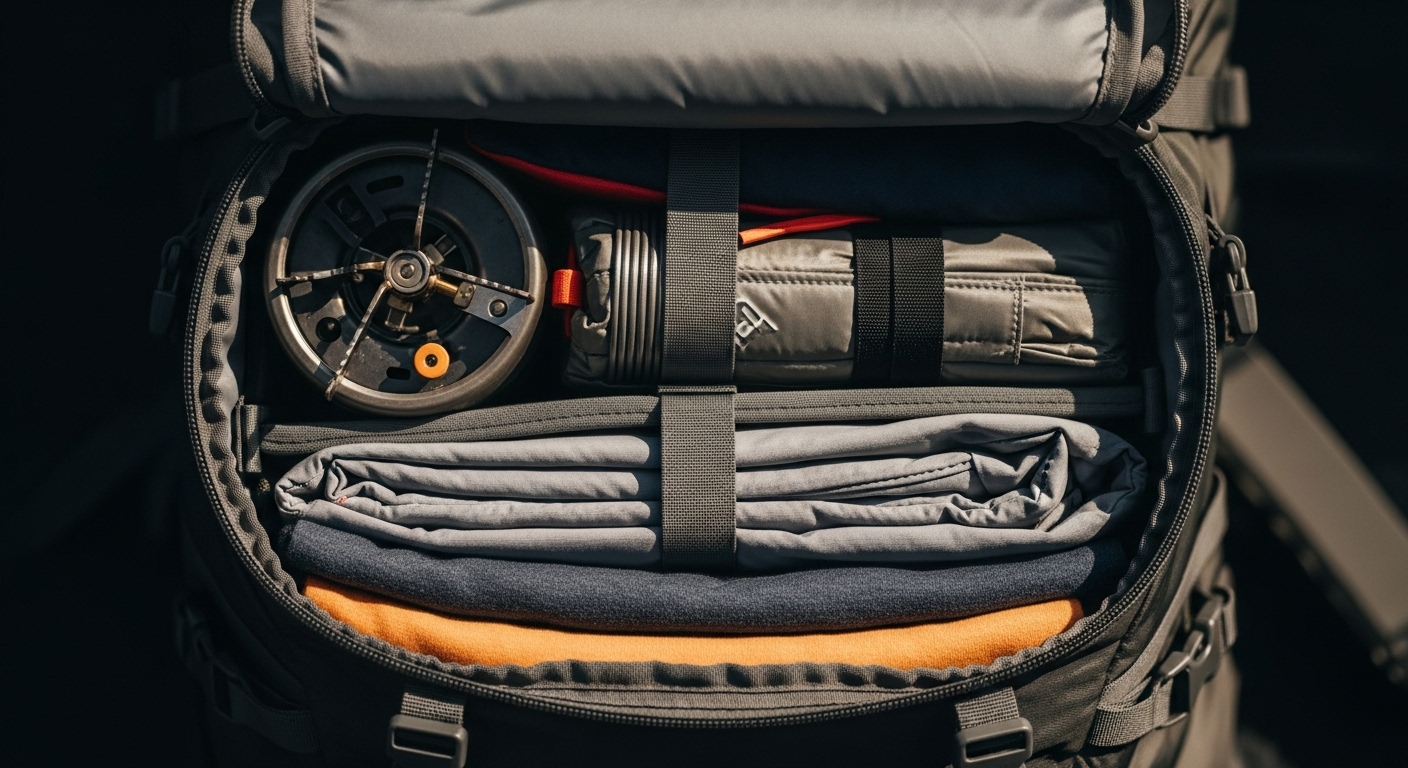
Build a small clothing system that can change with elevation, coast and time of day. A comfortable base layer, a warm mid-layer and a rain-and-wind shell cover more useful combinations than one bulky jacket. Add sun protection and footwear for the actual stops on the itinerary, not an imagined expedition that is not part of the trip.
Keep one complete layer change reachable rather than burying every warm or dry item in the main luggage. The useful question is not whether rain is forecast at the first hotel; it is whether anyone can stay warm and reasonably dry after a wet walk, a delayed ferry, an exposed viewpoint or an evening arrival.
- Comfortable base layer
- Warm mid-layer
- Rain and wind shell
- Sun protection and practical footwear
Park and day-bag kit
Move the items used at short stops out of the main luggage. Each person does not need a large hiking pack, but the group should be able to carry water, food, medication, weather layers, sun protection, phone power and simple first aid without returning to an overpacked vehicle.
Keep valuables and temperature-sensitive items with you when leaving the car. Use small closed pouches for documents, electronics and medication, and give wet clothing or muddy footwear a separate place on return. A day bag works best when it can be reset in a few minutes at the end of each stop.
- Water and snacks
- Medication and personal essentials
- Small first-aid kit
- Waste bag and reusable container
Plan food, water and service gaps without overpacking
Carry a practical delay margin rather than filling the vehicle for the entire holiday. Water, a simple meal or substantial snack, and any required medication should cover the time between dependable services. The amount changes with party size, temperature and remoteness, so use the route sheet instead of a universal quantity.
Resupply during ordinary town stops and keep food waste controlled. In park country, food and scented items must be handled according to current wildlife and campground rules. A tidy food system also makes ferry terminals, roadside breaks and late arrivals easier because the group can find what it needs without unpacking every bag.
- Carry enough water for the driving day and planned stops
- Choose food that survives delays and does not require roadside preparation
- Identify the next realistic resupply point before a remote stretch
- Keep cleanup supplies small, sealed and easy to reach
Load the vehicle in the order the day will happen
A complete packing list can still fail if the vehicle is loaded badly. Put the next needed item closest to the door and keep sightlines and passenger space clear. Heavy items should be secured rather than allowed to shift, and nothing essential should depend on unloading the roadside shoulder of a busy highway.
Use a small arrival bag for the first night when possible. If a ferry, weather delay or changed hotel plan shortens the evening, everyone can reach sleepwear, toiletries, chargers and medication without dismantling the car. The same approach makes early departures quieter and reduces the chance of leaving an item behind.
- Cabin: documents, medication, water, phone power and one warm layer
- Top of luggage: day bags, rain shells and the next overnight bag
- Lower storage: later-trip items and equipment not needed en route
- Separate zone: wet, sandy or muddy items after outdoor stops
Final departure checks
Use live sources for details that can change after you finish packing. Recheck the provincial road service, the relevant park bulletin and any ferry status close to departure. Confirm the first fuel or charging stop and compare the planned arrival with available daylight and the accommodation check-in window.
The final review is also the time to remove equipment. If an activity has been cancelled, the season is different from the original plan or a rental already includes an item, take it off the list. Leaving room in the vehicle improves access, makes daily resets easier and keeps the checklist focused on the trip rather than the fear of forgetting something.
- Road and weather conditions
- Park advisories and reservation details
- Ferry status where relevant
- Arrival time and daylight margin
Common planning mistakes
- Packing the car so essentials are buried
- Using one clothing plan for every elevation
- Treating downloaded plans as more current than official live sources
Printable companion
Download the Canada road trip checklist
A printable list for documents, driving, weather layers, park days and the essentials worth keeping within reach.
Download the free PDFQuestions travellers ask
Is the PDF free?
Yes. The checklist is an ungated direct download and does not require an account or email address.
Is this a winter-driving checklist?
No. Winter routes need specific tires, emergency supplies and current provincial guidance beyond this general list.
What belongs in the day bag?
Keep water, medication, a weather layer, sun protection, phone power and anything needed at short stops within reach.
Sources and currency
Conditions change. Confirm dynamic details again before departure; each source shows its own last-checked date.
- Parks Canada: Plan your national park visit (2026-08-31)
- DriveBC: Current road conditions and events (2026-08-31)
- BC Ferries: Schedules, fares and current conditions (2026-08-31)
- Government of Alberta: Alberta road conditions (2026-08-31)
Continue planning
Related field guides

Canada · First-trip shortlist
Canadian Road Trips for First Visits
Canada is too large for a single “best” road trip. Start with the landscape you want, the driving rhythm you enjoy and the logistics you are ready to manage.
Open the guide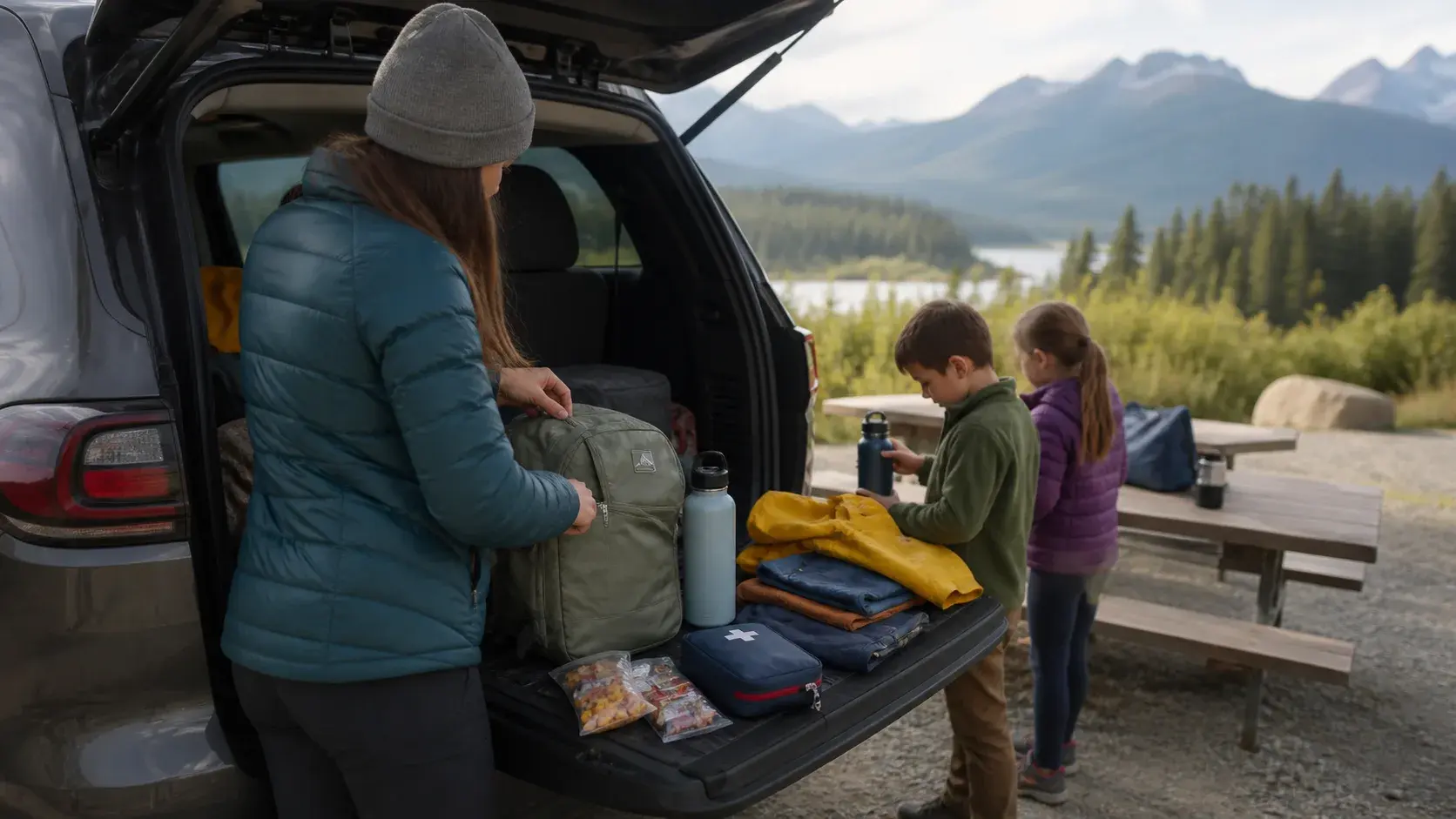
Family car packing
Family Road Trip Packing List
A family road trip is easier when the essentials are packed by the moment they will be needed, not by the category they belong to at home.
Open the guide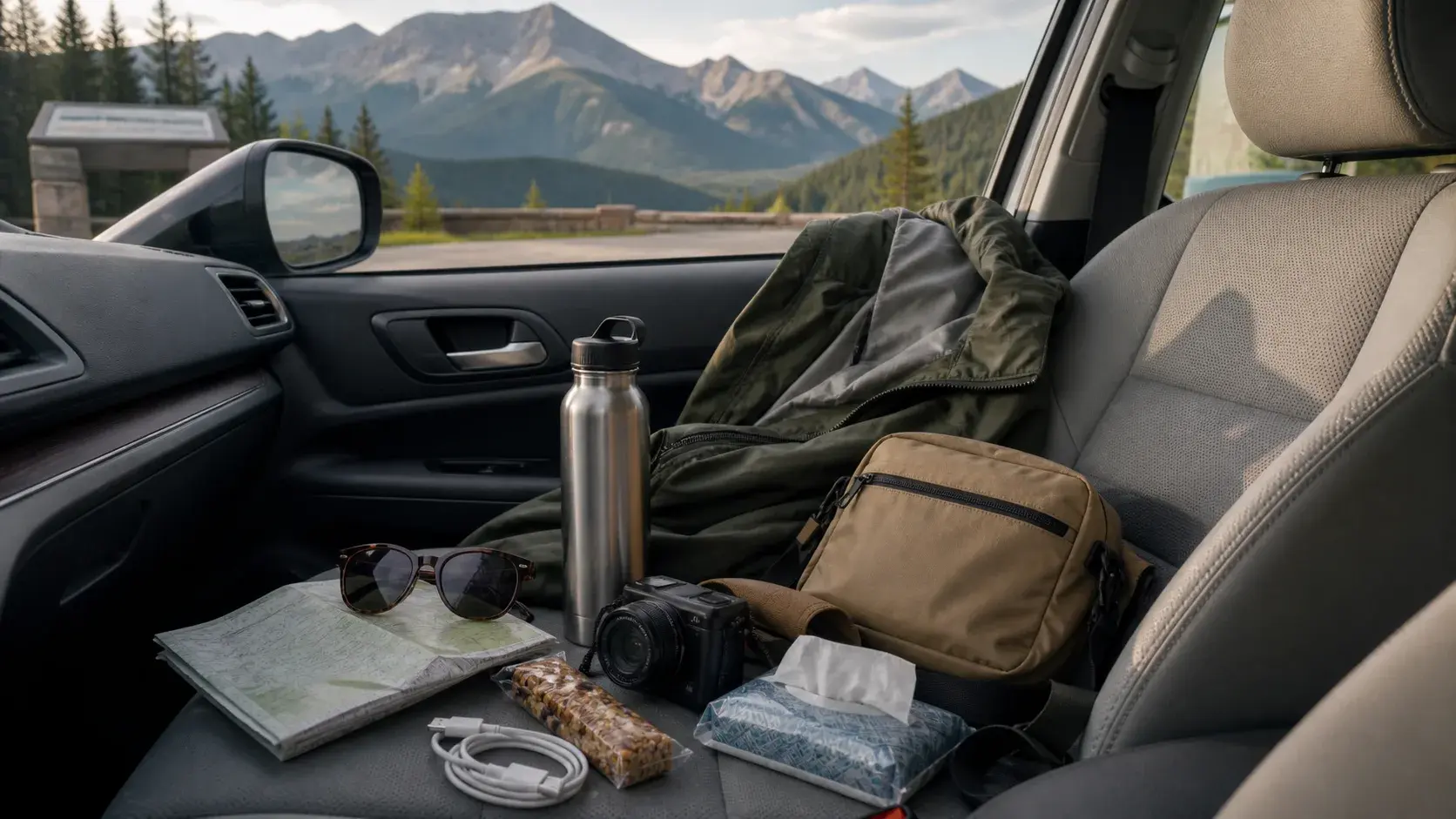
Scenic drive comfort
Scenic Drive Comfort Checklist
A scenic drive feels better when the car supports the day instead of swallowing it: essentials visible, stops planned and weather treated as part of the route.
Open the guide