
Canada · First-trip shortlist
Canadian Road Trips for First Visits
Canada is too large for a single “best” road trip. Start with the landscape you want, the driving rhythm you enjoy and the logistics you are ready to manage.
- Region
- Canada
- Best for
- International and first-time Canada visitors
- Season
- Route dependent; late spring through early autumn is the broadest window
- Time
- 3–14 days
By Horizon Outdoor Editorial TeamPublished 2026-08-29Updated 2026-08-31

Quick facts
- Best first BC route
- Sea to Sky Highway
- Best mountain route
- Icefields Parkway
- Best coastal loop
- Vancouver Island
- Planning rule
- Choose one region per trip
How to choose your first route
Match the route to the trip you can actually support, not only the scenery you recognize. Begin with the arrival city, the number of full driving days and the conditions you are comfortable handling. Then choose one landscape family—mountains, Atlantic coast, Pacific coast, lake country or northern road—rather than trying to sample the entire country.
This is a planning shortlist, not a permanent ranking of Canada. It includes routes for which a first visitor can find a clear gateway and official planning information, while also showing how different the commitment can be. A compact highway near a major city and an unpaved northern corridor should never be compared as if they ask the same thing of the traveller.
- Available days and driving comfort
- Season and daylight
- Ferry, park and accommodation complexity
Compact routes for a shorter first trip
When the holiday has three or four road-trip days, choose a route with a simple arrival gateway and only one or two overnight bases. Sea to Sky can work as a short mountain corridor from Vancouver, while the Okanagan can be shaped around a small number of lakeside communities. Neither needs to become part of a much larger provincial circuit.
On Vancouver Island, the Pacific Marine Circle or a focused west-coast approach can provide a complete trip without attempting the entire island. Ferry terminals and sailing times must be chosen before the road sequence. Check DriveBC and BC Ferries close to travel, because the practical route depends on current roads and the exact crossing used.
- Sea to Sky Highway — a focused mountain-and-coast drive from Vancouver
- Okanagan Valley — lakes, towns and a flexible base-to-base rhythm
- Pacific Marine Circle — a southern Vancouver Island circuit
- A focused Pacific Rim approach — one west-coast base rather than an island race
A Canadian Rockies route built around the parkway
The Icefields Parkway is the clearest mountain choice on this shortlist, but it should be treated as a remote national-park road rather than a collection of photo stops. Parks Canada describes limited services and no dependable continuous cell coverage along the corridor. Give the road a full day and protect time at both ends for Banff, Lake Louise or Jasper.
A first Rockies trip becomes easier when accommodation, park entry and any reserved activity are confirmed before optional viewpoints are added. Use Alberta 511 and current park notices on departure morning. Summer is not a promise of warm or stable conditions at elevation, so keep layers, food, water and a shorter backup plan available.
- Icefields Parkway between Lake Louise and Jasper
- Banff and Jasper as prepared bases rather than a single rushed day
- Park entry, accommodation and activity reservations checked separately
- Fuel, food, weather and offline information prepared before the corridor
Atlantic routes where the coast sets the pace
Tourism Nova Scotia presents the Cabot Trail as a four-to-five-day itinerary through key Cape Breton areas, which is a more useful first-trip scale than treating the loop as a quick driving challenge. Build around a small number of communities, keep viewpoints optional and check Cape Breton Highlands National Park information when park stops are part of the plan.
Tourism New Brunswick’s Fundy Coast itinerary is a larger journey that can fill a week or more. Tides, coastal communities and park visits give it a different rhythm from the Rockies. For either Atlantic route, use a regional arrival gateway and protect time for weather; combining both with several additional provinces can turn a first visit into a sequence of transfers.
- Cabot Trail — a four-to-five-day Cape Breton loop
- Fundy Coast — a longer New Brunswick coastal journey
- Allow time for communities, tides, park stops and changing coastal weather
- Choose one Atlantic region instead of linking several provinces too quickly
Longer loops in Quebec and Northern Ontario
Bonjour Québec describes the Gaspésie Tour as an approximately 885-kilometre loop suited to about seven days. It combines St. Lawrence and Gulf coastlines, towns and park access, making it a strong first choice for travellers arriving through Quebec who want one complete regional journey instead of a drive across several provinces.
Destination Ontario presents the Lake Superior coastline between Sault Ste. Marie and Thunder Bay as a journey to savour rather than an eight-hour transit. This route works for travellers who are comfortable with long northern distances and who plan accommodation, park stops, fuel and weather in advance. It should not be added casually between Toronto and another distant region.
- Gaspésie Tour — a roughly week-long peninsula loop
- Lake Superior north shore — a substantial Sault Ste. Marie-to-Thunder Bay corridor
- Plan services and overnight bases before scenic stops
- Expect long distances even when the route stays within one province
Keep the Dempster Highway in a separate decision category
The Dempster Highway belongs on a Canadian road-trip map, but not as an easy substitute for the other routes. Travel Yukon describes an unpaved all-season public road crossing the Arctic Circle with very limited services. It requires a suitable vehicle, current road information, spare-tire planning, realistic fuel and lodging decisions, and comfort with remote travel.
For most first-time visitors, the Dempster should be a future dedicated trip rather than an add-on to a short Canada holiday. If it is the central reason for travelling, use the official territorial planning resources and verify rental permissions before booking. This guide does not turn its inclusion in a national shortlist into a recommendation for an unprepared driver.
- Unpaved remote-road preparation
- Limited services and long distances
- Vehicle-rental permission checked in writing
- Current Yukon and Northwest Territories road information
Compare commitment before scenery
Use duration as the first filter, then compare seasonal access, reservation pressure, service gaps and the longest comfortable driving day. A route that fits the calendar with no margin does not fit the trip. Two nights in important bases usually create a better first visit than collecting distant places through daily checkouts.
Arrival logistics matter just as much as the named highway. Count the flight day, vehicle pickup, ferry check-in and the drive from the last overnight to the departure airport. A ten-day holiday may contain only seven useful road-trip days. Choose the route that still works after those transition days are honestly removed.
- 3–4 days: one compact corridor or focused coastal section
- 5–8 days: one island, Atlantic, Quebec or mountain region
- 7–10 days: Gaspésie, Fundy Coast or a measured Lake Superior plan
- Remote northern roads: separate vehicle, service and contingency planning
What to verify before booking
Dynamic details belong to official sources and should be checked again close to departure. Use the provincial or territorial road service for closures and incidents, the operating agency for ferry information, and Parks Canada or the appropriate park agency for entry, reservations and advisories. A saved itinerary is a planning document, not a live status report.
Before committing to non-refundable bookings, confirm that the chosen vehicle can use the route, that the trip is appropriate for the season and that every fixed arrival can tolerate a delay. Repeat the check on departure morning. If smoke, storm, wildfire, construction or a service interruption changes the route, follow current official direction and use the planned alternative.
- Road closures and construction
- Park entry and reservations
- Ferry space where relevant
- Seasonal services and weather
Common planning mistakes
- Trying to cross Canada in a short holiday
- Choosing a route before checking the season
- Booking every hour and leaving no disruption buffer
Printable companion
Download the Canada road trip checklist
A printable list for documents, driving, weather layers, park days and the essentials worth keeping within reach.
Download the free PDFQuestions travellers ask
What is the easiest first Canadian road trip?
Sea to Sky is compact and starts near Vancouver. The best choice still depends on your arrival city, season and available days.
Can I combine the Rockies and Vancouver Island?
Only with enough time and a clear transit plan. For a shorter first visit, one region usually produces a better trip.
When should I book?
Popular parks, ferries and accommodations can require advance planning. Use official channels and confirm the conditions for your exact dates.
Sources and currency
Conditions change. Confirm dynamic details again before departure; each source shows its own last-checked date.
- Parks Canada: Plan your national park visit (2026-08-31)
- DriveBC: Current road conditions and events (2026-08-31)
- BC Ferries: Schedules, fares and current conditions (2026-08-31)
- Government of Alberta: Alberta road conditions (2026-08-31)
- Parks Canada: Icefields Parkway planning, services and safety information (2026-08-31)
- Destination British Columbia: Pacific Marine Circle Route planning ideas (2026-08-31)
- Tourism Nova Scotia: Cabot Trail four-to-five-day itinerary (2026-08-31)
- Tourism New Brunswick: Fundy Coast road-trip itinerary (2026-08-31)
- Bonjour Québec: The Gaspésie Tour itinerary (2026-08-31)
- Destination Ontario: Lake Superior coastal road-trip itinerary (2026-08-31)
- Travel Yukon: Dempster Highway itinerary and preparation (2026-09-02)
Continue planning
Related field guides
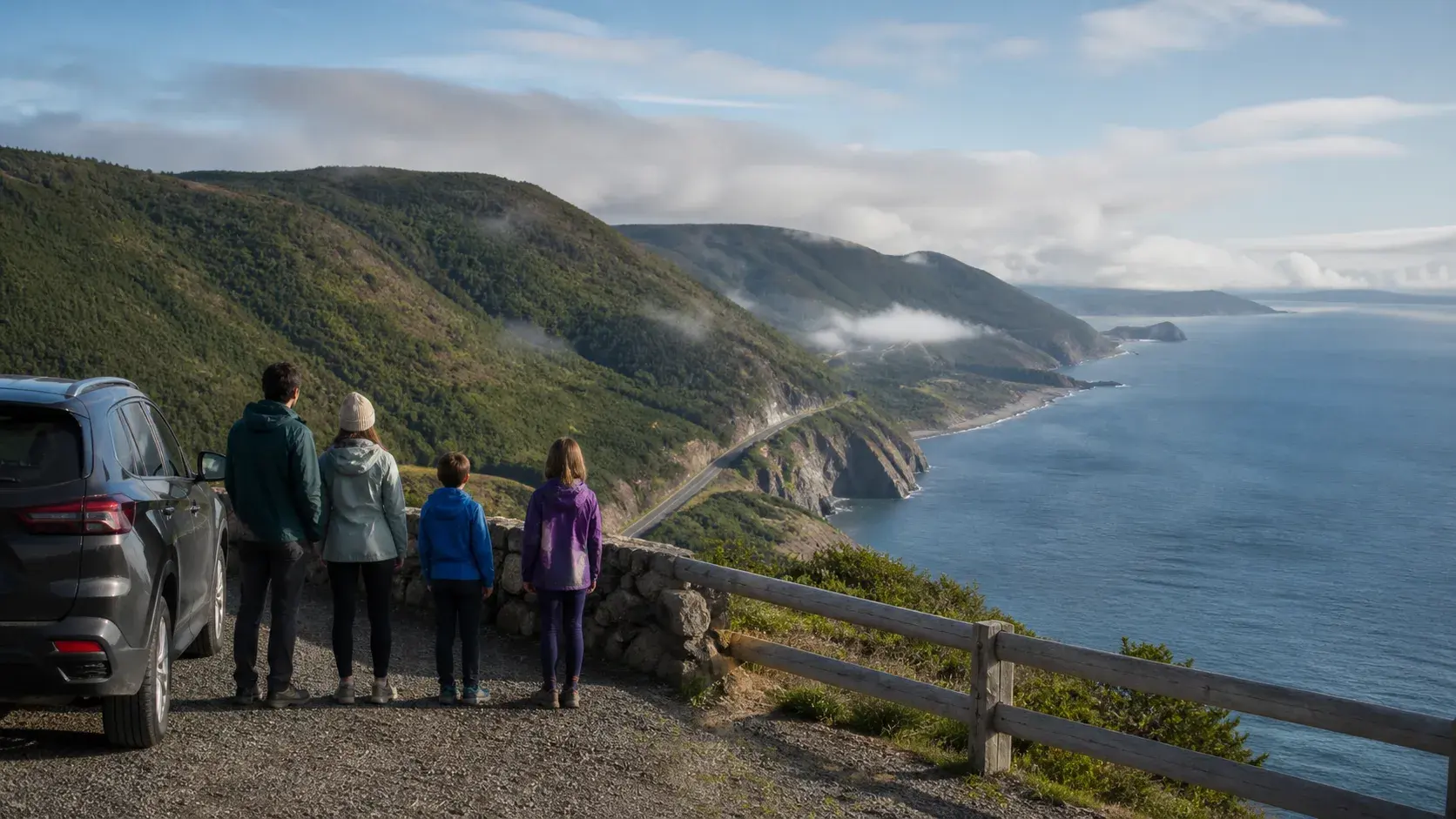
Nova Scotia · Cape Breton
Cabot Trail Road Trip Guide
The Cabot Trail is not a loop to finish. It is a coastal-and-highland drive where the best moments often come from slowing down.
Open the guide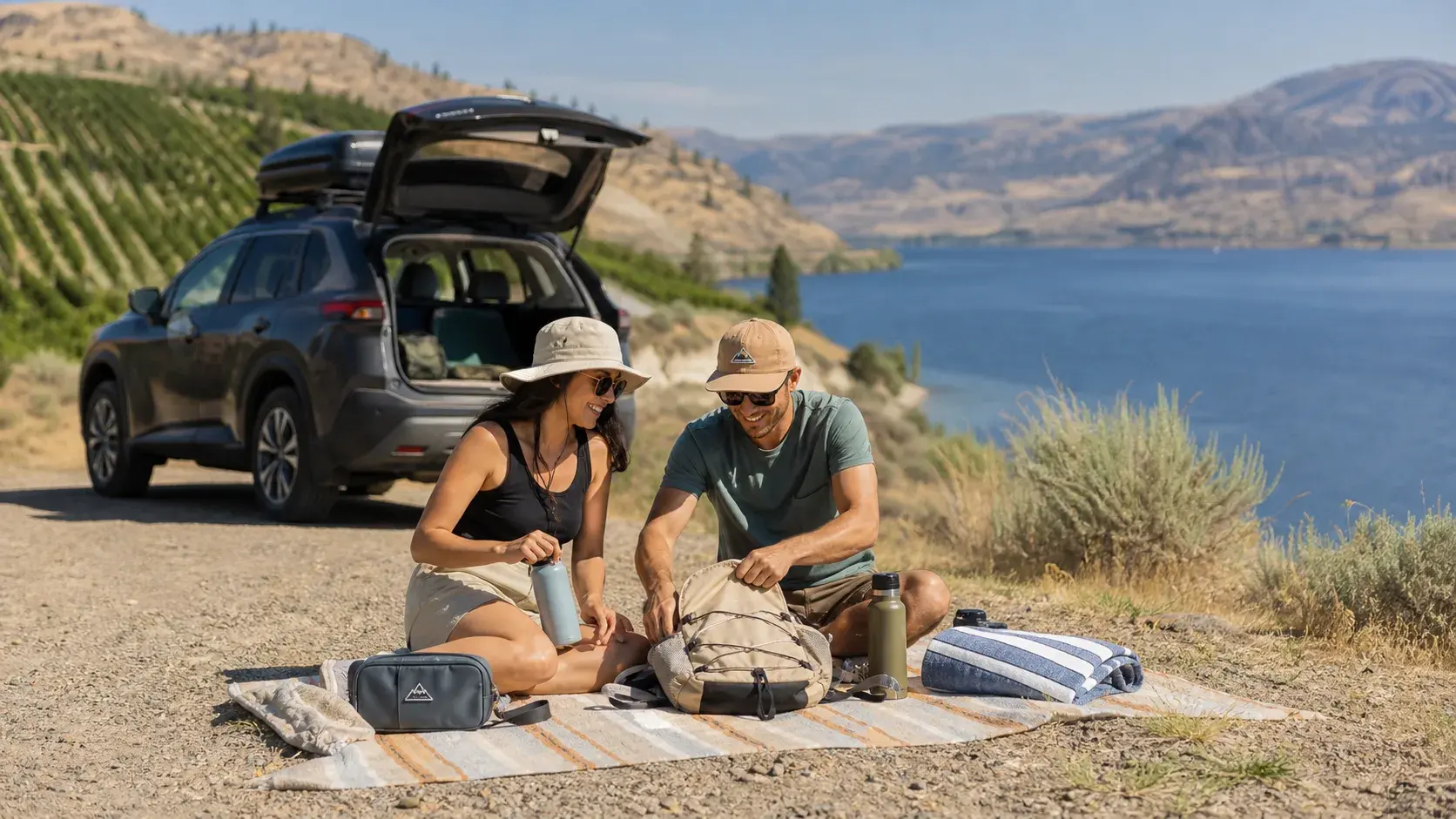
British Columbia · Okanagan Valley
Okanagan Valley Road Trip Guide
The Okanagan is one of British Columbia’s easiest regions to imagine and one of the easiest to overfill. Build the trip around bases, heat and official checks.
Open the guide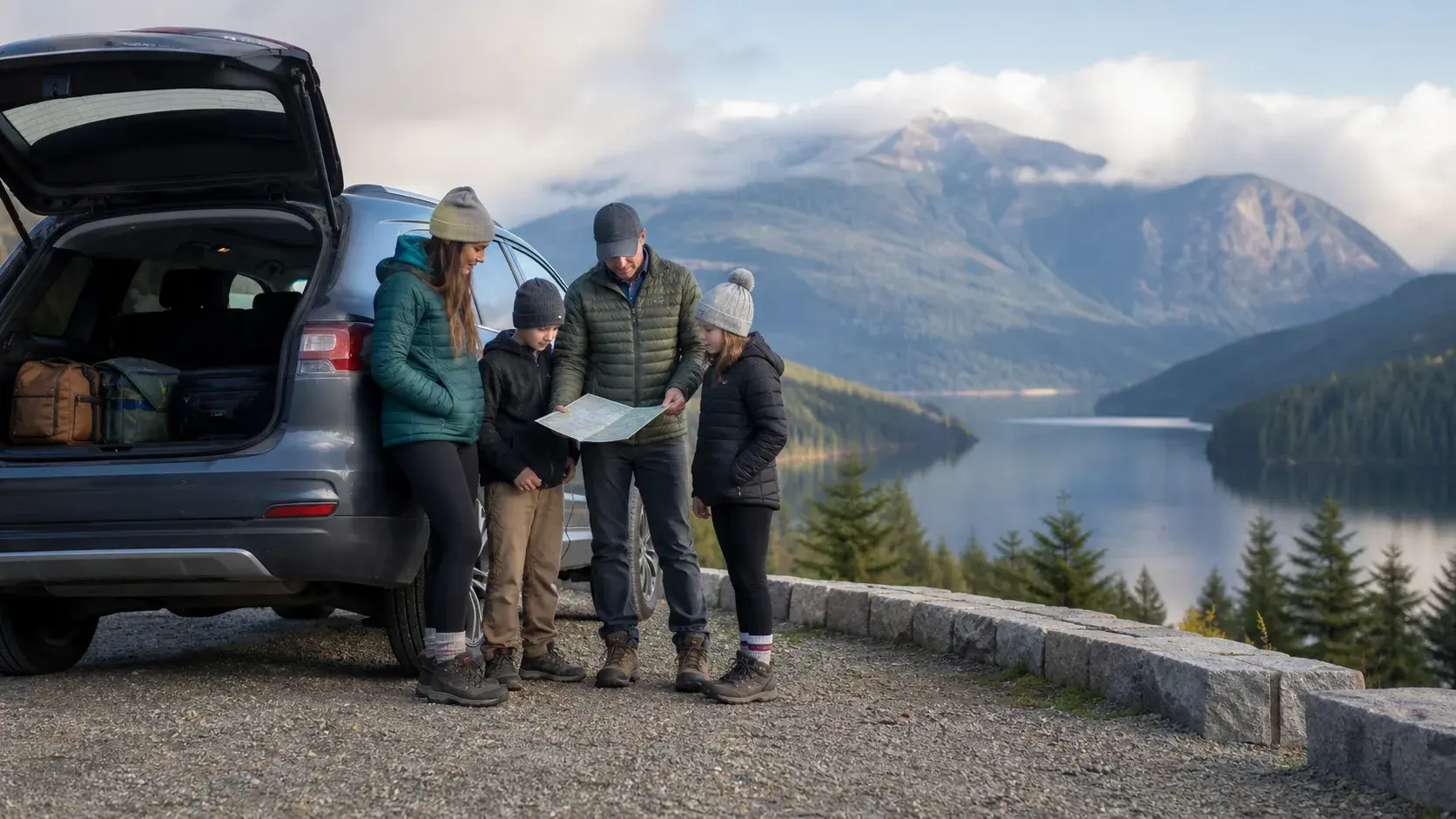
British Columbia · Scenic drive shortlist
Top 10 Scenic Drives in British Columbia
BC’s best drives are not interchangeable. Some are easy weekend routes near Vancouver; others ask for ferries, mountain weather, long distances or remote-road judgment.
Open the guide