
Spring and fall · Packing checklist
Canada Shoulder-Season Packing Checklist
Shoulder season is not one kind of weather. Pack a small system that can move between rain, wind, cold mornings and brighter afternoons without burying the items needed at the next stop.
- Region
- Canada
- Best for
- Road-trippers travelling in spring or fall across cities, parks and regional highways
- Season
- Spring and fall, adjusted to route, elevation and current conditions
- Time
- 20-minute packing review plus a departure-day reset
By Horizon Outdoor Editorial TeamPublished 2026-09-10
Quick facts
- Pack for
- The route’s coldest, wettest and most exposed stop
- Keep reachable
- Shells, warm layer, dry socks, water and medication
- Separate
- Clean and dry items from wet footwear and clothing
- Final check
- Weather alerts, road service and vehicle readiness
Translate the route into conditions before packing
List the overnight bases, highest or most exposed stops, ferry or highway commitments and any place where services become limited. Check the destination forecast rather than only the departure city. A spring coast, an interior pass and an autumn city weekend can experience different wind, rain and temperature on the same trip.
Read the full Environment and Climate Change Canada alert when one is issued, then compare it with the provincial or territorial road service. Pack for the plan that remains safe, not for an activity that should be cancelled if conditions arrive.
- Mark the coldest and wettest expected stop
- Note elevation, wind exposure and available shelter
- Keep one route or activity that works in poorer conditions
Build one wearable three-part layer system
Use a comfortable base, an insulating mid-layer and a rain-and-wind shell that fit together. Add a warm hat, light gloves and footwear suited to the planned surface. The system should be wearable during a roadside delay as well as a walk; several unrelated bulky jackets usually create more luggage without improving adaptability.
Pack one dry change of socks and a compact insulating layer where passengers can reach them. Children and anyone who cools quickly may need a larger margin. Test movement and car-seat fit before departure rather than discovering that a bulky coat interferes with safe restraint use.
- Comfortable base layer
- Warm mid-layer
- Waterproof and wind-resistant outer shell
- Dry socks, warm hat, light gloves and practical footwear
Give wet gear a place before it becomes wet
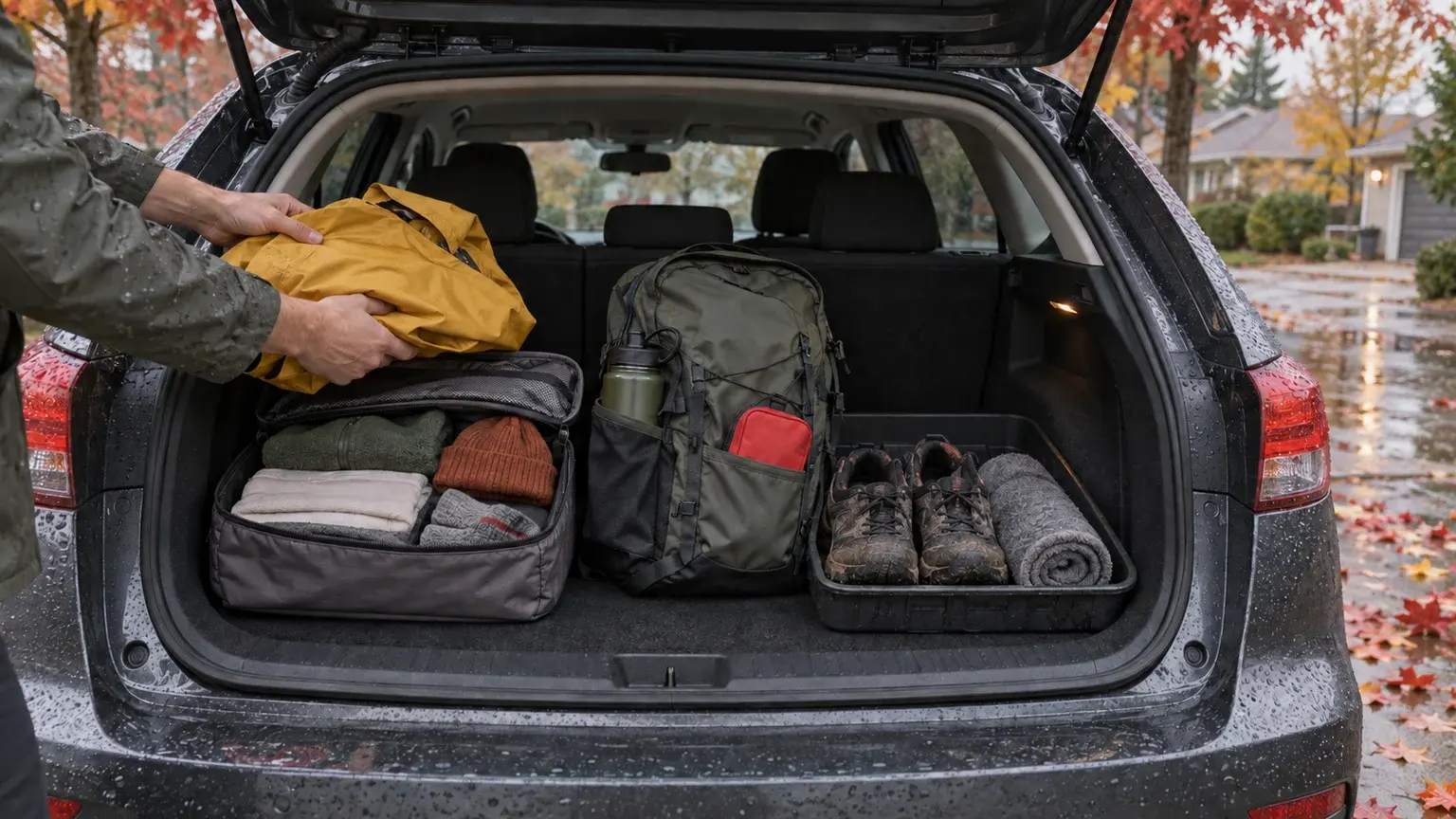
Use a ventilated or washable container for muddy footwear, damp shells and used towels. Keep it separate from dry layers, documents, medication and electronics. A few reusable bags are enough; the purpose is to prevent one wet stop from compromising the rest of the vehicle.
At the end of each day, dry what can be dried and return one complete set of weather layers to the accessible zone. Replace wet wipes, snacks or spare socks as they are used. This small reset is more valuable than carrying several duplicate outfits that remain buried.
- Washable footwear tray or durable wet bag
- Small towel and spare socks
- Separate dry pouch for electronics and documents
- End-of-day drying and restock routine
Prepare the vehicle for the colder possibility
Follow the vehicle’s maintenance schedule and check tires, lights, battery condition, wipers, washer fluid, heating and defogging before a long shoulder-season route. Tire and seasonal-equipment rules vary by place and date, so confirm the law and current road guidance for every province, territory, mountain corridor or rental agreement involved.
Carry a car emergency kit appropriate to the route, including light, first aid, warmth, food, water, warning equipment and charging. If winter conditions are forecast, use winter-driving guidance and be ready to delay the trip. Emergency supplies do not turn an unsuitable vehicle or hazardous road into a safe plan.
- Tires, battery, lights, wipers and defogger checked
- Season-appropriate washer fluid and ice scraper where needed
- Emergency kit, phone cable and power bank
- Enough fuel or charge for an unplanned delay
Load for the next transition, not the final destination
Keep the day bag, shell, warm layer, water, medication and a dry change accessible from the passenger area or top of the luggage. Secure heavy items low and preserve the driver’s sightlines. No essential layer should require unloading beside a busy road.
Run a final check shortly before departure: current weather and road status, the first fuel or charging stop, remaining daylight and every fixed reservation. Remove gear for cancelled activities. The best shoulder-season load is organised enough to change plans without turning the vehicle inside out.
- Cabin or top layer: day bag and immediate weather gear
- Low and secured: heavy luggage and later-trip equipment
- Separate: wet zone and emergency kit
- Departure: weather, road, fuel and daylight check
Common planning mistakes
- Packing for an average temperature instead of the route’s exposed stops
- Burying every dry layer under the main luggage
- Mixing wet footwear with dry clothing and documents
- Assuming four-wheel drive replaces suitable tires and road judgement
- Carrying more gear instead of cancelling an unsafe activity
Printable companion
Download the Canada road trip checklist
A printable list for documents, driving, weather layers, park days and the essentials worth keeping within reach.
Download the free PDFQuestions travellers ask
What counts as shoulder season in Canada?
It varies by region, elevation and year. Use spring or fall as a planning prompt, then pack from current destination forecasts, road guidance and the actual route.
Do we need winter gear in fall or spring?
Some routes may require it. Check forecast conditions, legal tire or chain requirements and the provincial or territorial road service for the dates and roads involved.
What should stay inside the cabin?
Keep medication, water, phone power and one complete set of immediately useful layers reachable without unloading on the roadside.
How do we avoid overpacking for variable weather?
Use one compatible base, mid-layer and shell system, one dry backup for essential pieces and a daily drying routine instead of several unrelated outfits.
Sources and currency
Conditions change. Confirm dynamic details again before departure; each source shows its own last-checked date.
- Environment and Climate Change Canada: Weather alerts in Canada (2026-09-10)
- Transport Canada: Planning a winter road trip (2026-09-10)
- Transport Canada: Preparing a vehicle for winter (2026-09-10)
- Transport Canada: Driving safely in winter (2026-09-10)
- Transport Canada: Winter driving information (2026-09-10)
- Government of Canada: Emergency car kit (2026-09-10)
- Government of Canada: Preparing for winter storms (2026-09-10)
Continue planning
Related field guides
Printable planning guide
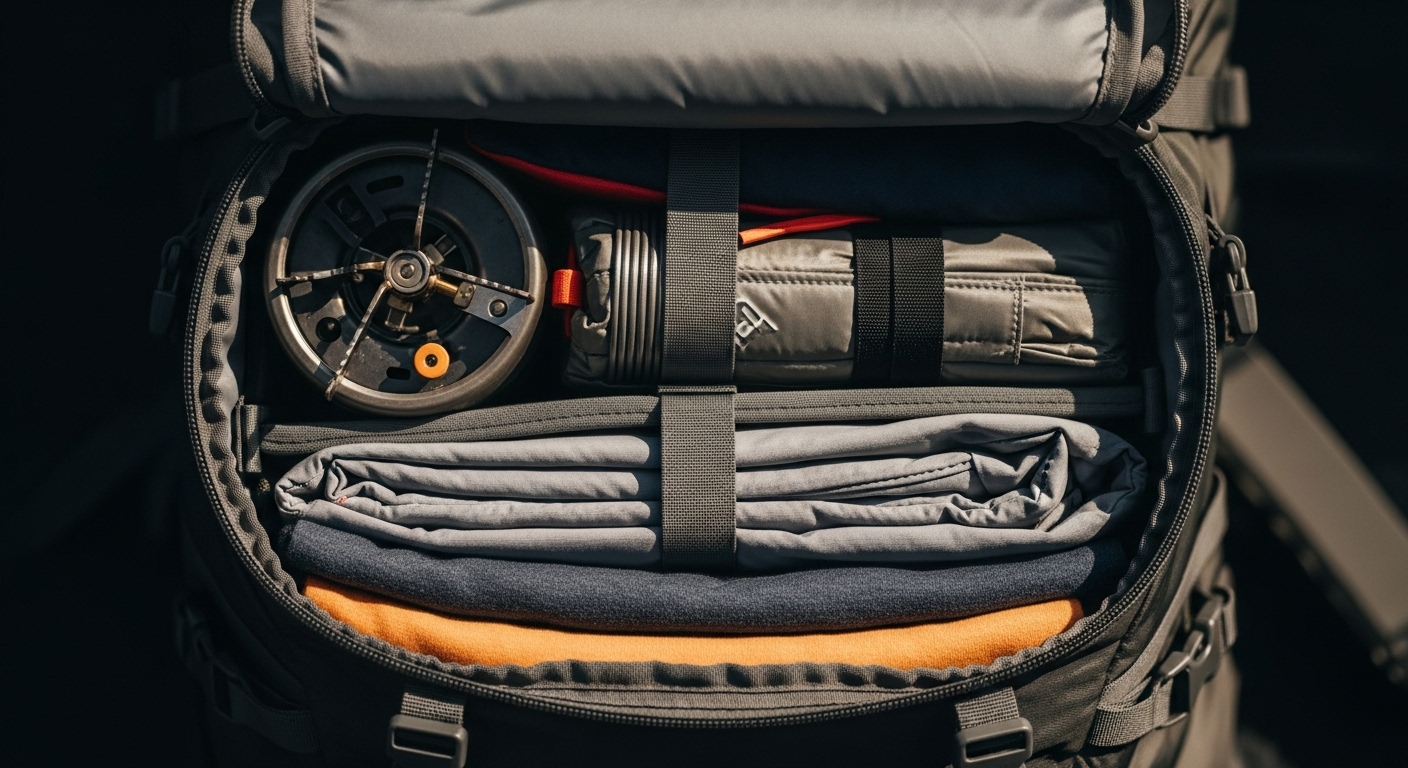
Canada Road Trip Packing Checklist
Start with the essentials that protect the trip, then remove anything your route, season and travelling party do not need.
Open the guide
Canada · First-trip shortlist
Canadian Road Trips for First Visits
Canada is too large for a single “best” road trip. Start with the landscape you want, the driving rhythm you enjoy and the logistics you are ready to manage.
Open the guide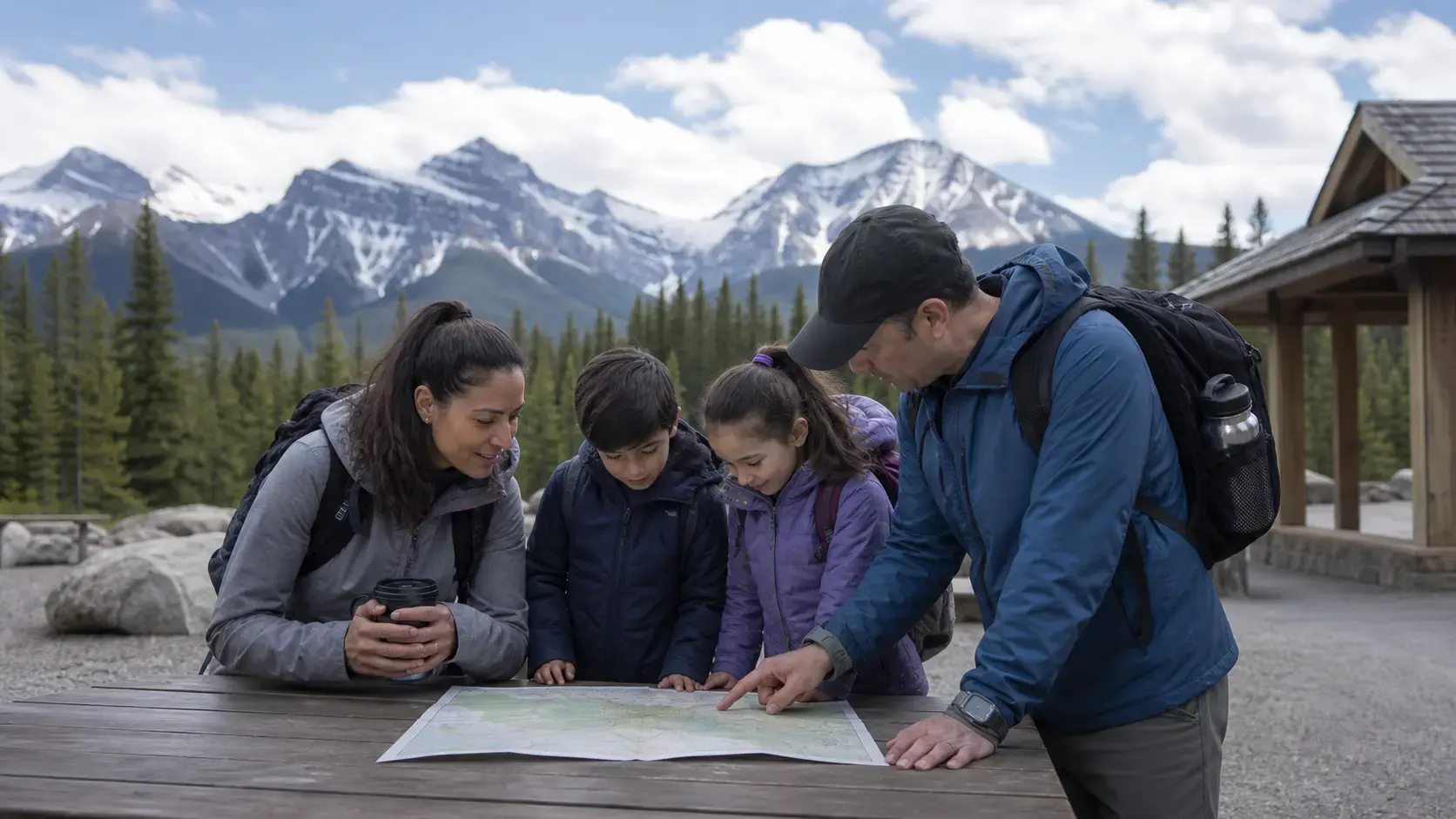
Canada · First national park trip
Canada National Parks First-Time Guide
A first national park visit works best when the logistics are visible before the scenery takes over: entry, reservations, roads, weather, wildlife and a day plan that can shrink.
Open the guide