
Student weekend trips
Student Weekend Packing List
A good weekend bag should be small enough to carry, complete enough for a changed plan and organized enough that essentials do not disappear into someone else’s car.
- Region
- Canada
- Best for
- Students planning weekend road trips, hostel stays, campus visits, cabin weekends or short outdoor breaks
- Season
- Year-round with weather and transportation adjustments
- Time
- 15-minute bag setup plus post-trip reset
By Horizon Outdoor Editorial TeamPublished 2026-08-30Updated 2026-08-31
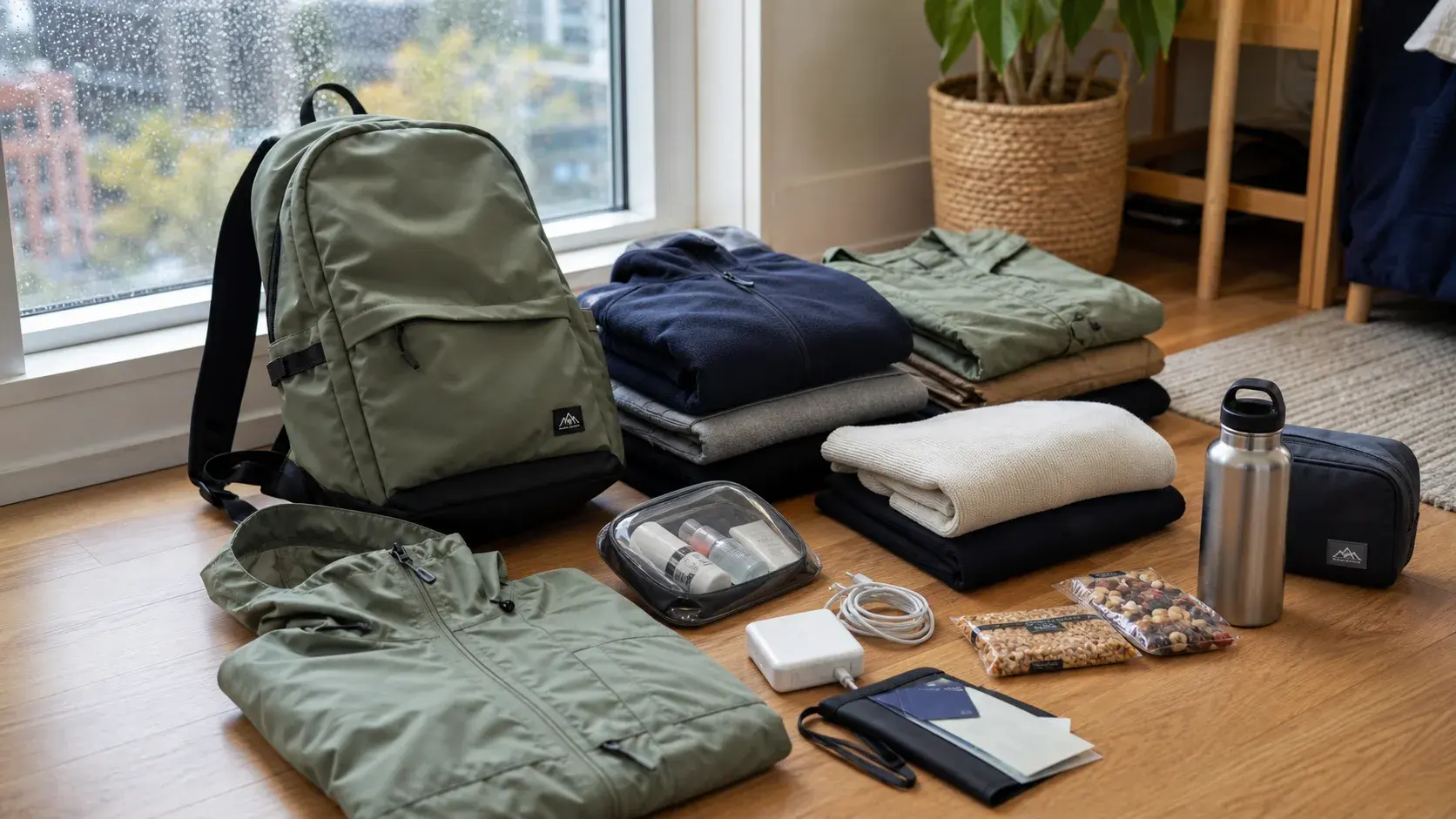
Quick facts
- Best format
- One personal bag plus one shared group plan
- Clothing rule
- Two outfits, sleepwear, weather layer and practical footwear
- Keep with you
- ID, wallet, medication, keys, charger and confirmations
- After return
- Empty wet items, clean containers and reset daily essentials
Use a two-outfit rule, then add weather protection
For most weekends, overpacking creates more problems than it solves. Pack one travel outfit, one clean change, sleepwear and activity-specific clothing only if the plan truly needs it.
Add a warm layer and rain protection before adding another casual outfit, especially for BC coast, mountain or ferry routes where the weather can change faster than a campus routine.
- Travel outfit plus one clean change
- Sleepwear and underwear or socks for the full weekend
- Warm layer and rain shell matched to the forecast
- Practical footwear for the real surface, not only the destination photo
Keep small essentials in a top pouch
The top pouch should handle the first delay: wallet, ID, keys, medication, lip balm, glasses or contacts, earplugs, cable, power bank and a small hygiene kit.
If the trip includes a flight, ferry, bus or shared vehicle, this pouch stays with the student rather than inside checked luggage or someone else’s bag.
- ID, wallet, keys and travel confirmations
- Medication, glasses or personal health items
- Phone cable, power bank and earbuds or earplugs
- Toothbrush, small toiletries and any air-travel liquid limits checked
Pack food and drinks for the travel window
Student trips often run late, and a simple food plan prevents expensive or rushed stops. Carry water and sturdy snacks for the first travel window.
If bringing perishable food, pack it cold with ice packs and keep the cooler out of direct sun. Separate food from dirty shoes, toiletries and wet clothing.
- Refillable water bottle and one spare drink plan
- Shelf-stable snacks for the drive or bus ride
- Cooler with ice packs for perishable food
- Waste pouch and reusable container for leftovers or wrappers
Reset the bag before Monday
The weekend is not finished until wet clothes, food containers, borrowed items and chargers are back where they belong. Empty the bag the same day if possible.
Wash or dry clothing, return shared supplies, restock toiletries and remove trash so the bag is ready for the next short trip instead of becoming storage.
- Laundry and wet items removed immediately
- Food containers cleaned and perishable leftovers handled safely
- Chargers, ID and keys returned to daily-use places
- Shared costs or borrowed items settled while details are fresh
Common planning mistakes
- Packing multiple outfits before adding a warm layer or rain shell
- Putting ID, medication or keys in someone else’s bag
- Assuming a shared group item exists without assigning it to a person
- Leaving wet clothes, containers and chargers in the bag after returning
Printable companion
Download the student weekend checklist
A compact weekend list for clothing, toiletries, documents, chargers, shared car basics and the reset before returning home.
Download the free PDFQuestions travellers ask
How much should a student pack for a weekend?
Start with one personal bag: travel outfit, one clean change, sleepwear, toiletries, chargers, ID, medication and weather layers. Add activity-specific gear only when the plan truly needs it.
What should students share instead of duplicate?
First aid, some snacks, cooler space, cleanup supplies, route checks and parking details can be shared if one person is clearly responsible for each.
What belongs in the bag, not the car trunk?
ID, wallet, medication, phone power, glasses or contacts, keys and travel confirmations should stay with the student.
What if the weekend includes a flight?
Check CATSA rules before packing liquids, gels, aerosols or non-solid food in carry-on luggage, and confirm airline baggage limits separately.
Sources and currency
Conditions change. Confirm dynamic details again before departure; each source shows its own last-checked date.
- DriveBC: Current road conditions, events and highway cameras (2026-08-30)
- Environment and Climate Change Canada: Weather warnings, watches and advisories (2026-08-30)
- BC Parks: Staying safe while visiting BC Parks (2026-08-30)
- PreparedBC: Emergency kit and grab-and-go bag basics (2026-08-30)
- CATSA: Liquids, non-solid food and personal items in carry-on baggage (2026-08-30)
- Transport Canada: Driver distraction and road safety guidance (2026-08-30)
- Province of British Columbia: Provincial rest area information (2026-08-30)
- Health Canada: Summer food safety tips for coolers and perishable food (2026-08-30)
Continue planning
Related field guides
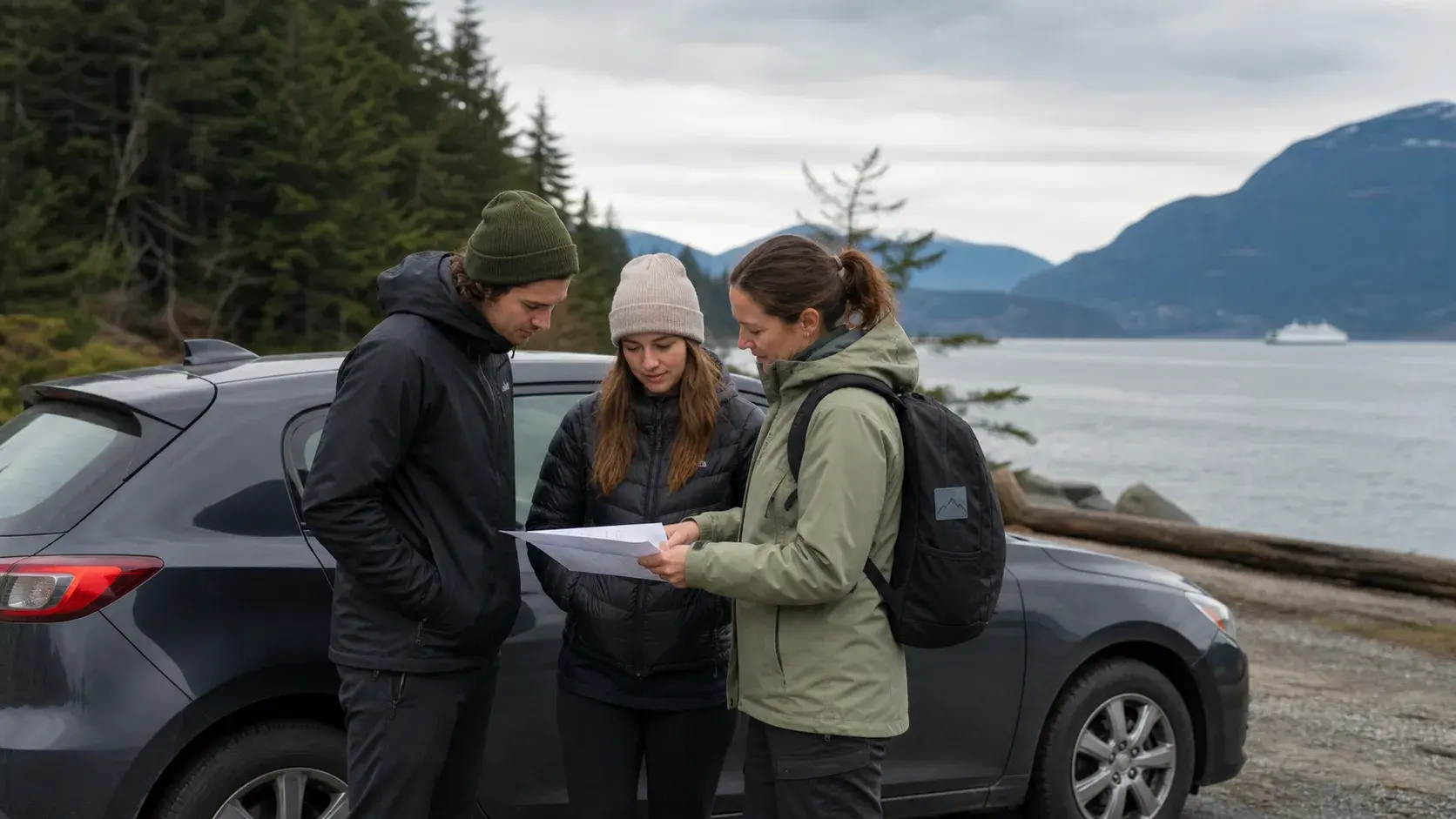
Vancouver · Weekend road trips
Top 10 Road Trips from Vancouver
A good Vancouver road trip starts with the exit plan. Decide how much time you have, whether a ferry belongs in the day and how much mountain or coastal uncertainty your group can enjoy.
Open the guide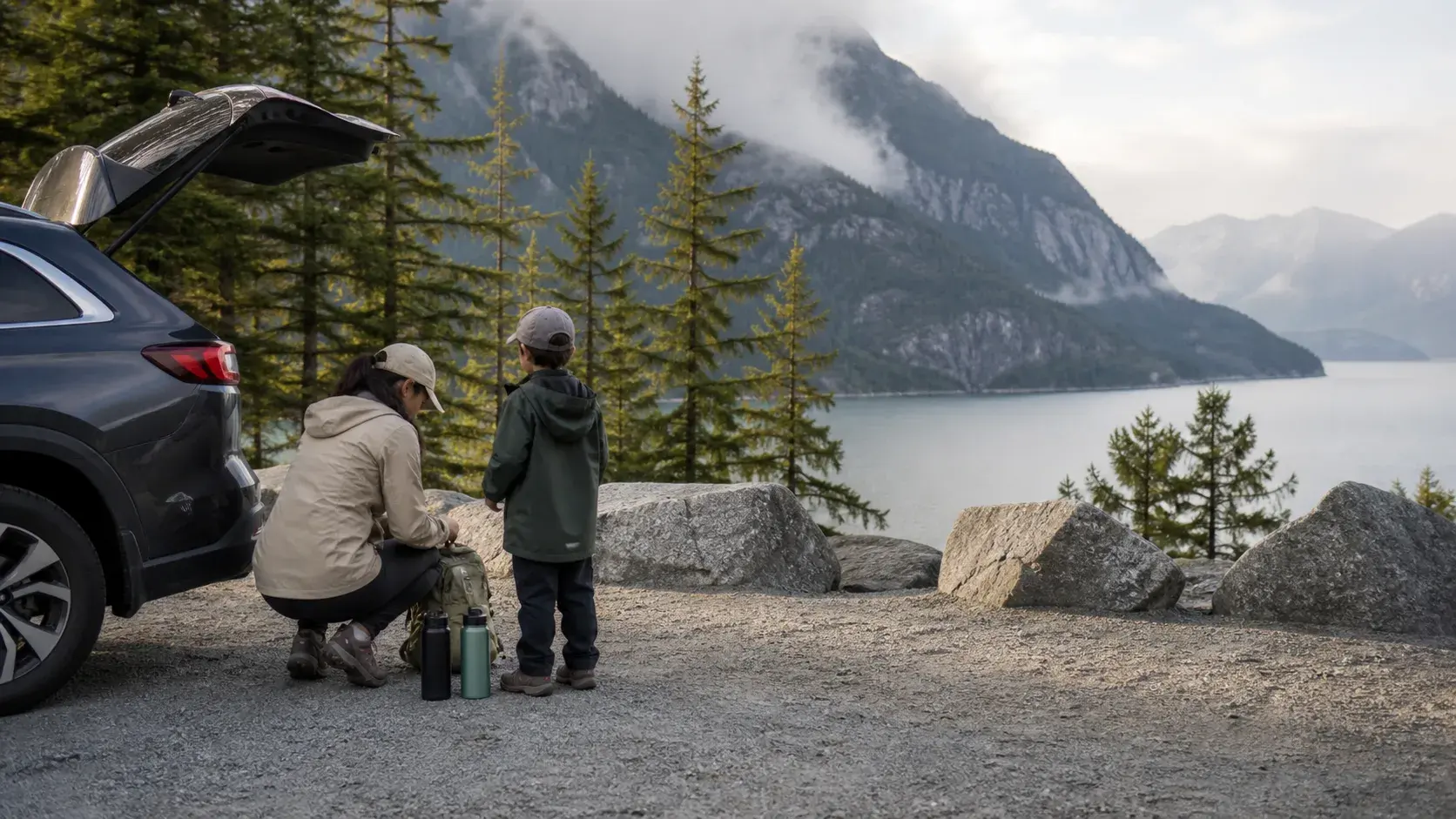
British Columbia · Highway 99
Sea to Sky Highway Road Trip Guide
Ocean, granite, forest and mountain towns arrive quickly on this compact BC route. Choose a few strong stops, check conditions before departure and protect the return drive from becoming rushed.
Open the guide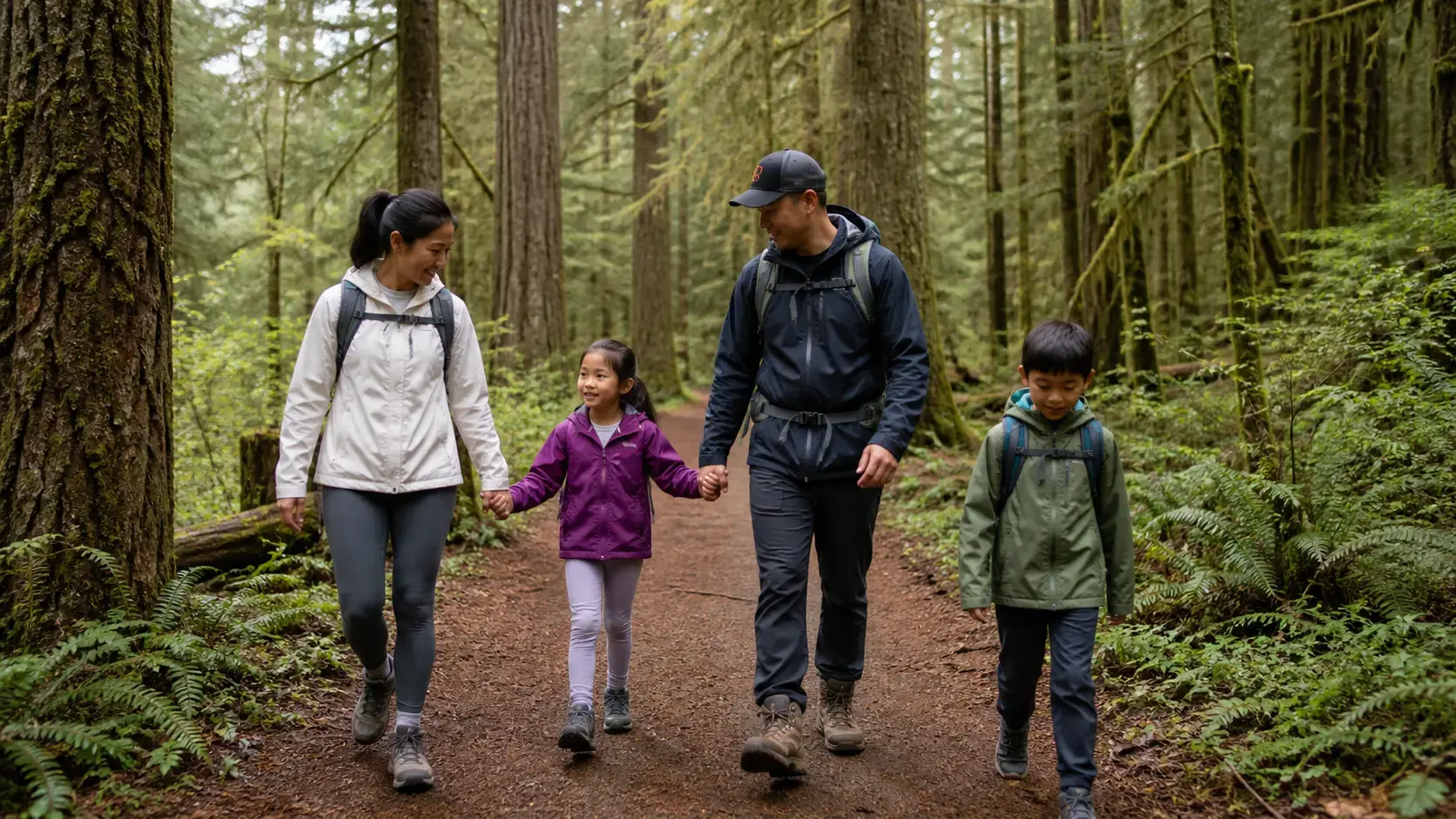
Vancouver · Beginner-friendly trails
Easy Hikes Near Vancouver for Beginners
You do not need to start with a summit. Vancouver’s easiest outdoor days begin with a short trail, a realistic weather check and enough margin to turn around while everyone still feels good.
Open the guide