
British Columbia · Highway 99
Sea to Sky Highway Road Trip Guide
Ocean, granite, forest and mountain towns arrive quickly on this compact BC route. Choose a few strong stops, check conditions before departure and protect the return drive from becoming rushed.
- Region
- Vancouver to Whistler, British Columbia
- Best for
- First-time BC visitors, families and easy outdoor weekends
- Season
- Late spring through early autumn is simplest; check winter tire, road, park and weather guidance outside that window
- Time
- One long day or a calmer two-day weekend
By Horizon Outdoor Editorial TeamPublished 2026-08-29
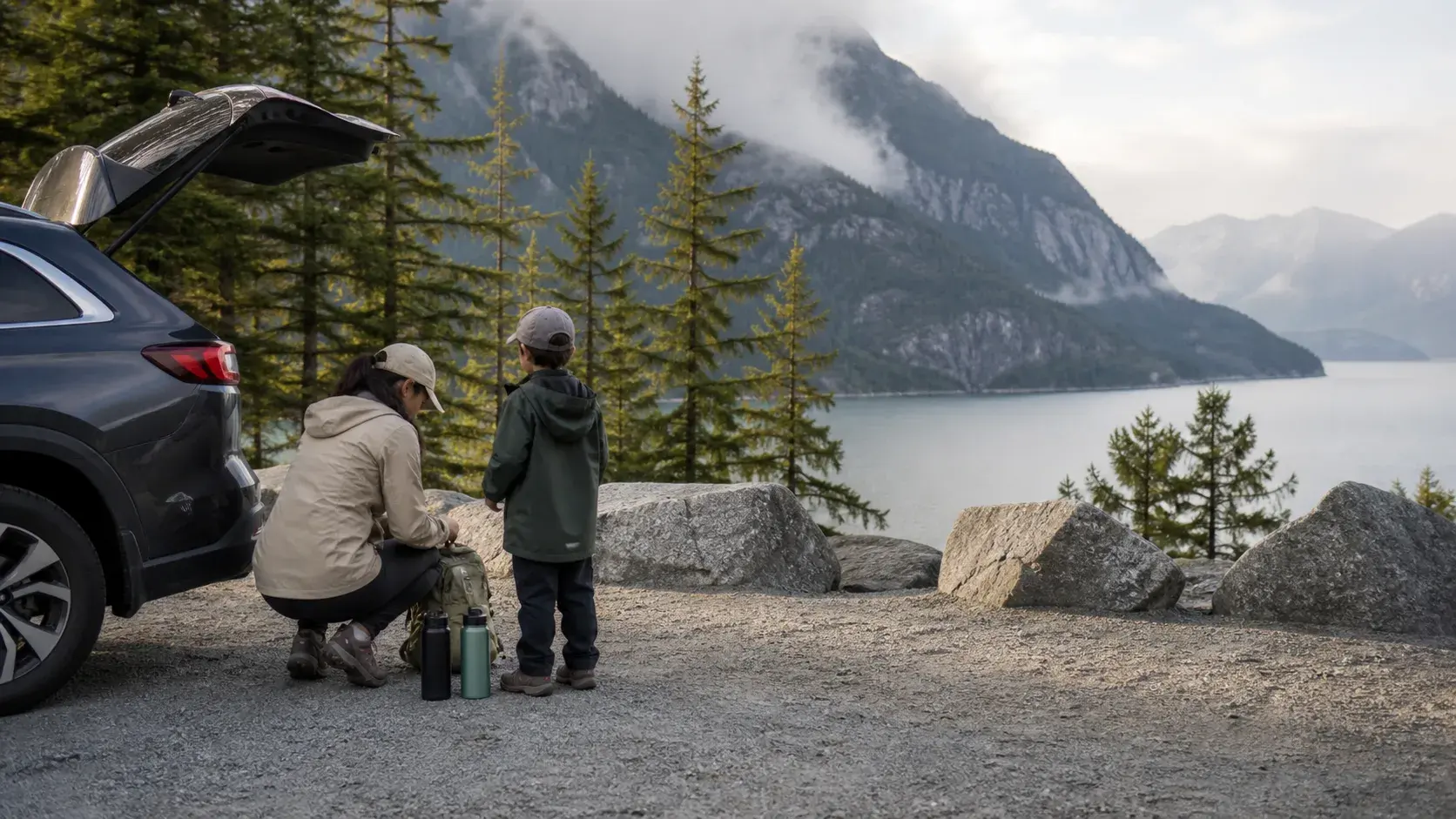
Quick facts
- Route
- Highway 99 from Vancouver toward Squamish and Whistler
- Family pace
- Two or three anchor stops, not every pullout
- Best base
- Squamish for a short weekend; Whistler for a slower second day
- Departure check
- DriveBC, destination forecast and official park advisories
Use Sea to Sky for a first BC outdoor road trip
Choose the Sea to Sky Highway when you want a clear first taste of coastal British Columbia: Howe Sound, granite cliffs, forested stops, Squamish, Whistler and enough outdoor feeling without committing to remote driving. It can work as a day trip, but it becomes better when the plan is selective.
The route is compact enough to tempt overpacking the itinerary. That is the main trap. Every stop has a small cost: parking, washrooms, children leaving and re-entering the car, food timing, weather layers and the time it takes to settle back into the drive. A family plan should treat those costs as real.
Start with two or three anchors, then let anything else be optional. For many families, a waterfall or viewpoint, a Squamish meal break and one Whistler walk are enough for a strong day. More stops can be added only when the road, parking and group energy are still working.
- Good fit: families who want big scenery without a long expedition
- Good fit: visitors starting from Vancouver with limited days
- Good fit: short walks, waterfalls, viewpoints, village time and flexible food stops
A realistic one-day family outline
For a one-day trip, decide before leaving whether the main destination is Squamish or Whistler. If Whistler is the goal, keep the first half of the route lighter. If Squamish is the goal, protect the day from becoming a rushed push north just because the highway continues.
Shannon Falls is a natural short-stop candidate because BC Parks describes it as directly next to Highway 99, with day-use, picnicking, hiking and access toward Stawamus Chief Park. It is also popular, so the useful guidance is not simply "go there"; it is to check current advisories and have a second stop ready if parking or timing does not fit.
Whistler can still work as a day-trip endpoint, but it should not be treated as a quick extra after too many earlier stops. Give the village or an easy park walk its own block of time, then begin the return while children still have patience and daylight remains useful.
- Morning: leave Vancouver early enough to protect parking and daylight
- Midday: choose one Howe Sound or Squamish anchor stop
- Afternoon: continue to Whistler only if the group still has margin
- Return: leave before everyone is tired, hungry and driving in the dark
A calmer two-day plan
The two-day version is the better family shape because it turns the route from a checklist into a weekend. Day 1 can stay close to Howe Sound and Squamish, with food, a short walk and enough time to stop when the weather opens. The overnight removes pressure from the return drive.
Day 2 can focus on one north-side anchor. BC Parks describes Brandywine Falls as a 70 metre waterfall with hiking, picnicking, waterfall viewing and views toward Daisy Lake and surrounding mountains. The same official page also notes seasonal gate and parking considerations, so check the park page before making it the fixed centerpiece.
If the family wants less driving and more town comfort, use Whistler as the second-day anchor. Lost Lake Park is managed by the Resort Municipality of Whistler and is a practical easy-outdoor option near the village in season. Confirm current opening details, access and services before relying on it for food, parking or swimming plans.
- Day 1: Vancouver, Howe Sound viewpoint, Shannon Falls and Squamish
- Night 1: stay in Squamish or Whistler based on budget, timing and the next morning
- Day 2: Brandywine area or an easy Whistler park, then an unhurried return
Plan a rain and crowd alternative before departure
Sea to Sky weather can change quickly across coast, elevation and time of day. Use Environment and Climate Change Canada for the destination forecast and active alerts, then check again before departure. A dry start in Vancouver does not guarantee the same comfort near Squamish or Whistler.
Make a rain plan that is shorter and easier, not simply the same itinerary with wet clothes. Pack a reachable rain shell, warm layer and dry backup for the vehicle. If the weather makes the planned walk unpleasant for the youngest or least comfortable person, switch to a shorter stop, town break or return.
Crowds need a plan too. Popular stops can absorb time through parking and washroom waits. If a stop is full, move on rather than letting one crowded parking lot consume the day. The route has enough scenery that a calmer second-best stop is often better than a tense first choice.
- Rain plan: shorter waterfall or forest stop, warmer layer and dry ride-home kit
- Crowd plan: skip a full parking lot instead of circling until the day collapses
- Energy plan: turn Whistler into an optional extension, not a family obligation
Check road, park and season details the morning you go
DriveBC should be the departure-morning road check for Highway 99 conditions and events. It is also worth checking again before the return drive if weather, construction or traffic has been moving through the corridor.
Official park pages matter because the small details change the experience: gates, parking, trail advisories, washroom availability, pets, sensitive areas and seasonal maintenance. Do not rely on an old saved map, a social post or a third-party review when the official page is available.
Outside the simple late-spring to early-autumn window, raise the planning standard. Winter, shoulder-season weather, smoke, heat and reduced daylight can all change whether the same route is appropriate. When the current guidance does not fit the family, simplify the route before leaving.
- DriveBC for road conditions, closures, construction, events and webcams
- Official park pages for advisories, gate status, parking notes and safety guidance
- Destination forecast and alerts for rain, wind, heat, smoke, snow or rapid changes
Pack for short exits, not a miniature expedition
The Sea to Sky day bag should be light, reachable and useful for repeated short exits. Keep water, snacks, a weather layer, route reference and child comfort items near the top. If the bag becomes so full that every stop requires unpacking, it is working against the trip.
AdventureSmart emphasizes trip planning, communication, extra food and water, extra clothing, navigation, first aid, a light, signalling and shelter appropriate to the outing. For a family road trip, adults should carry and understand the safety items while children carry only lightweight personal items when appropriate.
Keep a fuller dry backup in the vehicle for the ride home. That vehicle kit does not replace what the family may need away from the car, especially at a waterfall, viewpoint or village walk. The useful split is simple: carry the next likely need, store the full reset kit dry in the car.
- Water, snacks and any needed personal medication
- Rain shell, warm layer and one small child backup
- Charged phone, route reference, compact first aid and signalling item
- Waste pouch and wet-item bag for food wrappers, tissues and damp clothing
Leave the corridor easier for the next family
BC Parks responsible recreation guidance applies even on a short roadside stop. Pack out food scraps and waste when facilities are unavailable, leave natural and cultural items in place, stay considerate of shared areas and give wildlife space.
At waterfall and river viewpoints, treat fences, railings and edges as part of the plan, not obstacles to a better photo. BC Parks specifically tells visitors at Brandywine Falls to stay behind fences and away from the river edge. That kind of instruction is worth repeating because family road trips often involve quick stops where attention is split.
Finish the day by resetting the car and day bag. Empty wrappers, dry wet layers, recharge devices and restock the snacks or first-aid items that were used. A route this close to Vancouver is likely to become a repeat trip, and a reset makes the next outing easier.
- Pack out waste when facilities are unavailable
- Stay behind fences and away from river edges where posted or obvious
- Leave natural and cultural items in place
- Give wildlife space and keep food controlled
Common planning mistakes
- Trying to combine every famous stop into one rushed day
- Letting parking waits decide the whole itinerary because there is no backup stop
- Assuming a sunny Vancouver forecast means dry or warm conditions along the whole corridor
- Driving to Whistler as an automatic add-on after the family has already had a full Squamish day
- Leaving all layers, water and child comfort items buried in the vehicle between stops
Printable companion
Download the Canada road trip checklist
A printable list for documents, driving, weather layers, park days and the essentials worth keeping within reach.
Download the free PDFQuestions travellers ask
Can the Sea to Sky Highway be a day trip from Vancouver?
Yes. Choose Squamish or Whistler as the main destination and limit the number of anchor stops. If Whistler is the goal, keep earlier stops brief. If Squamish is enough, let it be enough and return before the day becomes rushed.
Is one day or two days better for families?
Two days is usually calmer because it protects meals, short walks, weather changes and the return drive. One day still works when the plan is selective and the family has a clear turnaround point.
Do I need a four-wheel-drive vehicle?
Not for the main paved Highway 99 route in ordinary conditions. Match the vehicle, tires and driving plan to current DriveBC, weather and seasonal guidance, especially outside the simplest late-spring to early-autumn window.
What should we do if Shannon Falls or Brandywine Falls is too busy?
Move to the backup plan rather than circling until the day loses its shape. A calmer viewpoint, Squamish food stop, easy Whistler walk or shorter return can be a better family decision than forcing one crowded stop.
Sources and currency
Conditions change. Confirm dynamic details again before departure; each source shows its own last-checked date.
- DriveBC: Current road conditions and events (2026-08-31)
- BC Parks: Shannon Falls Park visitor information and advisories (2026-08-29)
- BC Parks: Brandywine Falls Park visitor information and advisories (2026-08-29)
- Resort Municipality of Whistler: Lost Lake Park access and seasonal visitor information (2026-08-29)
- AdventureSmart: Taking the essentials for an outdoor outing (2026-08-29)
- AdventureSmart: Trip plan contents and communication guidance (2026-08-29)
- Environment and Climate Change Canada: Local forecasts and active weather alerts for Canada (2026-08-29)
- BC Parks: Trip planning and safety for BC Parks visits (2026-08-29)
- BC Parks: Responsible recreation in BC Parks (2026-08-29)
Continue planning
Related field guides
Vancouver · Weekend road trips
Top 10 Road Trips from Vancouver
A good Vancouver road trip starts with the exit plan. Decide how much time you have, whether a ferry belongs in the day and how much mountain or coastal uncertainty your group can enjoy.
Open the guide
British Columbia · Scenic drive shortlist
Top 10 Scenic Drives in British Columbia
BC’s best drives are not interchangeable. Some are easy weekend routes near Vancouver; others ask for ferries, mountain weather, long distances or remote-road judgment.
Open the guide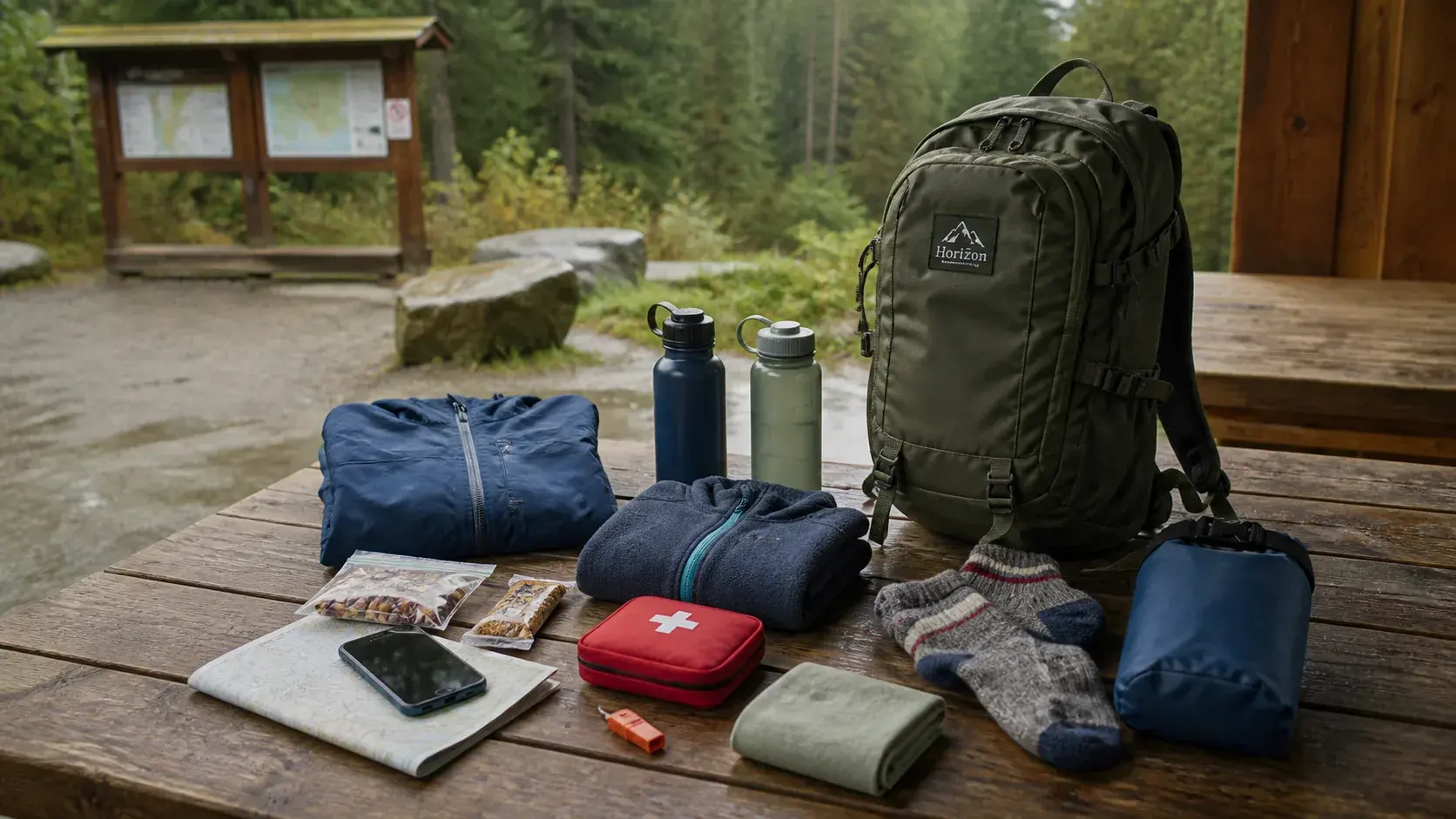
BC family outings · Day bag
Family Outdoor Day Bag Checklist for BC
Use one reachable bag system for park walks, short hikes, picnic stops and scenic days when the car may not be close enough to solve the next small problem.
Open the guide