
Nova Scotia · Cape Breton
Cabot Trail Road Trip Guide
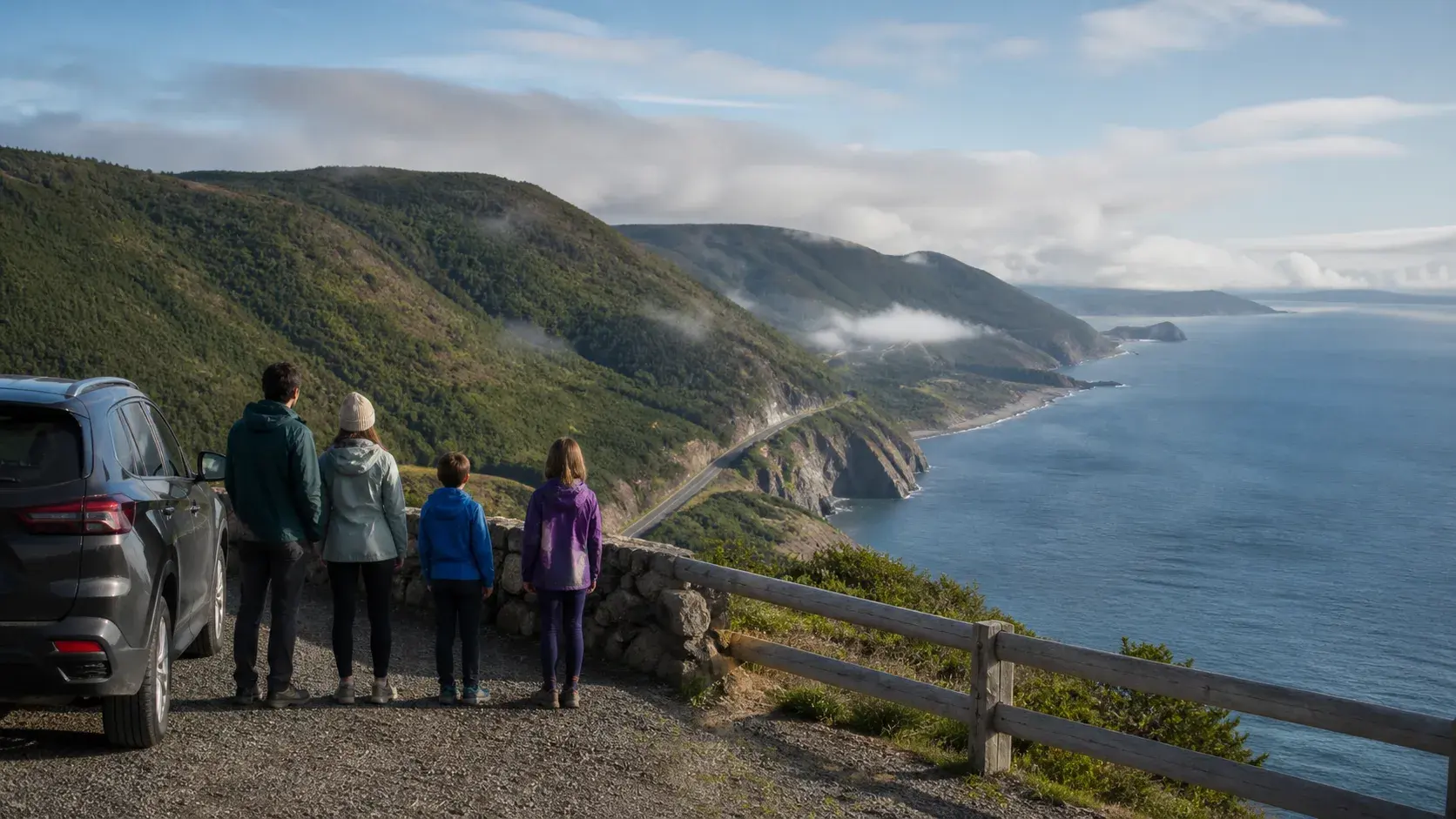
The Cabot Trail is not a loop to finish. It is a coastal-and-highland drive where the best moments often come from slowing down.
- Region
- Cape Breton Island, Nova Scotia
- Best for
- Families, first-time Atlantic Canada visitors, newcomers and travellers who want coastal scenery without rushing
- Season
- Late spring through autumn is simplest; shoulder seasons need closer service and weather checks
- Time
- Three to five days for a comfortable first visit
By Horizon Outdoor Editorial TeamPublished 2026-08-30Updated 2026-08-31
Quick facts
- Route length
- About 298 km around northern Cape Breton Island
- Park section
- Cape Breton Highlands National Park shapes the core of the drive
- Best pace
- Three days minimum; four or five days feels calmer
- Check before leaving
- Parks Canada, Nova Scotia 511, weather and ferry information
Choose the Cabot Trail when you want Atlantic scale without a race
Choose the Cabot Trail if you want a road trip that feels distinctly Atlantic Canadian: ocean edges, forested highlands, small communities, national park lookouts and enough short walks to make the drive active without turning it into a hiking expedition.
Tourism Nova Scotia describes the Cabot Trail as a 298 km route around northern Cape Breton Island. Parks Canada notes that 106 km of the route runs through Cape Breton Highlands National Park, so park entry, trail conditions and official notices matter for the core section of the trip.
- Best fit: 3 to 5 days, with one or two nights on each side of the loop
- Good bases: Baddeck, Chéticamp, Ingonish, Pleasant Bay or nearby community stays
- Main appeal: coastal views, national park lookouts, beaches, short trails and local food stops
- Planning mindset: leave room for fog, rain, wind, road work and slower family mornings
Use a comfortable three-day rhythm
The loop can be driven faster, but a first visit is better when the route has breathing room. A three-day plan gives families time to stop without turning every lookout into a schedule problem.
For a four- or five-day version, add a second night near Ingonish or Chéticamp. That extra night is useful if you are travelling with children, want to walk more than one trail, or need a weather backup day.
- Day 1: start in Baddeck or the St. Ann’s area and keep the first day light
- Day 2: build the main park day around Ingonish, lookouts, beaches and one short trail
- Day 3: cross the west-coast side slowly with Chéticamp, Pleasant Bay and sunset timing in view
- Extra day: keep it for fog, Skyline Trail timing, a beach reset or a second short walk
Plan the national park section deliberately
Cape Breton Highlands National Park is the part of the Cabot Trail where casual road-trip planning needs to become more deliberate. Confirm park entry requirements, seasonal services, camping reservations, trail notices and any fire or access restrictions before you leave reliable service.
Parks Canada is the best source for park entry, camping, trails, safety notices and current access. If camping or using a popular trail, use official reservation systems rather than assuming same-day availability.
- Carry or buy the correct Parks Canada entry pass for the days you enter the park
- Check current bulletins before committing to hikes or picnic plans
- Reserve camping through Parks Canada when needed
- Expect shoulder-season services to feel different from July and August
Treat Skyline Trail like a timed park experience
Skyline Trail is one of the most recognised Cabot Trail stops, but it should be planned like a limited-capacity park experience, not a spontaneous roadside pullout. Check the reservation rule for your travel year and keep an alternate short walk in mind.
For the 2026 season, Parks Canada says Skyline Trail parking reservations are required from June 26 to October 25. Reserve the time window that fits your driving day instead of forcing a rushed loop.
- Reserve the required parking window when your season requires it
- Bring layers because exposed lookouts can feel colder and windier than town forecasts
- Stay on marked routes and respect closures
- Use a shorter Parks Canada trail or beach stop if timing or weather does not work
Check roads, ferries and fuel before the highland stretch
The Cabot Trail is a real driving route, not a closed scenic parkway. Use official road updates before and during the trip, especially after storms, during construction season or when taking ferry-linked approaches.
Signal can be uneven and conditions can change quickly around coastal weather, highland roads and active maintenance. Treat fuel, food and maps as part of the itinerary.
- Check Nova Scotia 511 for current road conditions, closures and construction
- If using the Englishtown Ferry area, confirm current provincial ferry service
- Start park sections with a comfortable fuel margin
- Carry snacks, water and offline maps so a delay does not become a family problem
Build the trip around weather and wildlife safety
Late spring through early autumn is the easiest window for most first-time visitors, but Cape Breton weather still asks for flexibility. Fog, rain, wind and cooler highland temperatures can change the drive in a few hours.
Wildlife sightings are part of the appeal, but they should not override safe driving or park rules. Pull fully off the road only where it is safe and legal, keep children close, and never feed or approach animals.
- Check Environment Canada forecasts close to departure
- Pack rain protection, a warm layer and footwear for wet trails
- Use designated pullouts when stopping for views or wildlife
- Teach children that animals are watched from space, not approached
Common planning mistakes
- Trying to finish the Cabot Trail as a single long checklist day
- Forgetting that Cape Breton Highlands National Park requires official park planning
- Assuming Skyline Trail parking works without checking the current reservation rule
- Skipping road, ferry and weather checks because the route looks simple on a map
Printable companion
Download the scenic drive comfort checklist
A printable list for an unhurried drive, with comfort, medication, weather, food and roadside essentials kept easy to reach.
Download the free PDFQuestions travellers ask
How many days do you need for the Cabot Trail?
Three days is a comfortable first-visit minimum. You can drive the loop faster, but three to five days gives better space for Cape Breton Highlands National Park, weather changes, short walks and family pacing.
Do you need a Parks Canada pass?
You need to follow Parks Canada entry requirements when visiting Cape Breton Highlands National Park. Confirm the current pass, fee and reservation details directly with Parks Canada before travel.
Is Skyline Trail worth planning around?
Yes, if the weather and reservation timing work. For 2026, Parks Canada lists required Skyline Trail parking reservations from June 26 to October 25. Check the current year’s rule before building the day around it.
Where should I check road conditions?
Use Nova Scotia 511 for current road conditions and events. Also check Parks Canada bulletins for national park access, trail notices, fire restrictions and safety updates.
Sources and currency
Conditions change. Confirm dynamic details again before departure; each source shows its own last-checked date.
- Tourism Nova Scotia: Cabot Trail official route overview (2026-08-30)
- Parks Canada: Cape Breton Highlands National Park visitor information (2026-08-30)
- Parks Canada: Getting to Cape Breton Highlands National Park (2026-08-30)
- Parks Canada: Cape Breton Highlands National Park hiking trails (2026-08-30)
- Parks Canada: Skyline Trail parking reservation information (2026-08-30)
- Parks Canada: Cape Breton Highlands National Park safety and current restrictions (2026-08-30)
- Province of Nova Scotia: Nova Scotia road conditions and traffic events (2026-08-30)
- Province of Nova Scotia: Nova Scotia provincial ferry service information (2026-08-30)
- Environment and Climate Change Canada: Cape Breton Highlands weather forecast (2026-08-30)
- Parks Canada: Parks Canada reservations (2026-08-30)
- Parks Canada: Wildlife safety in national parks (2026-08-30)
Continue planning
Related field guides

Canada · First-trip shortlist
Canadian Road Trips for First Visits
Canada is too large for a single “best” road trip. Start with the landscape you want, the driving rhythm you enjoy and the logistics you are ready to manage.
Open the guide
Printable planning guide
Canada Road Trip Packing Checklist
Start with the essentials that protect the trip, then remove anything your route, season and travelling party do not need.
Open the guide
Canada · First national park trip
Canada National Parks First-Time Guide
A first national park visit works best when the logistics are visible before the scenery takes over: entry, reservations, roads, weather, wildlife and a day plan that can shrink.
Open the guide