
Alberta · Banff and Jasper
Icefields Parkway Road Trip Guide
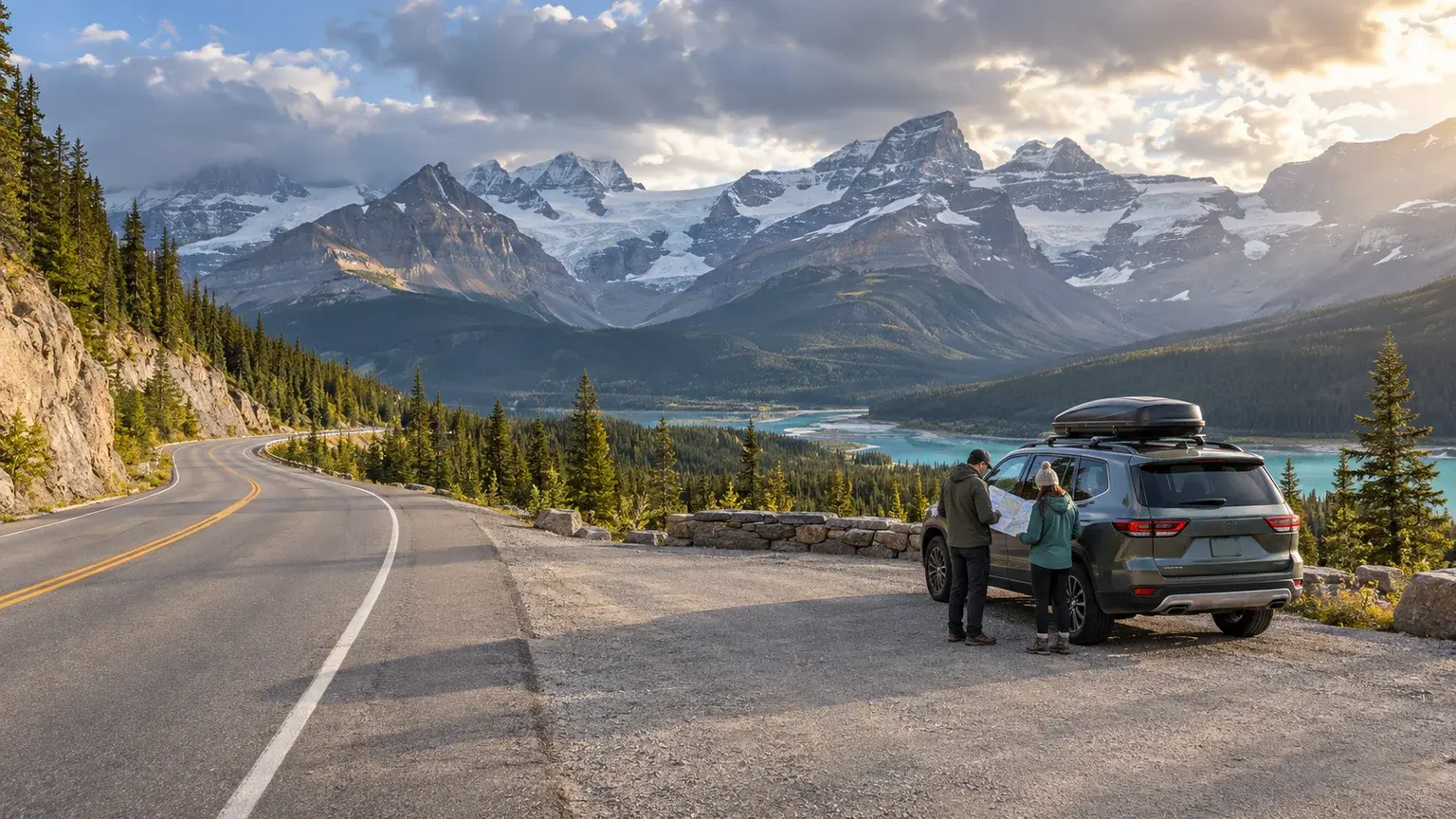
The Icefields Parkway rewards travellers who plan with margin. Build the drive around fuel, weather, wildlife, short walks and the long pauses the Canadian Rockies deserve.
- Region
- Lake Louise to Jasper, Alberta
- Best for
- First-time Rockies visitors and scenic-drive travellers
- Season
- June to September is most accessible
- Time
- 2–4 days
By Horizon Outdoor Editorial TeamPublished 2026-08-29Updated 2026-08-31
Quick facts
- Route
- Highway 93 North
- Comfortable pace
- Three days between Banff and Jasper
- Primary check
- Parks Canada and Alberta 511
- Carry
- Fuel margin, food, water and warm layers
Who should choose this drive
Choose the Icefields Parkway when the road itself is a major part of the trip. It suits travellers who want a succession of mountain landscapes, short walks and designated viewpoints, and who can accept that weather, parking or a wildlife closure may change which stops are possible. It is a poor fit for a tight transfer day with a fixed evening commitment.
The official route connects Lake Louise and Jasper through two national parks. That setting means ordinary road-trip decisions are joined by park entry, wildlife, closures and limited-service considerations. First-time visitors should plan it as a remote scenic corridor between prepared bases, not as an urban highway where food, fuel and connectivity can be assumed at any moment.
- A first Canadian Rockies trip
- A photography-focused scenic drive
- A slower national-park itinerary
Choose the direction from the rest of the trip
There is no universally better direction. Start from the base that already fits the broader journey and avoid doubling back simply to copy someone else’s itinerary. Northbound travel can follow a Banff or Lake Louise stay; southbound travel can follow Jasper. The practical difference is where you can fuel, sleep and absorb a delayed arrival.
A route plan should name the overnight bed at both ends before it names every viewpoint. Check the current approach road and park notices on the morning of departure, then decide which optional stops remain realistic. Protecting the arrival window prevents fading daylight or an unexpected closure from turning the final section into a rushed drive.
- Northbound: begin after a settled Lake Louise or Banff night
- Southbound: leave Jasper with the vehicle and day bags already ready
- Either direction: protect the final two hours from a fixed appointment
- Avoid adding a long airport transfer to the same scenic day
A three-day rhythm
A three-day rhythm does not require changing accommodation every night on the parkway. One day can be used to settle into the southern base and complete nearby park checks, the second for the main scenic corridor, and the third for a quieter Jasper-area plan. This gives the long middle day a clear purpose without treating the surrounding parks as an afterthought.
On the corridor day, choose one longer anchor stop and a short list of optional pullouts. Keep waterfalls, lake viewpoints and short walks in an order that follows the road instead of crossing back and forth. If parking is full or conditions remove one stop, continue safely and use the next option rather than waiting on the roadway.
- Day 1: Banff or Lake Louise area
- Day 2: Bow Lake, Peyto area and Columbia Icefield corridor
- Day 3: Waterfalls, Jasper arrival and resupply
Fuel, food and connectivity
Parks Canada describes the parkway as a remote road with limited services and no dependable continuous mobile coverage. Begin with enough fuel for the corridor, carry food and water, and download the map, lodging information and official contact details before leaving the base. Service availability varies by season, so an older travel post is not a supply plan.
Keep the cabin organized for the drive: water, weather layers, medication, phone power and the day bag should remain reachable. Fuel and meals are better handled before the scenic day becomes busy. This is not an invitation to carry expedition equipment for a summer drive; it is a reason to remove avoidable dependencies on a shop, signal or exact arrival time.
- Begin with a comfortable fuel margin
- Carry food and water for delays
- Save maps and reservation details offline
Confirm park entry, reservations and stop access
Driving the corridor takes place inside Banff and Jasper national parks, so check the current Parks Canada entry requirement before departure. A park pass does not automatically create parking, activity or accommodation access. Keep every reservation confirmation separate from the general entry check and read the instructions that apply to the exact place and date.
The most resilient itinerary has one or two commitments and several optional stops. If a booked activity has a check-in window, allow enough road margin to reach it without speeding or skipping safety checks. If the day has no reservations, use that flexibility deliberately and avoid turning every suggested viewpoint into a new deadline.
- Check the current park-entry requirement for the travel date
- Confirm reserved accommodation or activities through official channels
- Review current parking and closure information at both park bases
- Keep an unreserved roadside alternative for each anchor stop
Wildlife and roadside stops
A wildlife sighting never makes an unsafe stop acceptable. Slow only as traffic and official guidance allow, stay in the vehicle when required and use designated pullouts rather than the travel lane or shoulder. Never approach, feed or crowd an animal for a photograph, and do not copy a cluster of stopped vehicles without first confirming that the location is legal and safe.
Wildlife also changes the driving rhythm. Scan well ahead, respect posted speeds and avoid planning the route so tightly that a brief traffic delay creates pressure to hurry later. Food, garbage and scented items should remain controlled at stops; the responsibility continues at picnic areas, trailheads and accommodation, not only when an animal is visible.
- Follow park distance guidance
- Use designated pullouts
- Do not feed or approach animals
Mountain weather
Elevation can make the corridor colder and less predictable than conditions in Banff or Jasper suggest. Parks Canada advises travellers to prepare for cold, wind, rain and possible snow even outside winter. Carry a warm layer and weather shell in the cabin, and check both the official forecast and Alberta 511 rather than relying on the weather at one endpoint.
Poor visibility, road work, avalanche control or severe weather can remove the value of a scenic day or close part of the route. Keep a base-area alternative and be willing to delay or turn back. Winter travel requires current tire rules, a winter-ready vehicle and experience beyond this general itinerary; it should never be inferred from a summer-oriented packing list.
- Carry a warm layer in summer
- Check closures before departure
- Keep a shorter alternative for poor visibility
Common planning mistakes
- Treating the route as a single photo-stop checklist
- Starting without enough fuel, food or water
- Stopping unsafely when wildlife appears
Printable companion
Download the Canada road trip checklist
A printable list for documents, driving, weather layers, park days and the essentials worth keeping within reach.
Download the free PDFQuestions travellers ask
Can I drive the parkway in one day?
It is possible, but a one-day transit leaves little resilience for weather, wildlife, walks or parking. Two or more days is a calmer first visit.
Do I need a park pass?
National park entry requirements can change. Confirm the current pass and reservation details directly with Parks Canada.
Is mobile service reliable?
Do not depend on continuous coverage. Save maps, lodging details and emergency information before you leave town.
Sources and currency
Conditions change. Confirm dynamic details again before departure; each source shows its own last-checked date.
- Parks Canada: Icefields Parkway planning, services and safety information (2026-08-31)
- Government of Alberta: Alberta road conditions (2026-08-31)
- Parks Canada: Plan your national park visit (2026-08-31)
- Parks Canada: Banff National Park visitor information and bulletins (2026-08-31)
- Parks Canada: Jasper National Park trip-planning essentials (2026-08-31)
Continue planning
Related field guides
Canadian Rockies · Parkway planning
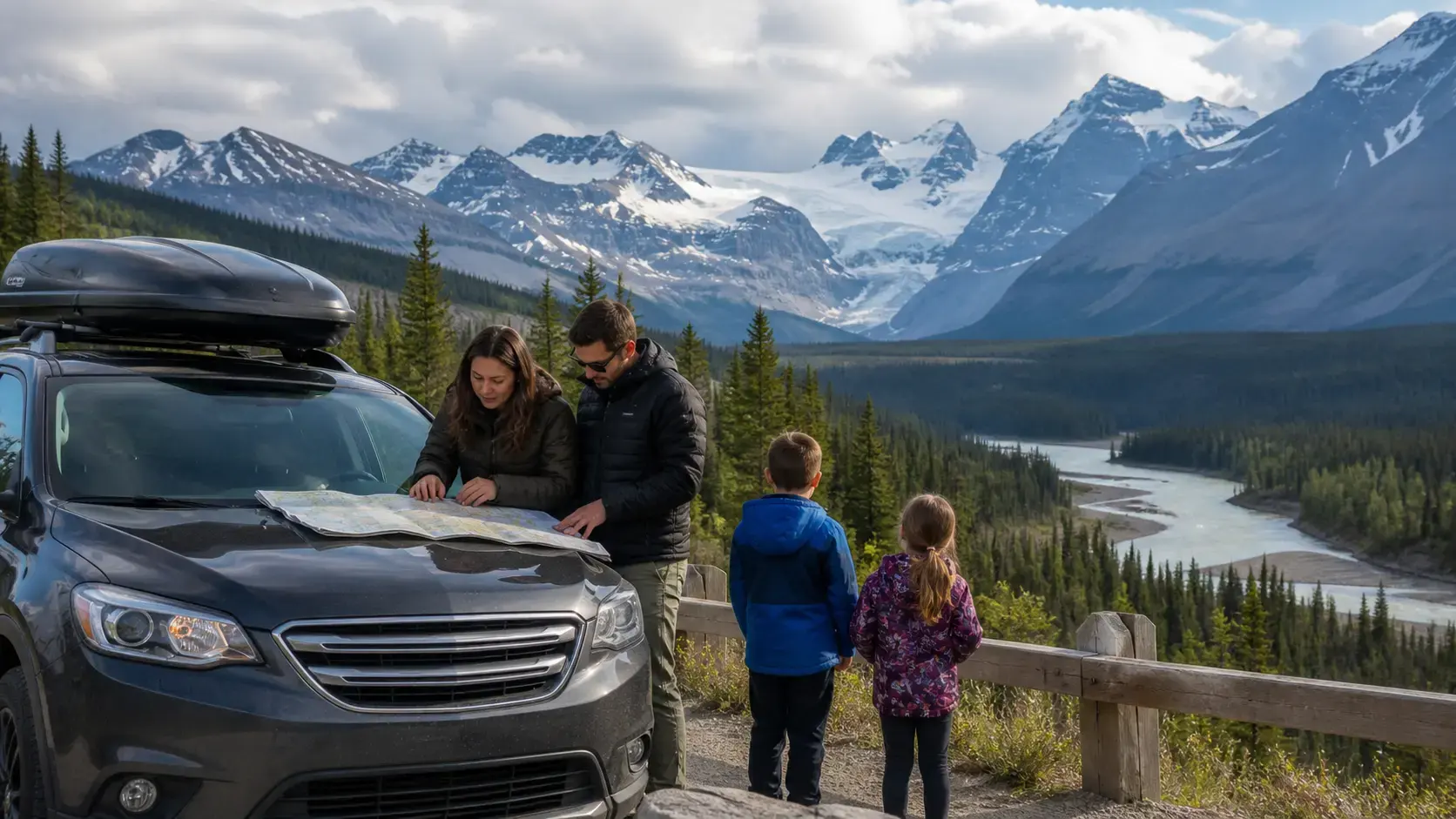
Banff to Jasper Road Trip Stops
The drive between Banff and Jasper is not a transfer day to rush through. Choose fewer stops, check the official conditions and leave enough daylight for mountain weather, wildlife and return-plan changes.
Open the guide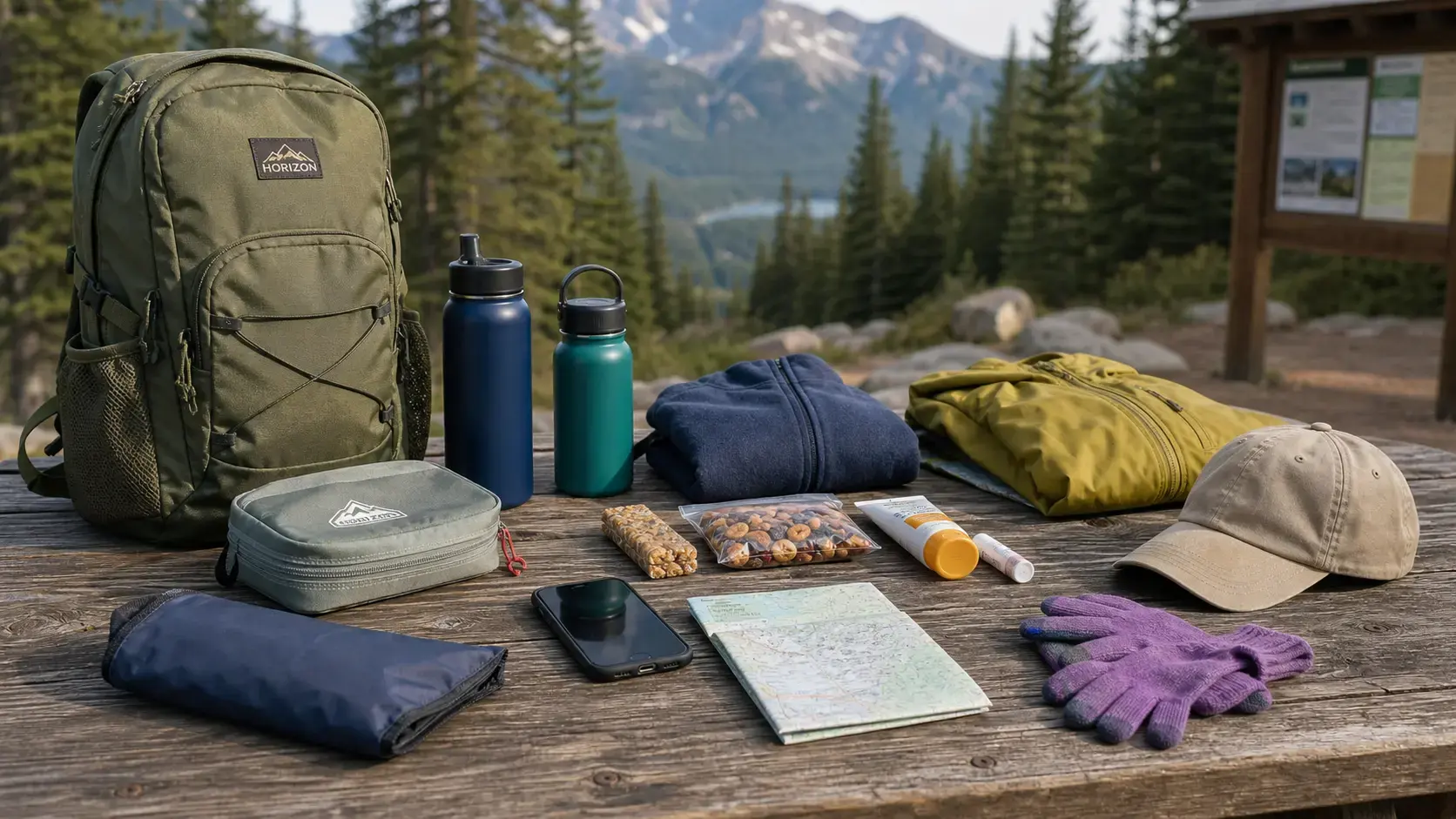
National parks · Day bag system
Canada National Park Day Bag Checklist
A good national park day bag is small enough to carry and organized enough to solve the ordinary problems that end good days early.
Open the guide
Canada · First-trip shortlist
Canadian Road Trips for First Visits
Canada is too large for a single “best” road trip. Start with the landscape you want, the driving rhythm you enjoy and the logistics you are ready to manage.
Open the guide