
Alberta–Saskatchewan · Prairie route
Prairie Badlands Road Trip Guide
Canada’s prairie badlands are not one continuous attraction. The Drumheller valley, Dinosaur Provincial Park and Grasslands National Park each deserve their own base and access plan, with open-country transfers treated as part of the journey.
- Region
- Southern Alberta and southern Saskatchewan
- Best for
- Road-trippers interested in geology, fossils, prairie ecology and dark skies
- Season
- Late spring through early fall for a classic route; verify heat, storms and seasonal services
- Time
- Seven to ten days for all three clusters without constant hotel changes
By Horizon Outdoor Editorial TeamPublished 2026-09-10
Quick facts
- Three clusters
- Drumheller, Dinosaur Provincial Park and Grasslands
- Key distinction
- Dinosaur is not in Drumheller; Grasslands has East and West Blocks
- Road habit
- Refuel early and download each rural leg
- Exposure checks
- Heat, wind, storms, smoke, daylight and services
Treat the badlands as three separate route clusters
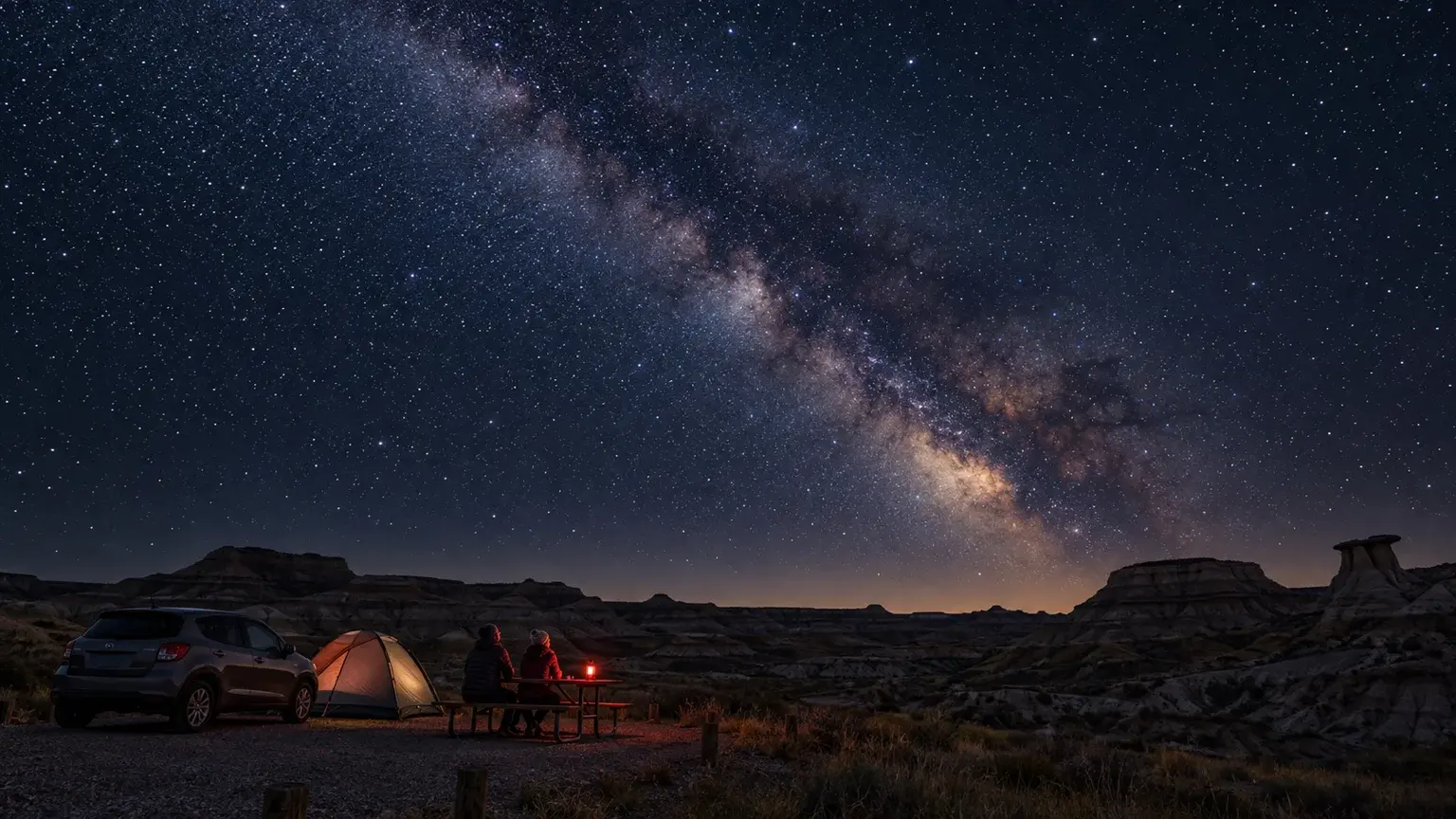
Drumheller provides a town base for the Red Deer River valley and surrounding badlands. Dinosaur Provincial Park lies in a different part of southern Alberta with its own visitor centre, campground, trails and programs. Grasslands National Park lies farther east in Saskatchewan and is itself divided into East and West Blocks.
A practical trip uses one base for each chosen cluster. Do not book a Drumheller hotel and assume Dinosaur Provincial Park is a nearby morning stop, or place both Grasslands blocks into the same casual park day. Map the actual access roads and services before committing to nights.
- Cluster 1: Drumheller valley
- Cluster 2: Dinosaur Provincial Park
- Cluster 3: one or both Grasslands blocks
- Transfer days: open-country driving with planned services
Reserve Dinosaur Provincial Park activities before shaping the Alberta leg
Dinosaur Provincial Park protects a sensitive fossil landscape. Use Alberta Parks information for the current trails, visitor facilities, campground and program choices. Some guided experiences require reservations and may provide access or interpretation that an independent roadside stop cannot.
Choose the program or self-guided activity first, then set the overnight base. Stay on designated trails and do not remove fossils, rocks or natural material. In hot or stormy conditions, shorten the exposed portion rather than forcing the booked day to match an ideal photograph.
- Check current programs and reserve through Alberta Parks
- Use designated routes in the protected landscape
- Keep an indoor or shorter heat alternative
Choose the Grasslands block by experience and access
Grasslands National Park’s West Block and East Block have different access points, visitor services and landscapes. The West Block is associated with the Frenchman River Valley and an Ecotour Scenic Drive; the East Block includes the Rock Creek area and badlands. Read the current Parks Canada map and directions before deciding whether the trip needs one block or both.
Services and facilities can be seasonal and limited. Confirm reception hours, campground arrangements, drinking-water guidance, road suitability and wildlife safety for the exact block. A dark-sky evening is most enjoyable when the return to the campsite or lodging is already settled.
- Choose East, West or both before booking
- Read the exact block’s access and service information
- Plan the post-sunset return in daylight
Plan rural transfers around fuel, surfaces and daylight
The open map can make prairie roads appear simple, but fuel, food, construction, gravel surfaces and mobile reception still shape the day. Refuel in a planned community, carry water and food for delays, and download the next accommodation and park directions. Do not assume every road suggested by a navigation app suits the vehicle or current weather.
Use Alberta 511 for the Alberta legs and Saskatchewan Highway Hotline after crossing the province. Review the route while parked, not while driving. If a storm, dust, smoke or poor visibility changes the road, wait or use the official alternate rather than improvising across an unfamiliar grid.
- Refuel before the rural leg
- Save the official park directions offline
- Check the correct province’s road service
Build the route around exposure and recovery
Badlands and mixed-grass prairie can be exposed to heat, sun, wind and fast-moving storms. Start outdoor activities earlier when appropriate, carry water and sun protection, and follow current park advice. Keep a short interpretive stop or town-based activity ready when conditions make a longer trail a poor choice.
Leave one flexible half-day before the cross-province transfer. It can absorb a guided-program change, a storm or the wish to stay for evening light. If unused, it becomes rest before the next rural drive. The route should make the land easier to understand, not turn every open horizon into pressure to keep moving.
- Schedule exposed activity for suitable conditions
- Keep water and layers reachable
- Use one buffer before the longest transfer
Common planning mistakes
- Assuming Dinosaur Provincial Park is in Drumheller
- Treating Grasslands East and West Blocks as one entrance
- Following an unverified navigation shortcut on rural roads
- Waiting until the fuel warning to find the next service
- Planning every badlands activity for the hottest part of the day
Printable companion
Download the Canada road trip checklist
A printable list for documents, driving, weather layers, park days and the essentials worth keeping within reach.
Download the free PDFQuestions travellers ask
Are Drumheller and Dinosaur Provincial Park the same place?
No. They are separate Alberta badlands clusters with different access, facilities and planning needs. Give each its own day and practical base.
Can we visit both Grasslands blocks in one day?
The blocks have separate access and services. Most first-time trips should choose one block per day and verify the actual transfer before deciding to include both.
How long does the full Alberta-to-Saskatchewan route need?
Seven to ten days is a useful editorial range for all three clusters. Shorter trips should remove a cluster rather than compress rural transfers and park time.
What should we check before a prairie transfer?
Review the correct provincial road service, destination weather, official park directions, fuel, food, water, surface suitability, mobile coverage assumptions and daylight.
Sources and currency
Conditions change. Confirm dynamic details again before departure; each source shows its own last-checked date.
- Alberta Parks: Dinosaur Provincial Park information and facilities (2026-09-10)
- Alberta Parks: Dinosaur Provincial Park interpretive program guide (2026-09-10)
- Parks Canada: Grasslands National Park visitor planning (2026-09-10)
- Parks Canada: Grasslands facilities and services (2026-09-10)
- Parks Canada: Grasslands hours of operation (2026-09-10)
- Government of Alberta: Alberta road conditions and events (2026-09-10)
- Government of Saskatchewan: Saskatchewan Highway Hotline (2026-09-10)
- Environment and Climate Change Canada: Canadian weather forecasts and alerts (2026-09-10)
Continue planning
Related field guides
Canada · First national park trip
Canada National Parks First-Time Guide
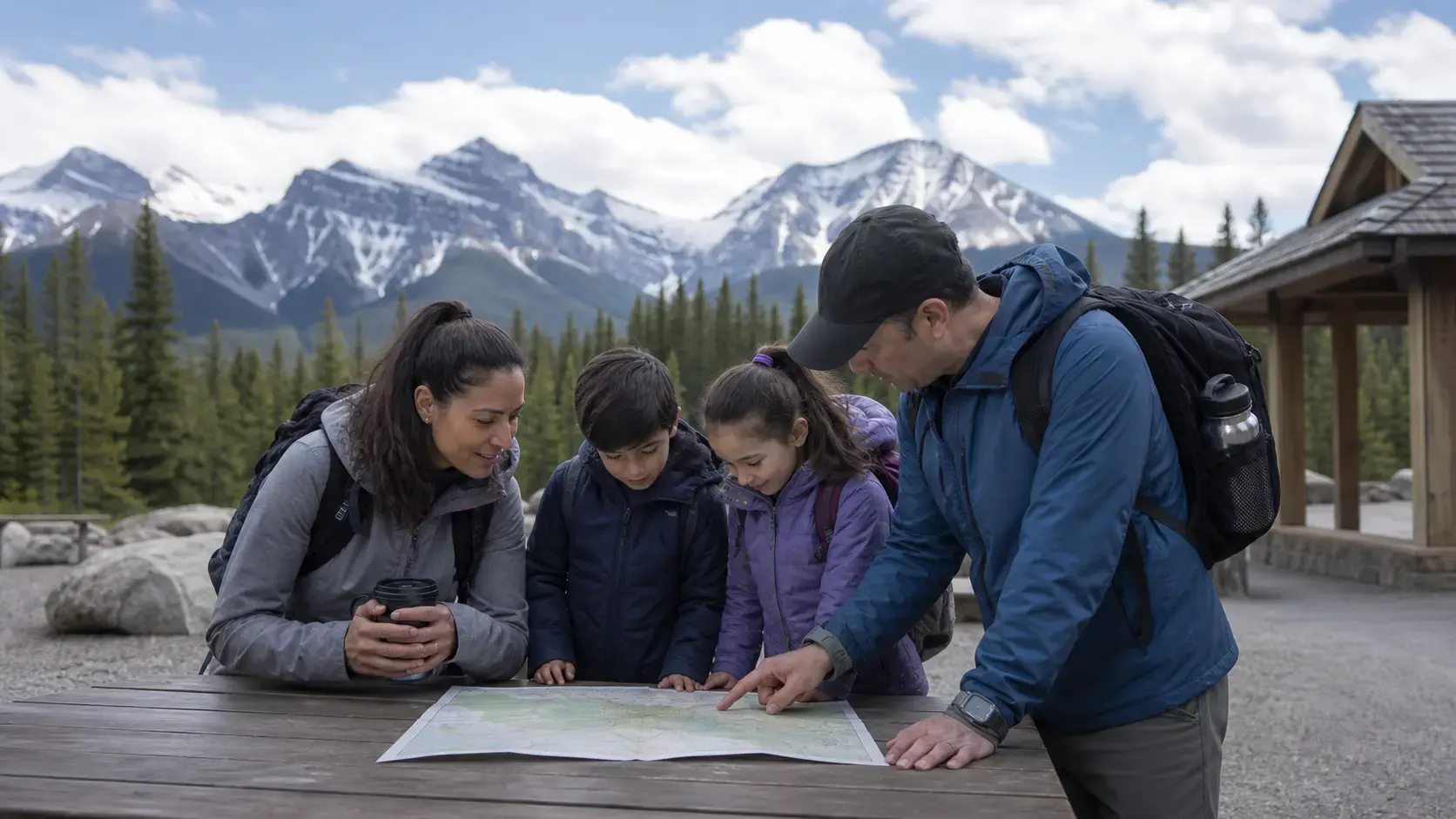
A first national park visit works best when the logistics are visible before the scenery takes over: entry, reservations, roads, weather, wildlife and a day plan that can shrink.
Open the guide
Printable planning guide
Canada Road Trip Packing Checklist
Start with the essentials that protect the trip, then remove anything your route, season and travelling party do not need.
Open the guide
Canada · First-trip shortlist
Canadian Road Trips for First Visits
Canada is too large for a single “best” road trip. Start with the landscape you want, the driving rhythm you enjoy and the logistics you are ready to manage.
Open the guide