
BC family outings · Day bag
Family Outdoor Day Bag Checklist for BC
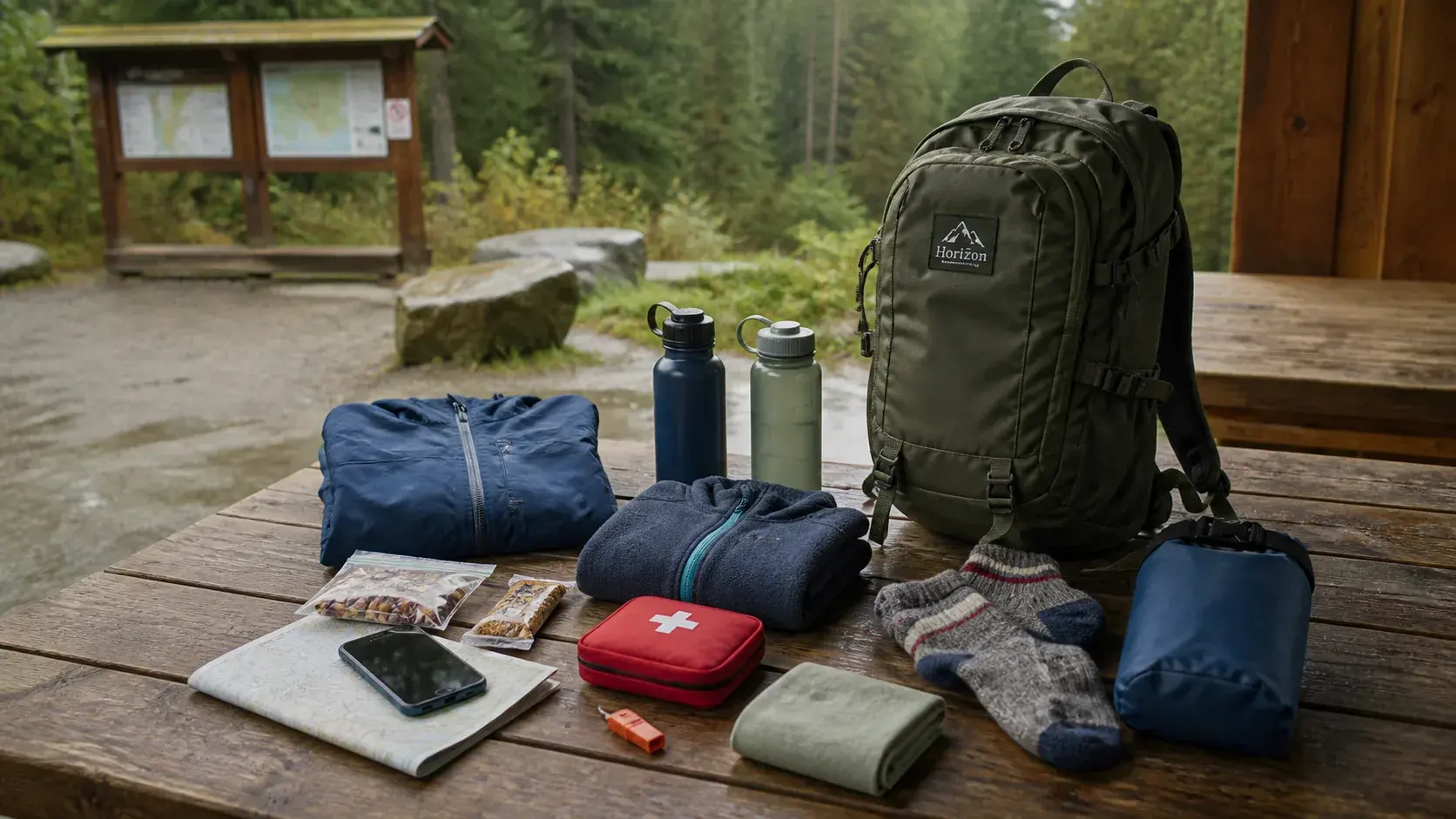
Use one reachable bag system for park walks, short hikes, picnic stops and scenic days when the car may not be close enough to solve the next small problem.
- Region
- British Columbia
- Best for
- Families planning short park days, easy trails, picnic stops and scenic outdoor routines in BC
- Season
- Year-round with weather, daylight and destination-specific adjustments
- Time
- 10 to 20-minute packing review before a short family outing
By Horizon Outdoor Editorial TeamPublished 2026-08-29
Quick facts
- Best use
- Short family walks, park days and picnic stops
- Carry first
- Water, layers, snacks, medication and navigation
- Adult control
- Keep safety tools and medication with a responsible adult
- Reset habit
- Empty, dry, restock and resize after each outing
Give the day bag one clear job
A family day bag is not the whole trunk in backpack form. Its job is to keep the useful items reachable after everyone has stepped away from the car: water, food, layers, needed personal items, navigation and the small safety basics that make a short delay easier to handle.
Before packing, check the exact destination forecast and the official park page where one exists. BC Parks reminds visitors to look for advisories such as closures, hazardous trail conditions and weather warnings before setting out. A nearby trailhead, beach, lake or mountain pullout can differ from the weather at home.
Set the bag up for the outing you are actually taking. A playground-and-picnic stop, an easy forest walk and a short viewpoint trail do not need the same load. Start with safety, weather and child comfort, then remove duplicate or bulky items that make the important things hard to find.
- Check weather, daylight and official destination advisories before packing
- Carry what the family may need away from the vehicle
- Leave nonessential duplicates and heavy backups in the car
- Keep the bag simple enough that every adult knows where key items are
Start with water, food, layers and personal essentials
Pack water where it can be reached without unpacking the bag. Add simple snacks that suit the family and the planned time outside. For children, the point is not a perfect meal plan; it is having enough familiar food and water to avoid turning a small delay into a rushed return.
Add one practical weather layer that matches the forecast and the weakest point in the group. In BC, shade, wind, coast, rain and elevation can change how comfortable a short outing feels. A light rain shell, warm layer, hat or dry socks may matter more than an extra camera lens or another toy.
Carry needed personal medication and important personal items under adult control. Do not bury them under clothing or food. This article does not provide medical advice; families should follow their own care instructions and keep required items reachable in the way their situation requires.
- Water for the group, packed where adults can reach it quickly
- Familiar snacks that fit the time outside
- One weather layer or dry layer matched to the day
- Needed personal medication and family-specific essentials
Pack child comfort by person, not by category
Children make the day bag easier when their essentials are grouped by person. A small labelled pouch can hold socks, a light layer, a comfort item and age-specific needs for one child. When someone gets wet, cold, tired or messy, an adult can hand over one pouch instead of searching through mixed family gear.
Keep the full ride-home change in the vehicle when the vehicle stays accessible, but carry one small child backup in the day bag. A pair of dry socks, a thin layer or a small towel can keep a minor splash from ending the day immediately. The larger dry clothing set can stay clean and sealed for the return.
Let older children help identify what they carry, but do not hand off essential responsibility too early. A child can carry a lightweight personal item or water bottle when appropriate; adults should still know where the safety items, medication, main water and route information are.
- One labelled child pouch for the item most likely to be needed first
- Dry socks or a light layer for small weather or splash problems
- Small towel, tissue or cleanup cloth
- Waste pouch for wrappers, tissues and damp disposable items
Adjust the same bag for sun, rain, cold and smoke season
The day bag should change with the day. Warm sunny park days call for sun protection, water and shade awareness. Rainy coastal days call for waterproofing, dry pouches and an outer layer. Shoulder-season outings often need one more warm layer than the home forecast suggests.
In winter or near snow, check current road, park and avalanche-related guidance when the route makes that relevant. Do not use a general family checklist as a substitute for winter driving preparation, avalanche training or destination-specific safety guidance. Choose a simpler route when the conditions exceed the family plan.
During wildfire smoke or heat events, check current official alerts before committing to the outing. The practical rule is simple: if the current conditions do not fit the people in the group, change the plan before the day bag becomes a way to force an outing that should be shortened, moved or postponed.
- Sun days: water, sun protection and a cooler timing plan
- Rain days: dry pouches, outer layer and wet-item isolation
- Cold days: warm layer, dry socks and shorter route options
- Alert days: confirm current official guidance and choose a safer plan
Pack by access, then reset the bag at home
Put the items used most often near the top or in the easiest pocket: water, snacks, child layer, tissue, waste pouch and phone. Keep first aid, medication and navigation consistently placed so adults do not need to remember a new system every weekend.
Separate wet or dirty items from food, first aid and dry clothing. BC Parks asks visitors to pack out waste when facilities are unavailable and to leave natural and cultural items in place. A small waste pouch and wet-item bag make it easier to respect the place without turning the backpack into a mess.
At home, empty the bag the same day. Dry damp layers and towels, discard waste, clean reusable containers, restock first aid or snacks that were used, recharge devices and check whether children have outgrown any backup clothing. The reset is what turns one good packing day into a dependable routine.
- Top pocket: water access, snacks, tissue and small child item
- Fixed pocket: medication, first aid, light and route reference
- Separate pouch: wet, dirty or waste items
- After outing: dry, clean, restock, recharge and resize
Common planning mistakes
- Packing every possible item until water, medication or a child layer is hard to reach
- Leaving all dry clothing in the car when the family will be away from it for a while
- Letting each outing use a different pocket system so adults cannot find essentials quickly
- Giving children responsibility for safety items before an adult has a reliable backup
- Putting the bag away wet, dirty or partly empty after returning home
Printable companion
Download the family road trip checklist
A printable family list for car comfort, weather changes, food stops, simple outdoor days and backup plans.
Download the free PDFQuestions travellers ask
How big should a family outdoor day bag be?
Choose a bag that fits the outing, the adults carrying it and the items that must stay reachable. A short park day may need much less than a long forest walk. The article does not make a capacity or product claim; the useful test is whether water, layers, medication and safety basics can be carried without becoming buried.
Should children carry their own bags?
They can carry light personal items when it suits their age and the route, but adults should keep responsibility for water planning, medication, navigation and safety items. A child bag should not be the only place where the group carries something essential.
What stays in the car instead of the day bag?
The full ride-home clothing changes, extra towels and larger cleanup supplies can stay in the vehicle when it remains accessible. Anything needed during the route, or during a delay away from the vehicle, belongs in the day bag.
Do we need a different bag for rain?
Not always. Use a bag appropriate to the outing and protect critical dry items inside closed pouches. For a rainy West Coast day, add better wet-item isolation and keep a true dry backup in the vehicle.
Sources and currency
Conditions change. Confirm dynamic details again before departure; each source shows its own last-checked date.
- AdventureSmart: Taking the essentials for an outdoor outing (2026-08-29)
- AdventureSmart: Trip plan contents and communication guidance (2026-08-29)
- Environment and Climate Change Canada: Local forecasts and active weather alerts for Canada (2026-08-29)
- BC Parks: Trip planning and safety for BC Parks visits (2026-08-29)
- BC Parks: Responsible recreation in BC Parks (2026-08-29)
Continue planning
Related field guides
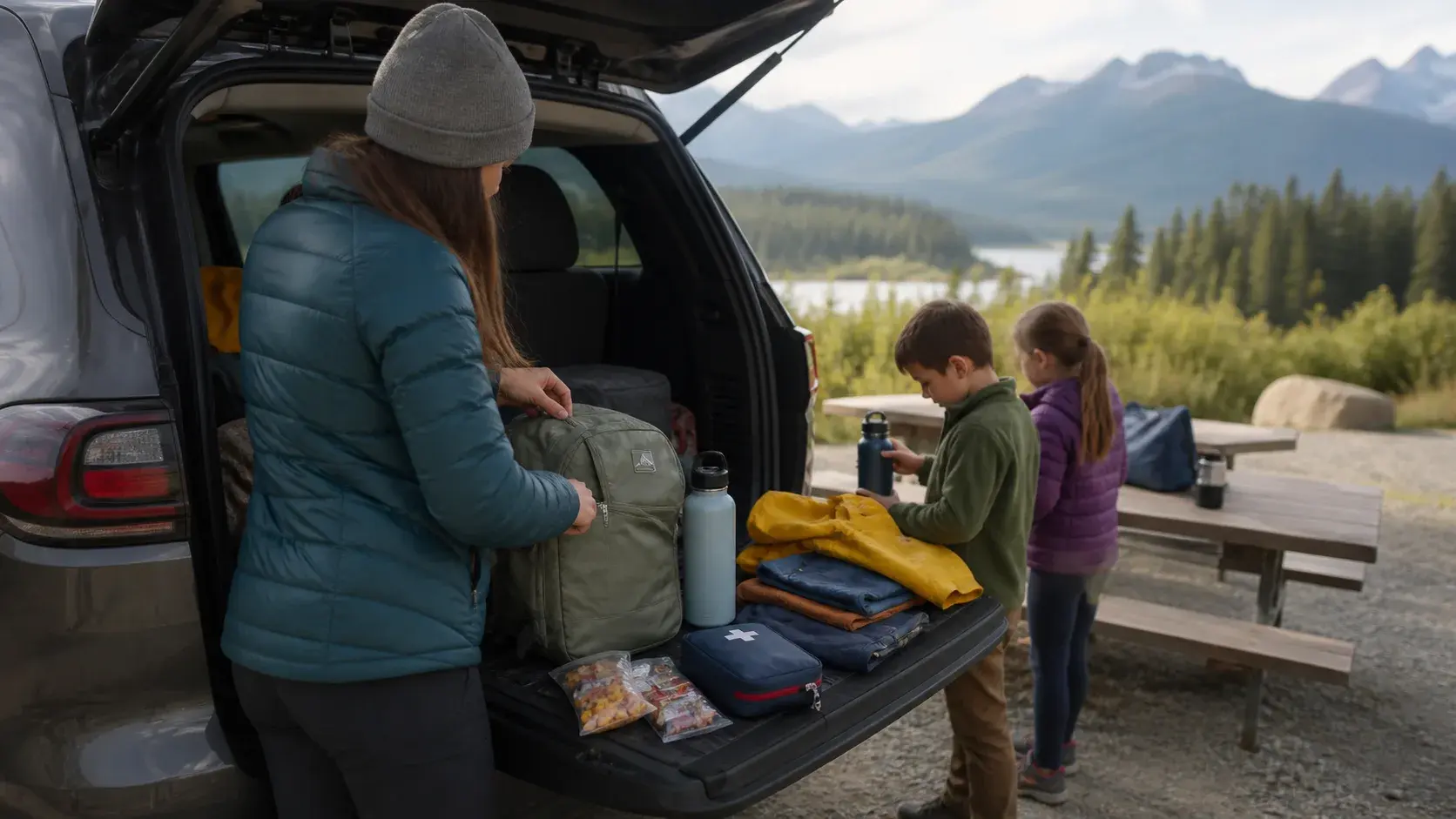
Family car packing
Family Road Trip Packing List
A family road trip is easier when the essentials are packed by the moment they will be needed, not by the category they belong to at home.
Open the guide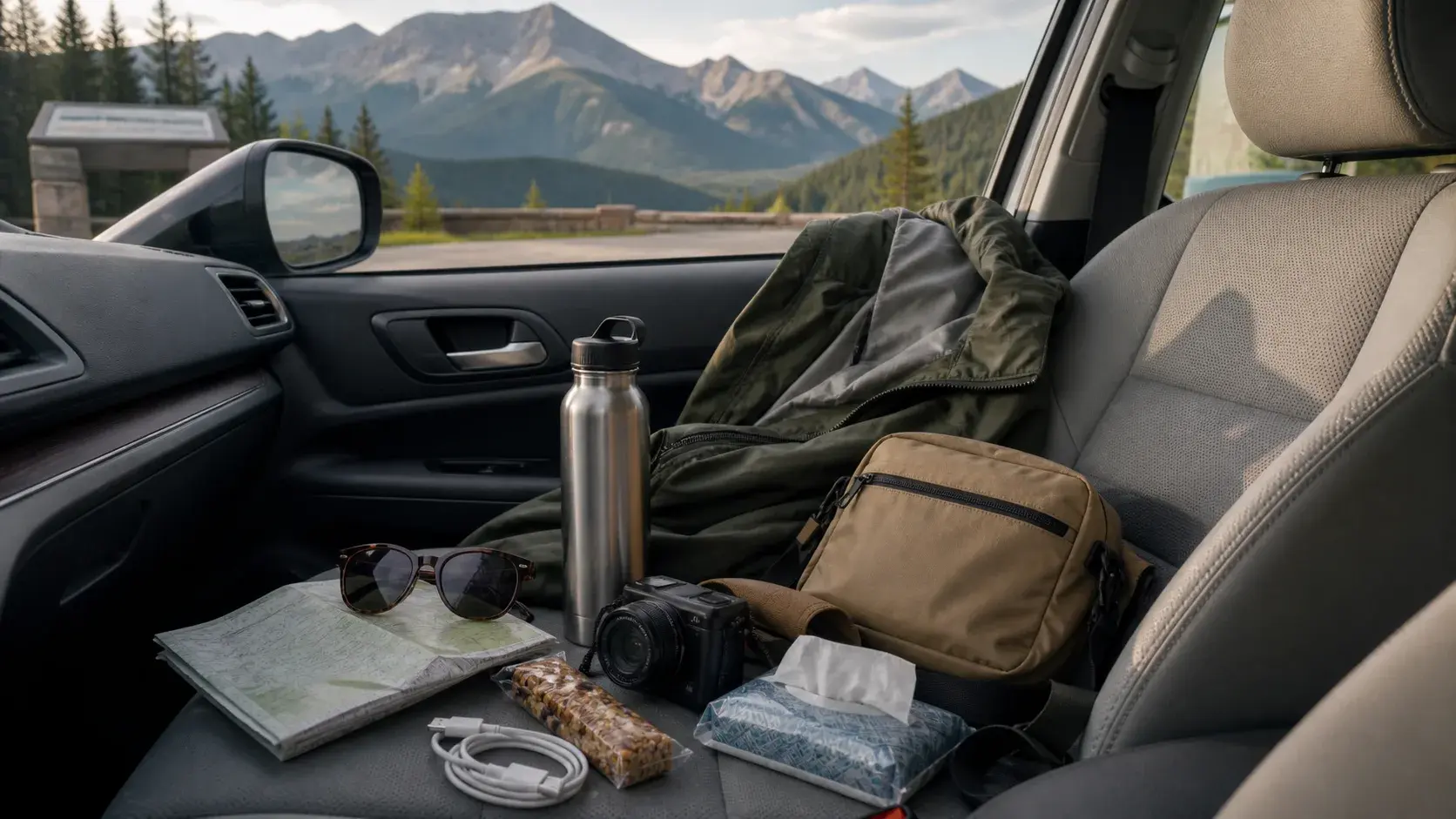
Scenic drive comfort
Scenic Drive Comfort Checklist
A scenic drive feels better when the car supports the day instead of swallowing it: essentials visible, stops planned and weather treated as part of the route.
Open the guide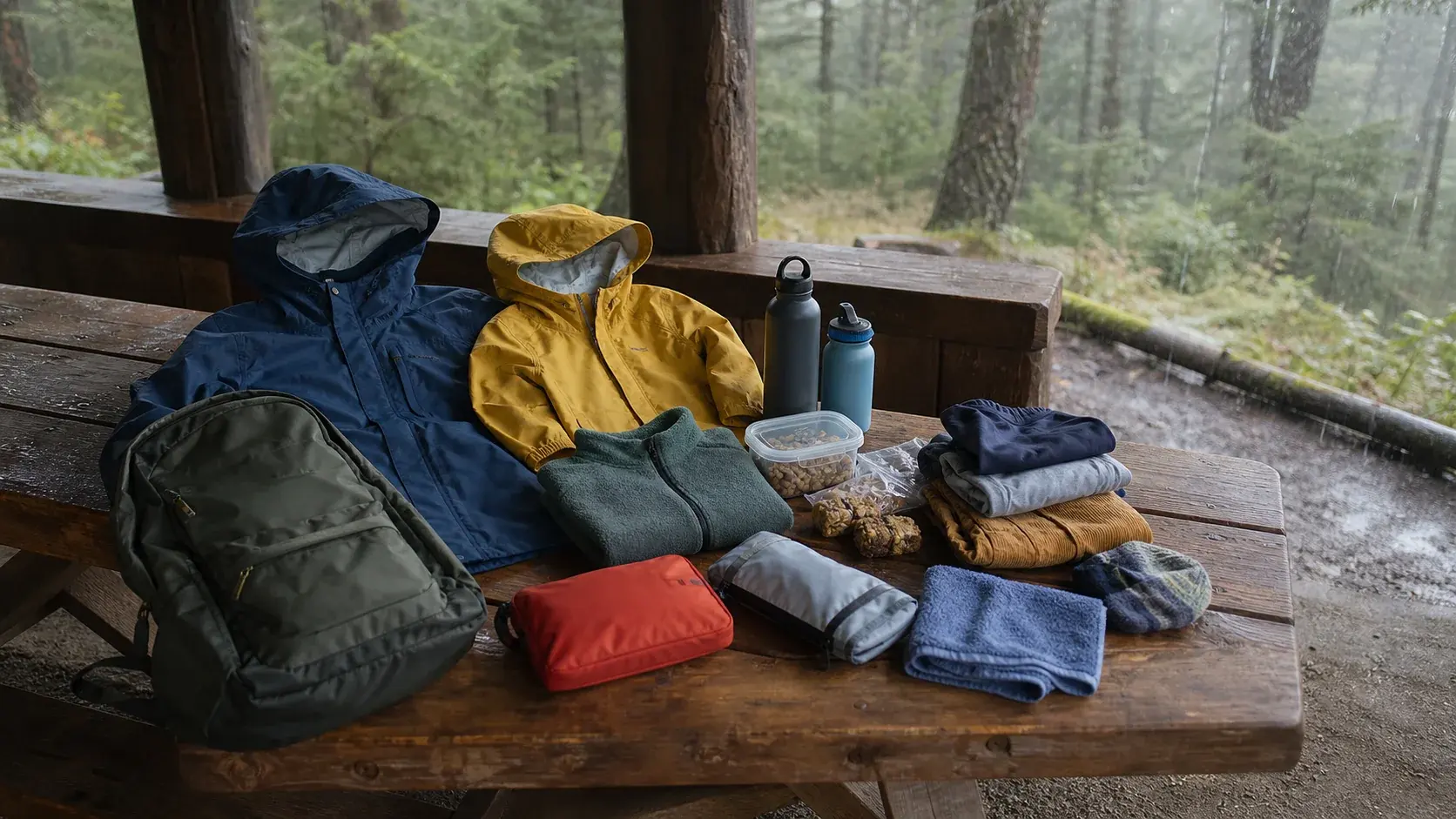
West Coast rain · Family packing
Rainy West Coast Day Kit for Families
Organize a wet-weather family day in three zones: what everyone wears, what stays close in the day bag and what waits dry in the car.
Open the guide