
Newfoundland · Route 430
Viking Trail Road Trip Guide
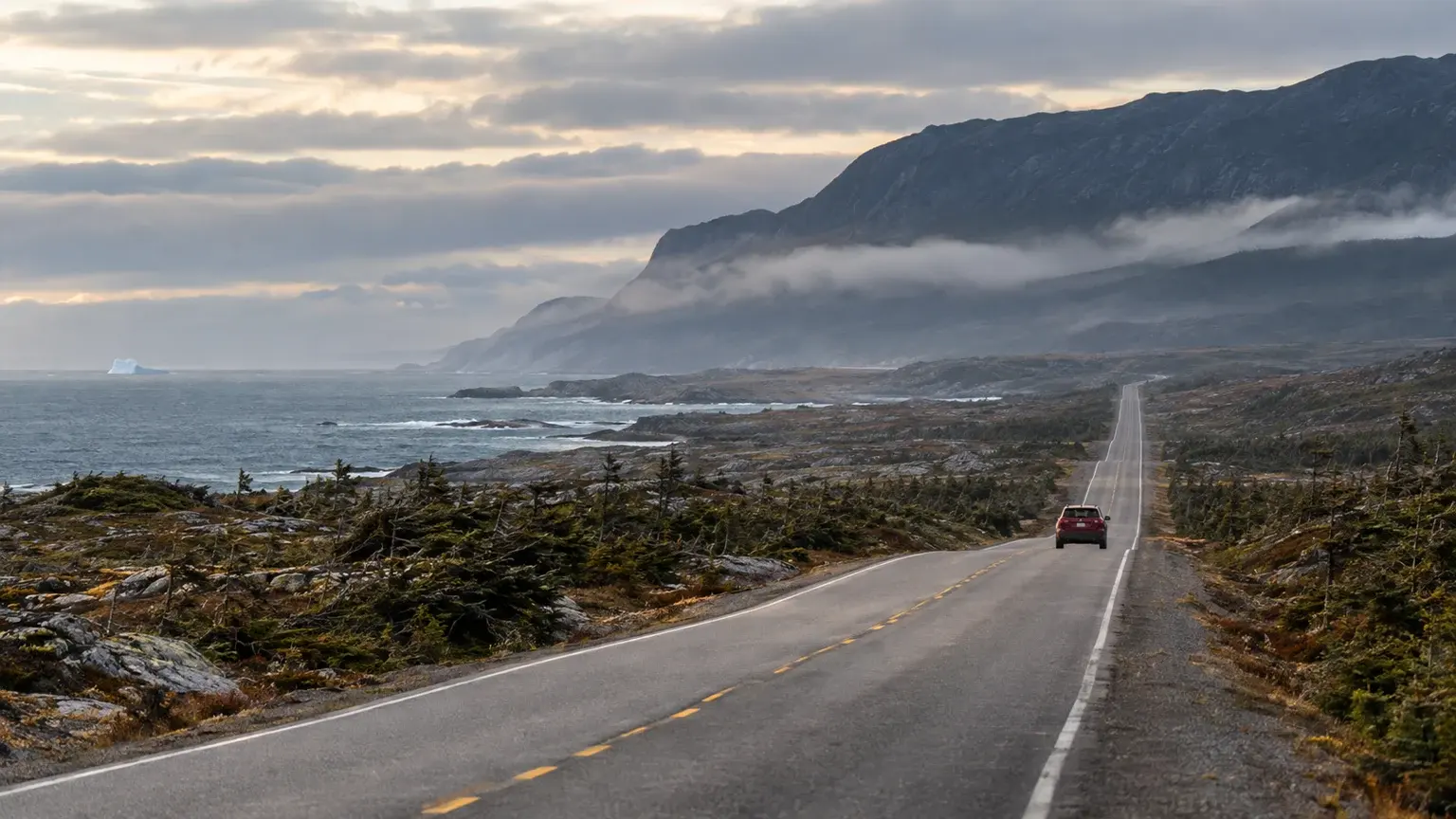
The Viking Trail is not simply a road to the northern tip. It joins Gros Morne’s large park landscape with outport communities, exposed coastal weather and the history interpreted at L’Anse aux Meadows. Give both anchors enough time and treat the long return as part of the route.
- Region
- Deer Lake, Gros Morne and Newfoundland’s Northern Peninsula
- Best for
- First-time western Newfoundland road-trippers, couples and families
- Season
- Late spring through early fall for the classic visitor route; verify operating dates
- Time
- Six to eight days from Deer Lake, longer for hiking or ferry connections
By Horizon Outdoor Editorial TeamPublished 2026-09-10
Quick facts
- Route spine
- Route 430 from Deer Lake along the Northern Peninsula
- Major anchors
- Gros Morne and L’Anse aux Meadows
- Long transfer
- Parks Canada estimates about five hours between the anchors
- Daily checks
- NL 511, forecast, fuel, wildlife and next services
Build the Viking Trail around two different anchors
Route 430 begins at Deer Lake and runs north through Gros Morne toward the Northern Peninsula. Gros Morne is a multi-day national-park landscape; L’Anse aux Meadows is a national historic site at the far end of the route. Treating one as a stop on the way to the other underestimates both.
A practical first plan gives Gros Morne several nights, uses at least one northern-peninsula base, and reserves a separate visit for L’Anse aux Meadows. The direction may be out-and-back from Deer Lake or part of a wider ferry itinerary, but the confirmed return and transport connection should shape every booking.
- Stage 1: Deer Lake and Gros Morne base
- Stage 2: northern-peninsula transfer and base
- Stage 3: L’Anse aux Meadows visit
- Stage 4: protected return or onward connection
Give Gros Morne choices instead of one overloaded day
Gros Morne includes communities and activity areas on different sides of a large park. Use the current visitor guide to choose a few compatible experiences rather than collecting every famous name. A Tablelands-oriented day, a coastal or community day and another weather-flexible park day form a more useful starting structure.
Some activities, trails, tours and facilities have seasonal schedules, reservations or specific safety requirements. Read the exact activity page and important bulletins. A difficult summit or backcountry route should never be treated as a default part of a first road-trip itinerary.
- Use the park visitor guide to group nearby activities
- Reserve only through the current official channel
- Keep a lower-commitment weather alternative
Treat the drive north as a full transfer day
Parks Canada places L’Anse aux Meadows 433 kilometres north of Deer Lake and estimates about five hours of driving from Gros Morne National Park. That time does not include fuel, meals, coastal stops, construction, wildlife or weather. Protect the transfer instead of booking a fixed historic-site arrival at the end of it.
Refuel at planned communities, carry food and water for delays, and save the next accommodation details offline. Route 430 is a working regional road. Follow speed limits, remain alert for wildlife and stop only where the car can fully leave the travelled lane.
- Begin the northern transfer rested
- Refuel before the next quiet section
- Do not promise a timed site visit after the long drive
Reserve real time for L’Anse aux Meadows
L’Anse aux Meadows is reached from Route 430 via Route 436 near the northern tip. Parks Canada recommends at least three hours for the visitor centre, reconstructed sod buildings, trails, programs and coastal views. Check current operating hours and program information before choosing the visit day.
Keep that day flexible enough for fog, wind and rain. A later or earlier entry may protect both visibility and comfort, but only within current operating hours. Nearby coastal stops are additions, not substitutes for the time needed to understand the historic site.
- Check site hours and current programs
- Allow at least the Parks Canada planning time
- Carry wind and rain layers into the site
Protect the return from the northern tip
The route remains long after the principal destination is complete. Keep a northern overnight after the site visit when needed and avoid linking the full drive back to a flight, ferry or other inflexible departure. The itinerary should survive one delayed morning without requiring unsafe speed or a night drive beyond the driver’s comfort.
Check Newfoundland and Labrador 511 and the destination forecast each morning. Wind, fog, rain and seasonal conditions can change the value of an optional stop. Remove the extra viewpoint before compressing fuel, food or rest.
- Separate the site visit from the longest return when possible
- Leave margin before flights or ferries
- Drop optional stops before reducing rest
Common planning mistakes
- Treating Gros Morne as one stop on the way north
- Booking L’Anse aux Meadows at the end of the long transfer
- Assuming the route time includes food, fuel and coastal stops
- Leaving the northern return without a margin night
- Using a famous difficult hike as the default park plan
Printable companion
Download the Canada road trip checklist
A printable list for documents, driving, weather layers, park days and the essentials worth keeping within reach.
Download the free PDFQuestions travellers ask
How long should the Viking Trail road trip take?
Six to eight days from Deer Lake is a useful first range when Gros Morne and L’Anse aux Meadows both matter. Add time for substantial hikes, slower community stays or ferry connections.
Can we visit L’Anse aux Meadows as a day trip from Gros Morne?
Parks Canada estimates about five hours of driving each way between the park and site. A northern overnight is the practical choice for most travellers.
How much time should we allow at L’Anse aux Meadows?
Parks Canada recommends at least three hours for the buildings, visitor centre, trails and programs. Confirm current hours and offerings.
What should we check before each Route 430 leg?
Review NL 511, destination weather, fuel, food, accommodation check-in, wildlife awareness and the daylight available for the full return.
Sources and currency
Conditions change. Confirm dynamic details again before departure; each source shows its own last-checked date.
- Parks Canada: Gros Morne National Park (2026-09-10)
- Parks Canada: Gros Morne visitor guide (2026-09-10)
- Parks Canada: Plan a visit to L’Anse aux Meadows (2026-09-10)
- Parks Canada: Parks Canada reservations (2026-09-10)
- 511 Newfoundland and Labrador: Newfoundland and Labrador road conditions (2026-09-10)
- Environment and Climate Change Canada: Canadian weather forecasts and alerts (2026-09-10)
Continue planning
Related field guides
Canada · First national park trip
Canada National Parks First-Time Guide
A first national park visit works best when the logistics are visible before the scenery takes over: entry, reservations, roads, weather, wildlife and a day plan that can shrink.
Open the guide
Printable planning guide
Canada Road Trip Packing Checklist
Start with the essentials that protect the trip, then remove anything your route, season and travelling party do not need.
Open the guide
Nova Scotia · Cape Breton
Cabot Trail Road Trip Guide
The Cabot Trail is not a loop to finish. It is a coastal-and-highland drive where the best moments often come from slowing down.
Open the guide