
Remote roads · Emergency kit
Remote Canadian Road Trip Emergency Kit
An emergency kit should buy time, make the vehicle visible and help you communicate. It cannot compensate for a closed road, an unsuitable vehicle or a route no one else knows.
- Region
- Remote and lightly serviced roads across Canada
- Best for
- Independent road-trippers travelling beyond dependable fuel, cellular service or roadside assistance
- Season
- Year-round, expanded for cold, heat, wildfire, flood and route-specific hazards
- Time
- 30-minute kit audit plus vehicle and route checks
By Horizon Outdoor Editorial TeamPublished 2026-09-10
Quick facts
- First safety layer
- Avoid the hazard and leave a route plan
- Kit priorities
- Shelter, visibility, communication, medical needs, food and water
- Technology rule
- Charge, test and understand limitations before departure
- Maintenance
- Inspect seasonally and replace expired or damaged supplies
Define what remote means on this route
Remote is not a visual category. It may mean a long distance between fuel stops, intermittent cellular service, few passing vehicles, an unpaved surface, no shelter or several risks at once. Mark the least-serviced section, expected traffic, road authority, weather exposure and the point at which the group will turn back.
Leave a route, vehicle description, passenger list and expected check-in time with a reliable person. Download official maps and keep a paper backup. If a road is closed, travel is discouraged or the vehicle is unsuitable, the emergency kit remains packed while the trip changes.
- Longest distance between dependable services
- Official road authority and turnaround points
- Trip plan held by a reliable contact
- Offline and paper navigation backup
Build the core kit by function
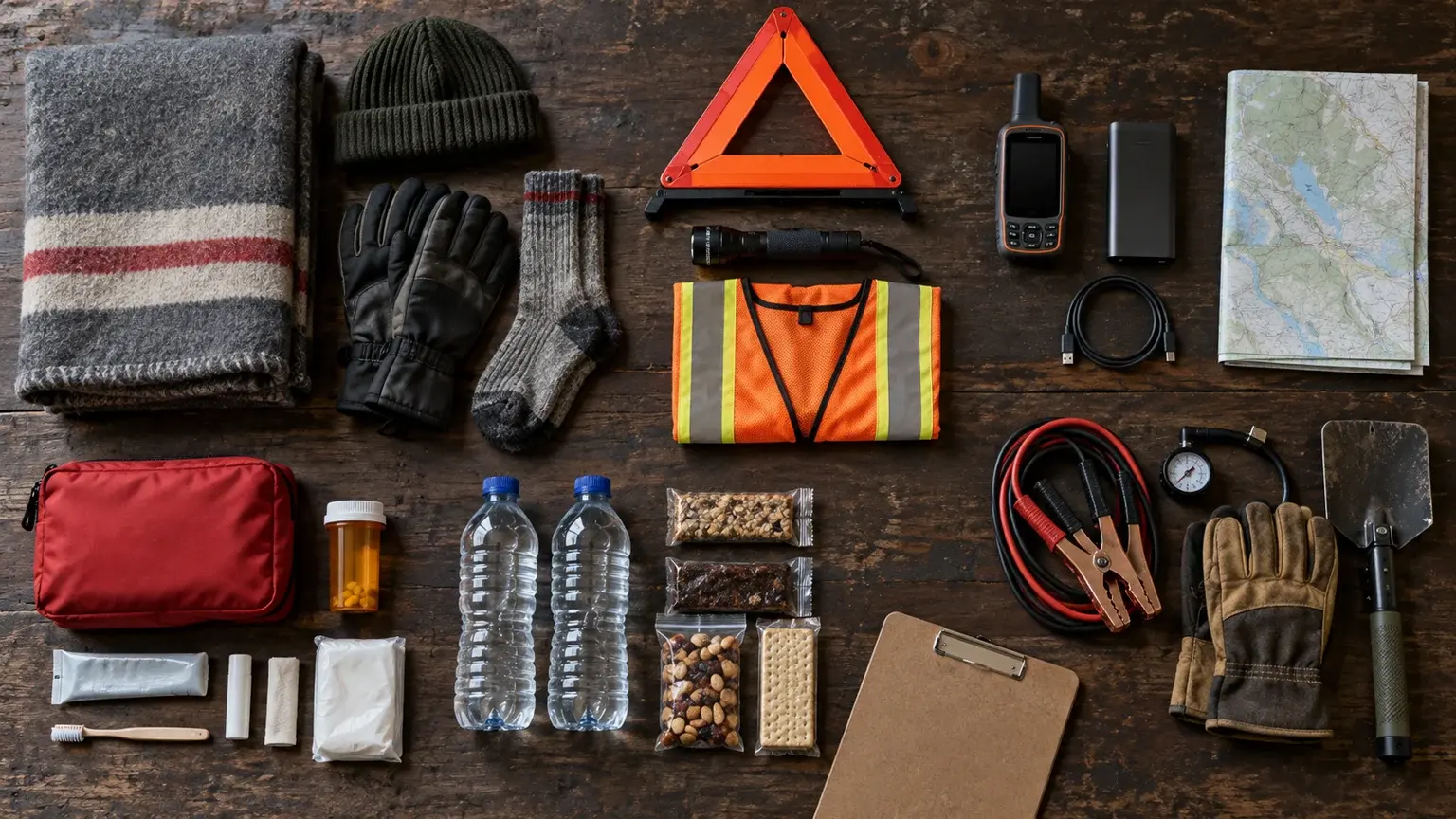
Begin with the Government of Canada emergency car kit, then adapt it to party size, season and route. Group supplies by what they do: warmth and shelter, visibility, communication and power, first aid and medication, food and water, and basic vehicle support. Store them in durable containers that passengers can identify in poor light.
Include non-perishable food, water in appropriate containers, blankets, extra clothing and footwear, first aid, a flashlight, whistle, road map, emergency plan and visible warning equipment. Add route-appropriate items only when someone knows how to use them. A tool without training can create a second hazard.
- Blankets, dry layers, gloves and seasonal shelter
- Flashlight, reflective triangles or approved warning light
- First-aid kit, medication and personal health information
- Non-perishable food and protected water
- Road map, emergency plan and basic vehicle tools
Design communication for the coverage gap
Carry a charged phone, cable and independent power bank, but do not treat a coverage map as a guarantee. Keep emergency contacts and the relevant direct numbers available offline. Preserve battery by limiting non-essential use when service or power becomes uncertain.
A satellite communicator or personal alerting device may be appropriate for a truly remote route, but it must be activated, tested and understood before departure. Parks Canada notes that satellite devices can initiate emergency response and that technology is not always reliable. Know what the device sends, where it needs a sky view and which service plan is active.
- Charged phone, cable and tested power bank
- Printed contacts and route-specific emergency numbers
- Optional activated satellite device appropriate to the route
- Scheduled check-ins with an overdue-response plan
Separate prevention and recovery equipment
Prevention begins with tires, battery, lights, fluids, wipers, brakes, spare or repair equipment and enough fuel or charge. Learn the rental or owner’s-manual procedure for a warning light, flat tire or roadside-assistance call while still near services. Secure all equipment so it cannot become a projectile.
Recovery tools must match the vehicle, conditions and user’s training. Booster cables, traction aid, shovel, tow equipment or extra washer fluid may belong on some routes, but no generic list establishes safe towing, water crossing or vehicle recovery. Stay within manufacturer instructions and professional assistance guidance.
- Vehicle inspection and current maintenance
- Spare tire or repair system understood
- Fuel or charging reserve for delay and rerouting
- Only compatible recovery tools the group can use safely
Test the kit and rehearse the decisions
Open every container before the trip. Test lights, power banks and communication devices; inspect batteries, food, water, medication and first-aid expiry dates; confirm clothing still fits; and make sure the paper map covers the actual route. Place the kit where it remains accessible after luggage is loaded.
Review what the group will do after a breakdown or unexpected stop. If the vehicle is safely off the road, it may provide the best shelter; follow current emergency guidance and avoid exposing passengers to traffic or severe weather. The purpose of the rehearsal is to reduce improvised decisions, not to create confidence that every situation can be solved alone.
- Test every powered or communication device
- Replace expired food, water, medicine and batteries
- Confirm kit access after the car is fully loaded
- Review safe stopping, check-in and help-request decisions
Common planning mistakes
- Buying a generic kit without opening or testing it
- Relying on a phone as the only map and communication plan
- Packing recovery gear no one knows how to use
- Burying the emergency kit under luggage
- Using supplies as justification to enter a closed or hazardous road
Printable companion
Download the Canada road trip checklist
A printable list for documents, driving, weather layers, park days and the essentials worth keeping within reach.
Download the free PDFQuestions travellers ask
Is a standard store-bought car kit enough?
Treat it as a starting point. Open it, compare it with official guidance and add the medication, clothing, communication, food, water and route-specific supplies your party needs.
Do we need a satellite communicator?
It depends on the coverage gap and consequences of delay. If you carry one, activate and test it, understand its limitations and keep a trip plan with a reliable contact.
How much food and water should we carry?
Use party size, temperature, remoteness and the longest credible delay to decide. Start with official emergency-kit guidance, then add a route-specific margin.
Where should the kit be stored?
Secure it where it remains reachable after luggage is loaded. Immediate items such as medication, light, phone power and warm layers should not require roadside unloading.
Sources and currency
Conditions change. Confirm dynamic details again before departure; each source shows its own last-checked date.
- Government of Canada: Emergency car kit (2026-09-10)
- Government of Canada: Emergency kit checklist (2026-09-10)
- Government of Canada: Get Prepared emergency planning (2026-09-10)
- Transport Canada: Planning a winter road trip (2026-09-10)
- Transport Canada: Preparing a vehicle for winter (2026-09-10)
- Innovation, Science and Economic Development Canada: Emergency telecommunications guidance (2026-09-10)
- Parks Canada: Parks Canada emergency contacts and communications (2026-09-10)
Continue planning
Related field guides
Printable planning guide
Canada Road Trip Packing Checklist
Start with the essentials that protect the trip, then remove anything your route, season and travelling party do not need.
Open the guide
Yukon · Northwest Territories
Dempster Highway Road Trip Guide
The Dempster is not a road to squeeze between other stops. Treat fuel, road conditions, weather and overnight planning as part of the itinerary, then let the northern landscape set the pace.
Open the guide
Yukon · First park plan
Kluane National Park Planning Guide
Kluane’s scale is part of its beauty and its planning challenge. Begin at the park’s eastern edge, use Haines Junction as an informed base and choose a day that fits the road, weather and your group’s actual experience.
Open the guide