
Yukon · First park plan
Kluane National Park Planning Guide
Kluane’s scale is part of its beauty and its planning challenge. Begin at the park’s eastern edge, use Haines Junction as an informed base and choose a day that fits the road, weather and your group’s actual experience.
- Region
- Kluane National Park and Reserve and Haines Junction, Yukon
- Best for
- First-time Yukon visitors, families and road-trippers arriving from Whitehorse or Alaska
- Season
- Year-round regional access; trails, camping, facilities and daylight vary sharply by season
- Time
- Two to four nights
By Horizon Outdoor Editorial TeamPublished 2026-09-10
Quick facts
- Practical base
- Haines Junction, about 160 km west of Whitehorse
- Access reality
- Highways skirt the park; most interior terrain is remote
- First-day shape
- Visitor centre, one corridor and one suitable activity
- Before departure
- Road, weather, bulletins, fuel and daylight
Understand the edge before imagining the interior
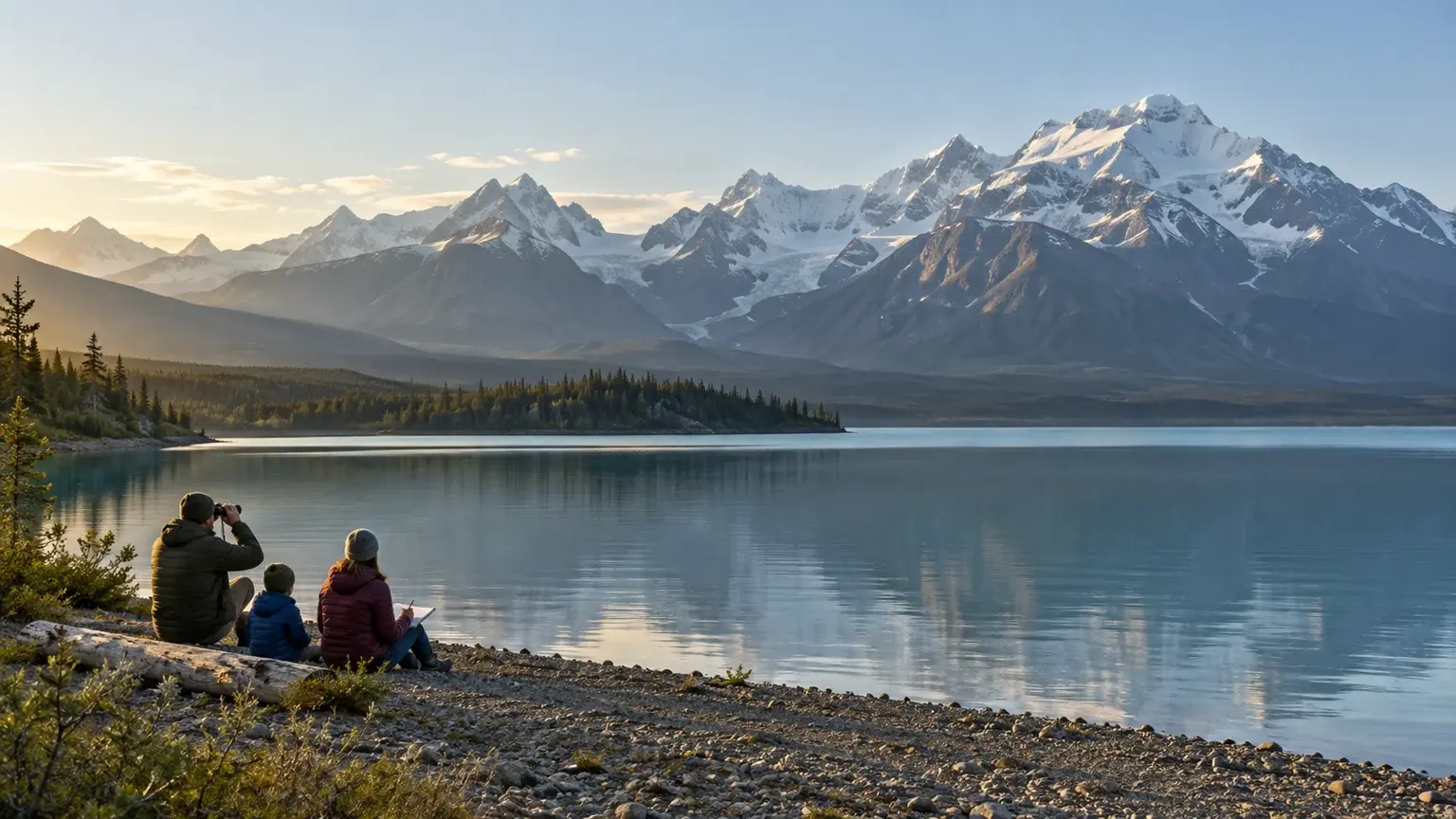
Kluane is not a park that most first-time visitors drive through from viewpoint to viewpoint. Parks Canada explains that the Alaska Highway and Haines Road run along the park’s eastern edge, while much of the interior is generally reached only by flightseeing or by serious mountaineering and ski expeditions. A roadside visit can still be complete when it is planned around the accessible edge.
Begin at the Kluane Visitor Centre in Haines Junction for current orientation, cultural context and help matching an activity to conditions. Use the park map to distinguish signed roadside attractions, established day trails and true backcountry routes before assigning time to any name on a broad regional map.
- Start with the visitor centre and current park map
- Separate roadside access from remote interior travel
- Choose an established day activity appropriate to the group
Use Haines Junction as a planning base, not only a fuel stop
Haines Junction is the practical starting point for a first visit. The Haines Road leads south beside the park and the Alaska Highway continues north along its edge. Staying nearby gives the group time to confirm visitor-centre hours, refuel, obtain food and respond to a late change without turning every decision into a long return drive.
Two to four nights is an editorial planning range, not an official minimum. It allows an arrival and orientation period, one main landscape day and a reserve for weather or a shorter second activity. Confirm accommodation, campground access and essential services rather than assuming a small northern community will match an urban schedule.
- Confirm fuel and food before the main park day
- Save maps and reservations for offline access
- Keep one uncommitted half-day for conditions
Build one clear first-day sequence
A useful first day combines the visitor centre with one highway corridor and one signed stop, lakeshore area or trail selected from current information. The roadside-attractions guide identifies viewpoints and interpretive trails along both main roads, while the hiking page helps separate shorter outings from routes that demand more time and skill.
Set a turnaround time using the complete return drive, not the distance to the trailhead alone. If wind, rain, smoke, visibility or trail conditions weaken the main plan, use a shorter signed stop instead. Kluane’s scale rewards time spent observing one landscape more than a chain of hurried photographs.
- One corridor and one principal activity
- A turnaround time that includes the return drive
- A shorter roadside alternative for changing conditions
Prepare for bear country before reaching the trailhead
Kluane is home to grizzly and black bears. Read the park’s bear guidance before leaving the base, travel together, make your presence known and carry bear spray where it can be reached immediately when hiking. Learn its correct use and check transport rules before flying or crossing an international border with any deterrent.
Never approach or feed wildlife. At roadside sightings, Parks Canada advises staying inside the vehicle when a bear is present and avoiding a stop that changes the animal’s behaviour or creates traffic risk. Food, garbage and scented items must remain controlled at picnic areas, campgrounds and trailheads.
- Read the current bear guidance as a group
- Carry accessible bear spray where permitted and know how to use it
- Stay in the vehicle for roadside bears and keep wildlife attractants secured
Treat backcountry and northern driving as separate commitments
An overnight backcountry route requires current registration or permit checks, a trip plan, appropriate food storage and the ability to be self-sufficient. Cell service is unavailable in much of the park. A scenic first visit does not need to become a remote overnight, river journey or mountaineering trip.
For every drive, check 511 Yukon, the destination forecast and park bulletins shortly before departure. Carry enough fuel margin, food, water, warm layers and an emergency kit for the distance and season. In winter or shoulder season, limited daylight and rapidly changing conditions should reduce the plan rather than merely increase the packing list.
- Keep technical or overnight routes outside a casual day plan
- Share the route and return time with a reliable contact
- Recheck road, weather, bulletins and daylight before leaving
Common planning mistakes
- Expecting to drive into the icefield interior
- Stacking both highway corridors and several trails into one day
- Starting a hike without learning the park’s bear guidance
- Relying on continuous cell service or urban service hours
- Turning an ordinary park day into an unplanned backcountry commitment
Printable companion
Download the Canada road trip checklist
A printable list for documents, driving, weather layers, park days and the essentials worth keeping within reach.
Download the free PDFQuestions travellers ask
Can Kluane be visited without a flightseeing tour?
Yes. The visitor centre, signed roadside attractions, lakeshore areas and suitable day trails can form a complete first visit. Flightseeing is optional and subject to current operator and park information.
Is Haines Junction a useful base?
Yes. Parks Canada identifies Haines Junction as a convenient base near the Alaska Highway and Haines Road corridors.
How much time should a first visit allow?
Two to four nights is a practical editorial range for orientation, one main day and weather flexibility. A shorter stop should focus on one corridor.
Do we need backcountry equipment for every Kluane visit?
No. Match equipment to a signed roadside or day activity. Remote overnight travel requires additional registration, communication, food-storage and self-sufficiency planning.
Sources and currency
Conditions change. Confirm dynamic details again before departure; each source shows its own last-checked date.
- Parks Canada: Kluane National Park and Reserve current notices (2026-09-10)
- Parks Canada: Plan your visit to Kluane (2026-09-10)
- Parks Canada: Kluane maps (2026-09-10)
- Parks Canada: Kluane roadside attractions (2026-09-10)
- Parks Canada: Hiking in Kluane (2026-09-10)
- Parks Canada: Kluane trail conditions (2026-09-10)
- Parks Canada: Kluane safety and guidelines (2026-09-10)
- Parks Canada: Bear safety in Kluane (2026-09-10)
- Parks Canada: Kluane backcountry safety (2026-09-10)
- Parks Canada: Kluane overnight registration (2026-09-10)
- Parks Canada: Kluane visitor guidelines (2026-09-10)
- Government of Yukon: 511 Yukon road conditions (2026-09-10)
- Environment and Climate Change Canada: Canadian weather forecasts and alerts (2026-09-10)
Continue planning
Related field guides
Yukon · Northwest Territories
Dempster Highway Road Trip Guide
The Dempster is not a road to squeeze between other stops. Treat fuel, road conditions, weather and overnight planning as part of the itinerary, then let the northern landscape set the pace.
Open the guide
Printable planning guide
Canada Road Trip Packing Checklist
Start with the essentials that protect the trip, then remove anything your route, season and travelling party do not need.
Open the guide
Canada · First national park trip
Canada National Parks First-Time Guide
A first national park visit works best when the logistics are visible before the scenery takes over: entry, reservations, roads, weather, wildlife and a day plan that can shrink.
Open the guide