
BC ferry travel · Car packing
BC Ferries Car Packing Checklist
Use a calm two-zone system for driving onto BC Ferries: keep the car ready for the road ahead and carry the essentials you may need while the vehicle is out of reach.
- Region
- Coastal British Columbia, including Vancouver Island and the Sunshine Coast
- Best for
- Families and first-time visitors driving onto BC Ferries
- Season
- Year-round; adjust for current weather, road conditions and ferry notices
- Time
- 15 to 25-minute packing review before departure
By Horizon Outdoor Editorial TeamPublished 2026-08-30
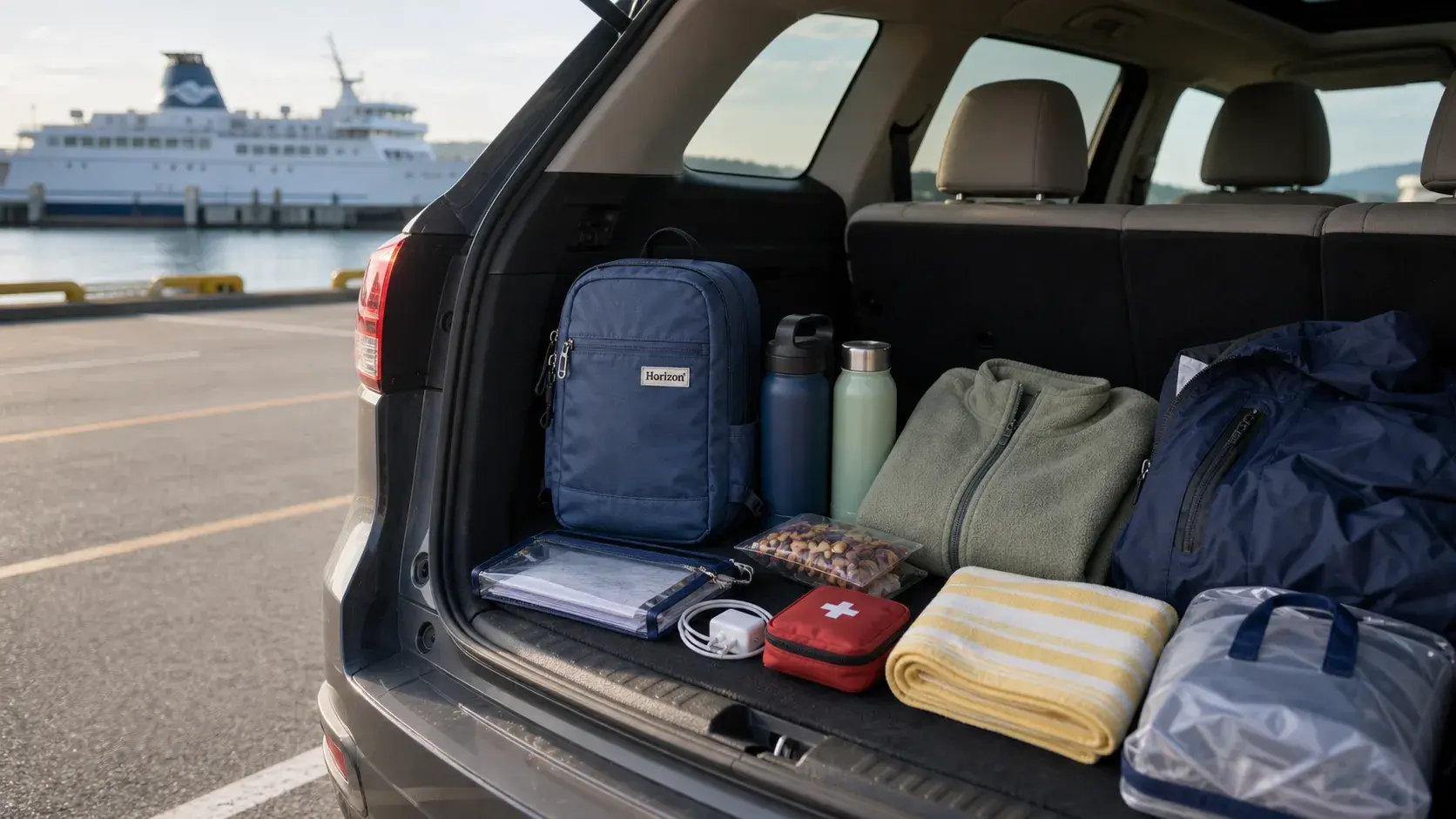
Quick facts
- Use two zones
- One reachable onboard bag and one road-ready car kit
- Carry upstairs
- Medication, documents, water, snacks, layers and kid essentials
- Plan for access
- Bring what you need before leaving the vehicle deck
- Check before leaving
- BC Ferries current conditions, local weather and road conditions
Pack for two different moments, not one long drive
A ferry trip changes what within reach means. At the terminal, your whole car may be close by. Once you board, the useful items may need to travel with you to the passenger decks. Pack as though the car will not be available again until the crew allows passengers back.
Use a simple two-zone system. The car kit holds road-trip supplies, larger dry clothing changes and anything you do not need during the sailing. The onboard bag stays light enough to carry through a terminal or up stairs while holding the things that would make a delay, a hungry child or a sudden temperature change easier to manage.
Place the onboard bag where it can be lifted out before boarding. Do not bury it behind coolers, beach gear or destination luggage.
- Onboard bag: documents, medication, water, snacks, layers and child essentials
- Car kit: larger clothing changes, cooler supplies, road gear and destination equipment
- One small wet-item pouch inside the onboard bag
- A bag position that allows quick pickup before leaving the vehicle
Make the terminal wait part of the plan
A terminal wait is still travel time, especially with children. Pack enough familiar food, drinking water and simple comfort items to cover an unhurried wait without depending on a particular shop, meal service or seating area.
Keep these supplies easy to reach while everyone is still in the car, rather than sealed beneath luggage intended for the destination. If the route is delayed or the terminal is busy, the family should not need to unpack the vehicle just to find water or a snack.
Before leaving home, check your route current conditions and the road to the terminal. BC Ferries and DriveBC are both day-of-travel tools; do not let yesterday evening information make the morning plan too tight.
- Water bottles and familiar, low-mess snacks for each traveller
- Tissues, wipes, a small waste bag and a cleanup cloth
- One quiet activity, book or headphones for each child who uses them
- Phone charged, with power bank and current route information available
Build an onboard bag you can carry with one hand
The best onboard bag is not a duplicate of the trunk. It is a compact bridge between the car and the ferry: easy to carry, easy to put under a seat and easy to reopen without scattering the family important items.
Keep medication, identification, booking details and valuables with the responsible adult rather than relying on access to the parked vehicle. Add a layer for every person who may get cold, especially near exterior decks or in changing coastal weather.
One child backup can ride in the onboard bag while the full return-drive clothing set stays sealed in the car. That keeps the bag light without leaving the family without a practical fix for a small spill, wet sleeve or chilly crossing.
- Reservation details, photo identification where needed, wallet and vehicle keys
- Personal medication and essential health supplies under adult control
- Light layers, rain protection and a small child comfort item
- Charged phone, power bank and a small pouch for valuables
Load calmly and leave the vehicle ready
Keep the driver area clear before reaching the terminal. Boarding directions come from terminal and deck crew, and the space between vehicles can be tight. A compact stroller or baby carrier can make the walk to passenger areas easier than trying to move bulky items between parked cars.
Before stepping away, secure loose items, take the onboard bag and make a quick mental note of where the vehicle is parked. Do not plan to retrieve forgotten food, medication or children supplies after loading.
Follow crew directions, return to the vehicle when announced and leave enough patience in the plan for unloading to happen in sequence.
- Compact stroller or baby carrier if a child cannot comfortably walk
- Vehicle keys, onboard bag and any required mobility aid before leaving the car
- Loose items secured so they cannot shift during travel
- Car alarm settings checked in advance if your vehicle allows it
Keep the next drive separate from the sailing
Arrival is not the end of the travel day. For Vancouver Island and Sunshine Coast trips, the road ahead may include rain, changing visibility, a late meal, a beach stop or a longer-than-expected drive. Keep a road-ready layer of food, water, first aid and basic vehicle supplies in the car.
Check weather and road information again when the day conditions make that sensible. Environment and Climate Change Canada provides forecasts and weather alerts, while DriveBC provides road conditions, events and webcams.
This is not a reason to overpack for every scenario. It is a reason to carry a modest, dependable baseline and adjust the day before leaving the terminal.
- Road snacks, water and a cooler plan that suits the family
- First-aid kit, flashlight, charging cable and paper map backup
- Dry footwear or clothing change stored in a sealed car bag
- Vehicle basics appropriate to the season and planned route
Common planning mistakes
- Leaving medication, identification, vehicle keys or the only child snack supply in the parked car
- Packing one oversized bag that is difficult to carry through a terminal or passenger deck
- Treating vehicle-deck access as guaranteed instead of preparing to leave the vehicle during the sailing
- Using current conditions from the night before as if they describe the day of travel
- Bringing more loose items than the family can safely manage during boarding, unloading and the next drive
Printable companion
Download the family road trip checklist
A printable family list for car comfort, weather changes, food stops, simple outdoor days and backup plans.
Download the free PDFQuestions travellers ask
Can we stay in our car during a BC Ferries sailing?
Do not plan on it. Vehicle-deck access and passenger movement are governed by BC Ferries and Transport Canada safety rules, and vehicle placement can vary. Carry the essentials you will need during the sailing.
What should always come out of the car and into the onboard bag?
Carry medication, documents, vehicle keys, valuables, water, snacks, weather layers, a child comfort item and any mobility or care item your family may need before the ferry arrives.
Should we pack food if there are terminal or onboard food options?
Yes. Bring enough familiar food and water for your own group, especially when travelling with children or dietary needs. Treat available food services as optional convenience, not the only plan for a wait or delayed meal.
How do we prepare for a ferry delay without overpacking?
Keep one modest reserve of snacks, water, layers, a charging option and quiet child activities in the onboard bag. Check BC Ferries current conditions and local weather before leaving, then adjust the following drive or outdoor stop if the day changes.
Sources and currency
Conditions change. Confirm dynamic details again before departure; each source shows its own last-checked date.
- BC Ferries: Driving onboard and vehicle-deck guidance (2026-08-30)
- BC Ferries: Travel tips for ferry passengers (2026-08-30)
- BC Ferries: Current conditions and departures (2026-08-30)
- DriveBC: Current road conditions, events and highway cameras (2026-08-30)
- Environment and Climate Change Canada: Weather forecasts and active alerts for Canada (2026-08-30)
- Province of British Columbia: Emergency kit and grab-and-go bag basics (2026-08-30)
Continue planning
Related field guides
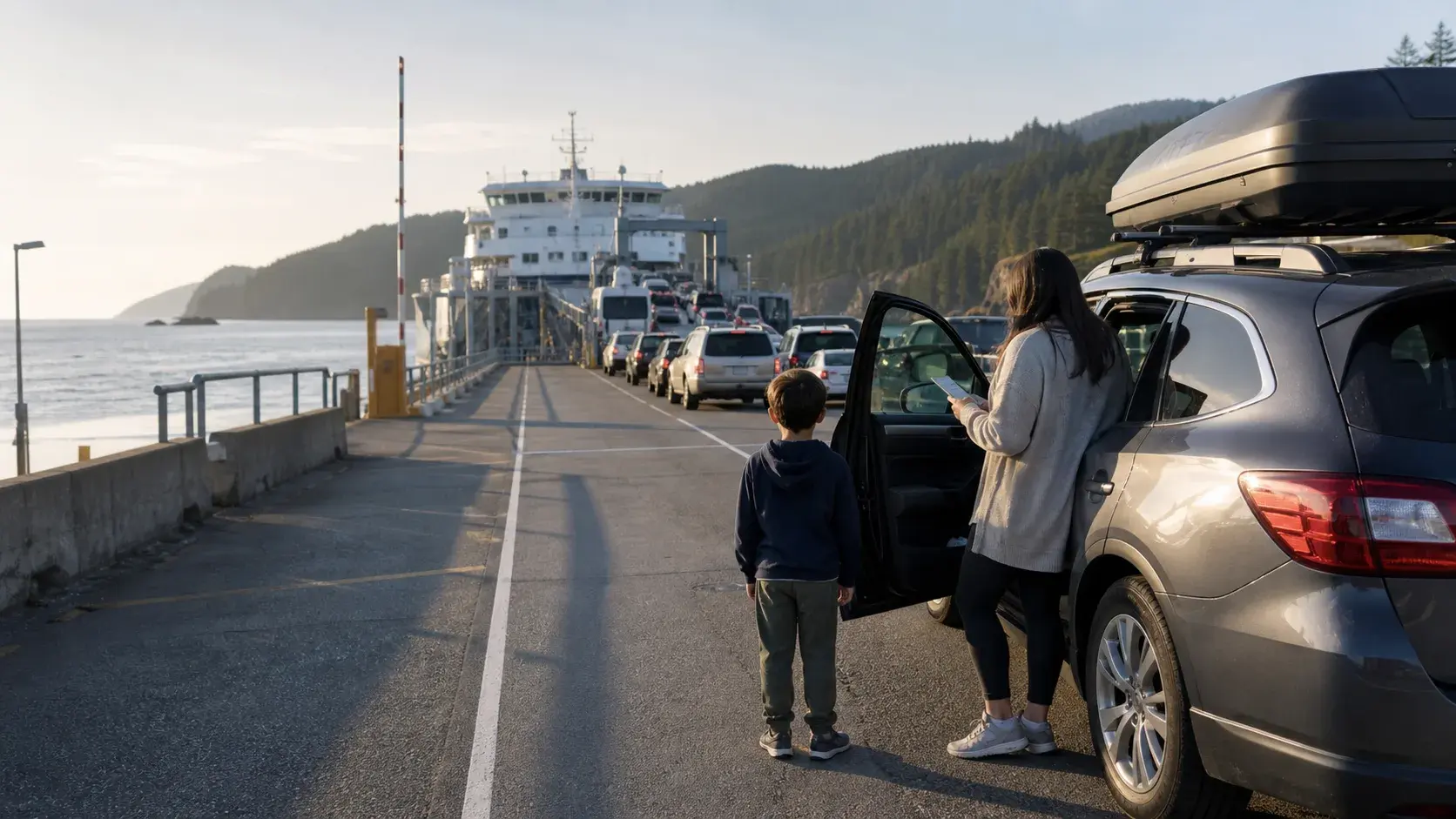
British Columbia · Ferry planning
Vancouver Island Ferry Route Planner
The ferry is the first part of the road trip, not a delay before it. Choose the terminal that puts you closest to your first overnight and keep the first island day intentionally light.
Open the guide
British Columbia · Coast and forest
Vancouver Island Loop Road Trip Guide
This is an island trip, not a race around a ring. Ferry timing and cross-island drives set the structure; beaches, forests and communities give it character.
Open the guide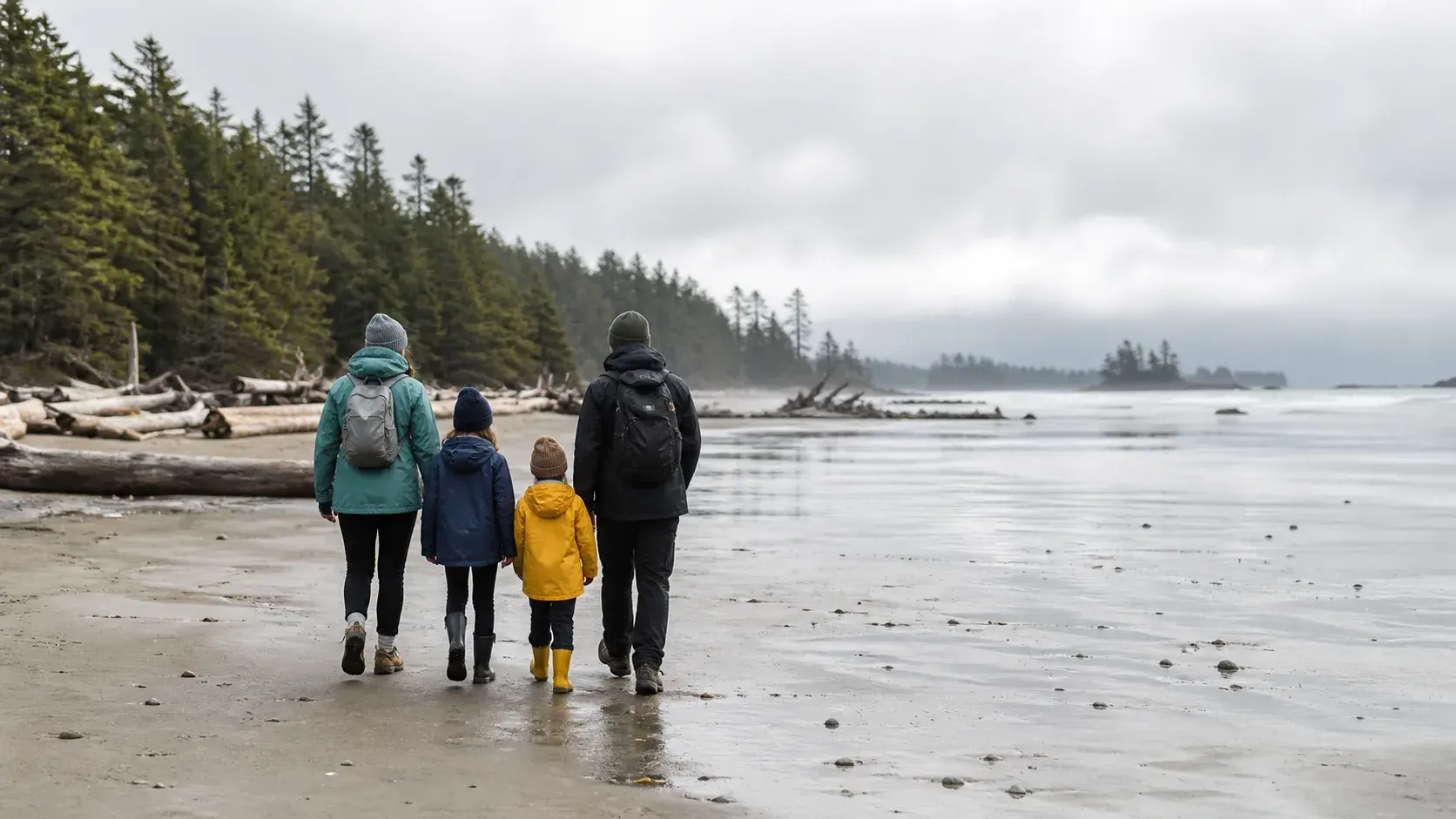
British Columbia · Ferry to Pacific coast
Vancouver to Tofino Family Road Trip Guide
The route to Tofino works best when the ferry, Highway 4 and wet-coast weather are planned as part of the trip instead of treated as obstacles.
Open the guide