
West Coast rain · Family packing
Rainy West Coast Day Kit for Families
Organize a wet-weather family day in three zones: what everyone wears, what stays close in the day bag and what waits dry in the car.
- Region
- Coastal British Columbia and the Canadian West Coast
- Best for
- Families planning approachable park days, short walks and roadside outdoor stops
- Season
- Rainy and changeable days; check the exact destination forecast before leaving
- Time
- A day outing with a dry return by car
By Horizon Outdoor Editorial TeamPublished 2026-08-29
Quick facts
- Pack in zones
- Wear it, carry it, keep it dry in the car
- Check twice
- Review the destination forecast before packing and before departure
- Child backup
- One labelled dry change per child
- Reset rule
- Dry, clean and restock the kit after every outing
Build the kit in three zones before the rain begins
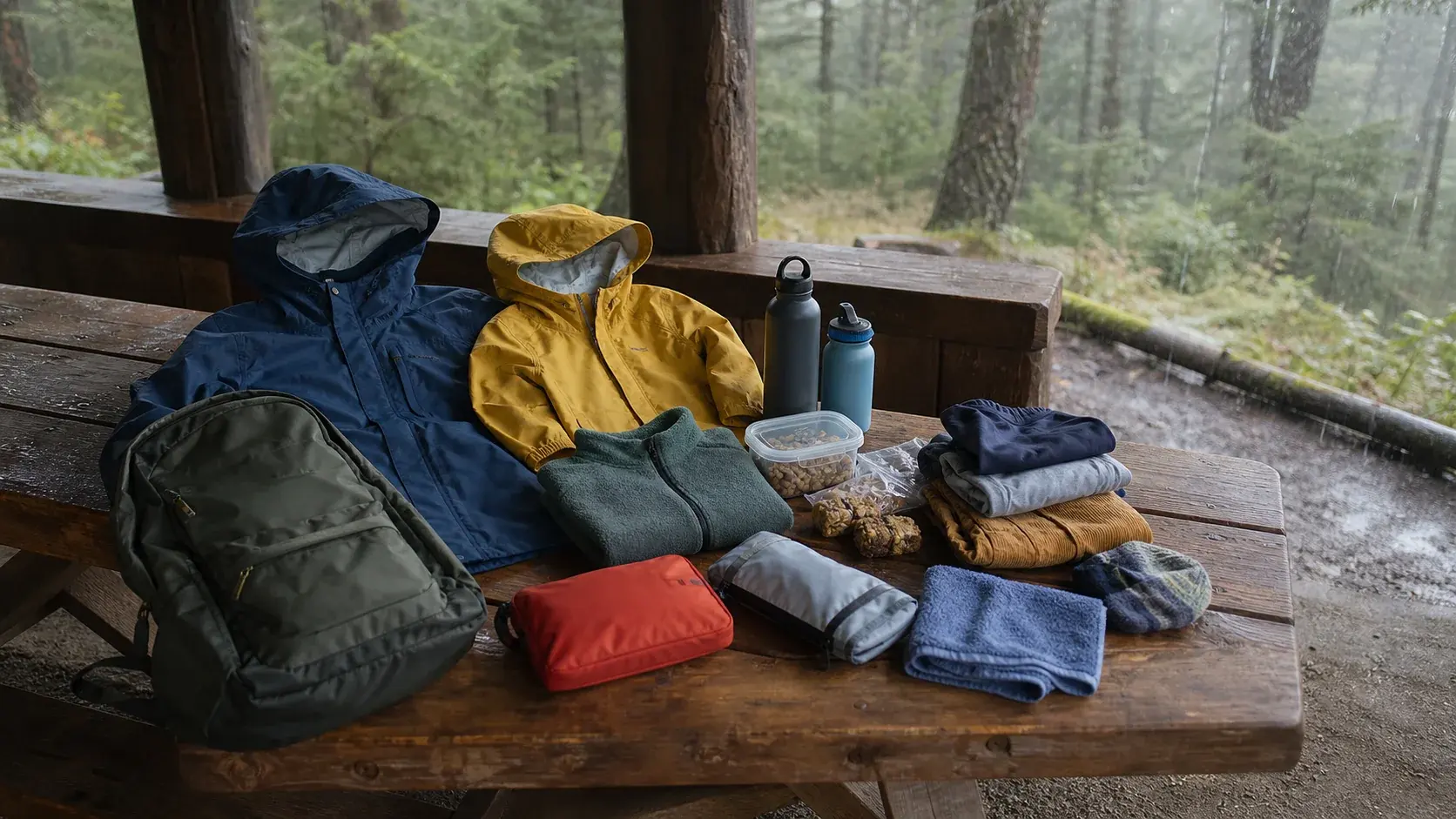
A useful rainy-day kit is less about owning more gear than putting the right item in the right place. Divide the family’s setup into three zones: clothing already on each person, a day bag that stays with the group and a sealed dry backup in the vehicle. This makes decisions quicker when rain changes during the day.
Start with the Environment and Climate Change Canada forecast and active alerts for the exact destination, not only the weather at home. Check once while packing and again before departure. A coastal park, higher trailhead and nearby town can have different conditions, and a current park advisory or weather warning should be allowed to change the route.
Leave a simple trip plan with a trusted person, even for a familiar family walk. AdventureSmart says a useful plan includes the destination, route, equipment and expected return time. Confirm that your contact received it, and do not depend on a phone alone: reception and equipment can fail outside urban areas.
- Wear: comfortable layers and the rain protection needed from the first stop
- Carry: essentials that must stay with the family away from the vehicle
- Keep dry in the car: complete changes, towels and ride-home supplies
Wear the working layers from the start
Dress each person for the conditions at the first outdoor stop rather than leaving every rain layer in the trunk. A comfortable base, a warm layer and an outer layer suited to rain and wind create a simple system that can be adjusted as the family moves, rests or waits. Practical footwear should match the surface and activity.
Give children enough freedom to walk, climb ordinary steps and use the washroom without an elaborate costume change. Hoods, cuffs and hems should fit the child rather than dragging or blocking their view. Keep one small comfort item, such as dry mitts or a warm hat, reachable if it suits the forecast and child.
Treat persistent wetness and cold discomfort as reasons to shorten the outing, not challenges to push through. Turn around while the route is still simple, move toward a warm and dry setting and use the vehicle backup. This is a conservative planning rule, not medical guidance; follow current official or emergency advice if safety is a concern.
- Comfortable base layer that allows normal movement
- Warm layer appropriate to the forecast and planned stops
- Rain-and-wind outer layer and practical footwear
- Optional dry hat, mitts or similar child comfort item
Keep the day bag useful when the car is out of reach
The day bag should cover the planned outing and a sensible delay without becoming so crowded that water or a child’s layer is hard to reach. AdventureSmart’s essentials include extra food and water, extra clothing, navigation and communication aids, first aid, a light, signalling, emergency shelter, sun protection, a fire-making kit and a pocketknife. Adults should carry and understand appropriate items.
Adapt that list to the destination, season and activity. For an easy family park day, keep water, snacks, needed personal medication, a compact first-aid kit, navigation, a charged communication device, a light, signalling and weather protection together. Specialized or adult-use equipment should be secured from children and carried only when appropriate and understood.
Use smaller internal pouches instead of loose layers. One pouch can hold items that must remain dry; another can hold food; a small waste pouch can accept wrappers and tissues. The aim is not perfect organization. It is being able to reach water, medication, a light or a dry child layer without emptying the bag onto wet ground.
- Water, snacks and any needed personal medication
- Navigation and communication aids, plus a light and signalling item
- Compact first aid and emergency supplies appropriate to the outing
- One immediately reachable dry layer for the child most likely to need it first
Give each child a dry backup and isolate wet items
Pack one complete dry change for each child in a labelled, closed pouch: top, bottom, socks and underwear, with any age-specific essentials the child normally needs. The label matters when several similar bundles are packed. Keep one small layer in the day bag and the fuller change in the vehicle so a minor splash does not consume the ride-home reserve.
Carry a separate closable wet-item bag for damp clothing, muddy socks and used towels. It is an isolation tool, not long-term storage. Keep wet items away from dry backups, food and first-aid supplies, and do not seal sharp or hot objects with clothing. If the outer day bag becomes wet, the inner dry pouches still protect the useful layer.
Pack child backups by person rather than by clothing category. A single labelled bundle is easier to hand over in a washroom or sheltered area than searching through one bag of family socks and another of shirts. Older children can identify their own bundle, but an adult should still know where every essential and medication is carried.
- Labelled full change for each child in a closed dry pouch
- One separate closable bag for wet and muddy items
- Small towel or cloth for hands, seats and simple cleanup
- Age-specific personal items kept with the correct child’s bundle
Keep a true dry backup in the car, then leave extras home
The vehicle kit is for the transition back to warmth and comfort. Store complete dry clothes for the family, dry footwear or socks where useful, towels, a simple cleanup cloth and a bag for wet gear inside a closed container. Add water and a modest food reserve appropriate to the day, but remove perishable leftovers promptly after returning home.
Place the dry container where it can be reached without unloading the entire vehicle. Do not count clothing already worn, an exposed blanket or a loose towel as the only backup. If the car will not remain accessible during the activity, anything necessary for the route belongs in the day bag instead; the vehicle kit cannot replace carried essentials.
Skip duplicate outfits, bulky entertainment, specialized equipment unrelated to the route and “just in case” gear nobody knows how to use. Do not bring loose single-use items that are likely to become litter. A short family day needs a complete, reachable system, not a miniature expedition, and removing clutter makes the essentials easier to find.
- Closed dry container with clothes, socks, towels and cleanup supplies
- Wet-item bag kept separate from dry clothing and food
- No duplicate wardrobes or technical gear unrelated to the outing
- Nothing essential left in the car when the family will be away from it
Pack out the wet day, then reset the kit at home
Keep food and waste under control throughout the outing. BC Parks asks visitors to pack out waste when facilities are unavailable, leave natural and cultural items in place, stay considerate of shared spaces and never feed or approach wildlife. Check the page for the specific park because closures, sensitive areas, pet rules and other advisories vary by place and time.
At home, empty every pouch the same day. Hang or open wet clothing and bags to dry according to their care instructions, clean mud from reusable items, discard waste, return food to appropriate storage and check first-aid or personal supplies that were used. A sealed wet bag should be emptied promptly rather than becoming forgotten storage.
Finish by rebuilding the dry car container and day-bag modules. Note what the family actually used, what was missing and what stayed untouched. Replace consumed items, recharge devices and update clothing sizes as children grow. The best rainy-day kit is a maintained routine: small enough to understand, complete enough for the plan and ready before the next forecast changes.
- Pack out food scraps, tissues, packaging and wet disposable items
- Dry clothing, bags and towels promptly after returning
- Restock used supplies and recharge communication or lighting devices
- Remove unused clutter before the next outing
Common planning mistakes
- Leaving every rain layer in the car because the forecast looks mild at home
- Packing children’s spare clothes loose, where one leak can wet the entire backup
- Mixing muddy or wet items with food, first aid and the dry ride-home kit
- Treating the vehicle kit as a substitute for essentials needed away from the car
- Returning a sealed wet bag to storage without emptying, drying and restocking it
Printable companion
Download the family road trip checklist
A printable family list for car comfort, weather changes, food stops, simple outdoor days and backup plans.
Download the free PDFQuestions travellers ask
Does every family member need a separate day bag?
No. For a short, easy outing, adults can divide shared essentials in a way that keeps the group covered if one bag is briefly inaccessible. Children can carry a light personal item if appropriate, but essential water, medication, navigation and emergency supplies should remain under reliable adult control.
Should all spare clothes stay in the vehicle?
Keep the complete ride-home changes dry in the vehicle when it will remain accessible, but carry at least the clothing and weather protection needed during the route. One reachable child layer in the day bag can handle a small problem without using the full dry backup.
What should we do if the forecast changes before departure?
Review the exact destination forecast, active alerts and the park’s official advisories. Adjust the timing, route or clothing, choose a simpler backup or postpone when the updated conditions no longer fit the family and the plan.
Do we need a special waterproof bag?
No particular product is required. Use a carrying system appropriate to the outing and protect critical dry items inside closed pouches. Check your own equipment before leaving; the article makes no performance claim about a bag, fabric or closure.
Sources and currency
Conditions change. Confirm dynamic details again before departure; each source shows its own last-checked date.
- AdventureSmart: Taking the essentials for an outdoor outing (2026-08-29)
- AdventureSmart: Trip plan contents and communication guidance (2026-08-29)
- Environment and Climate Change Canada: Local forecasts and active weather alerts for Canada (2026-08-29)
- BC Parks: Trip planning and safety for BC Parks visits (2026-08-29)
- BC Parks: Responsible recreation in BC Parks (2026-08-29)
Continue planning
Related field guides
Family car packing
Family Road Trip Packing List
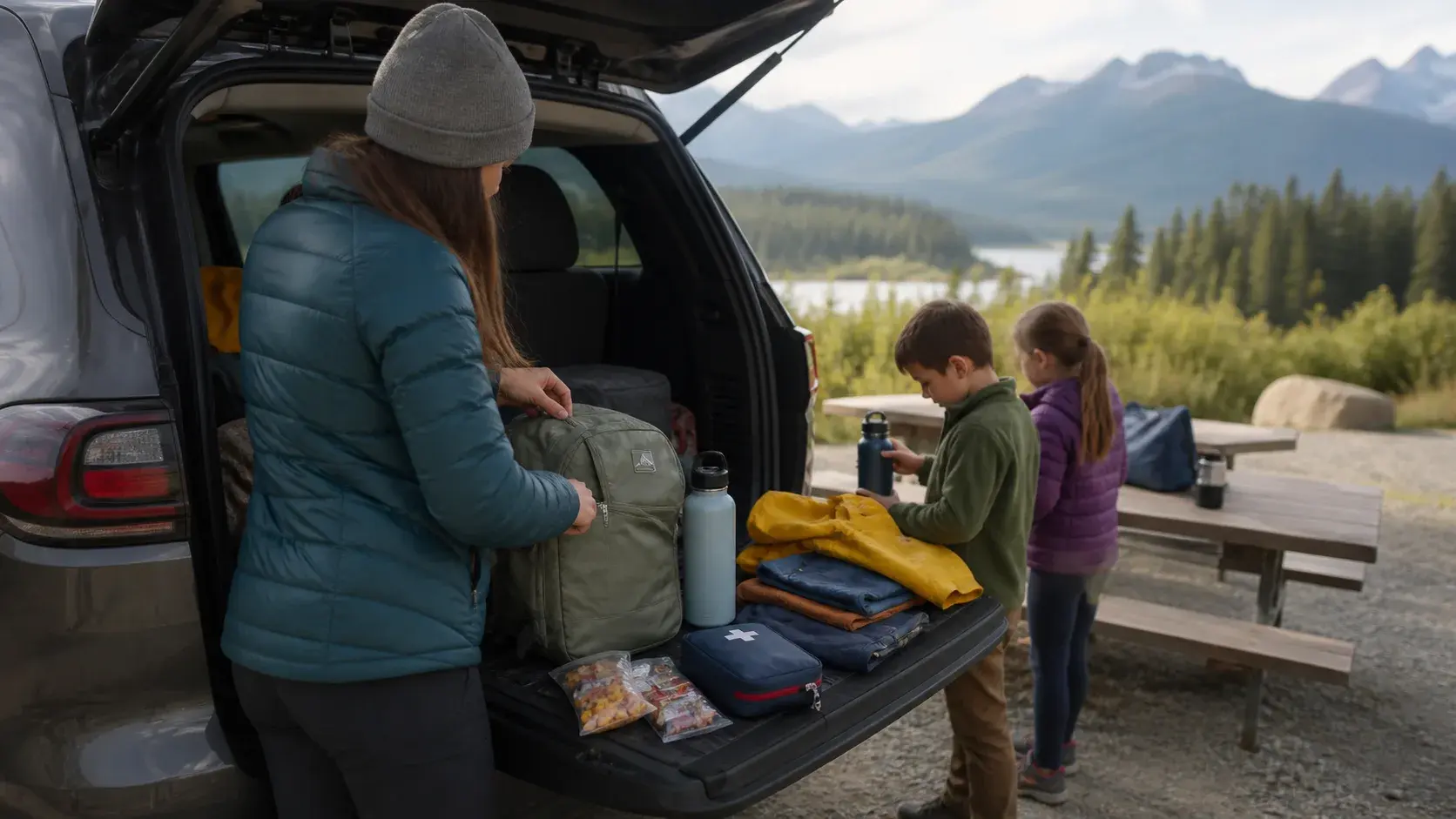
A family road trip is easier when the essentials are packed by the moment they will be needed, not by the category they belong to at home.
Open the guide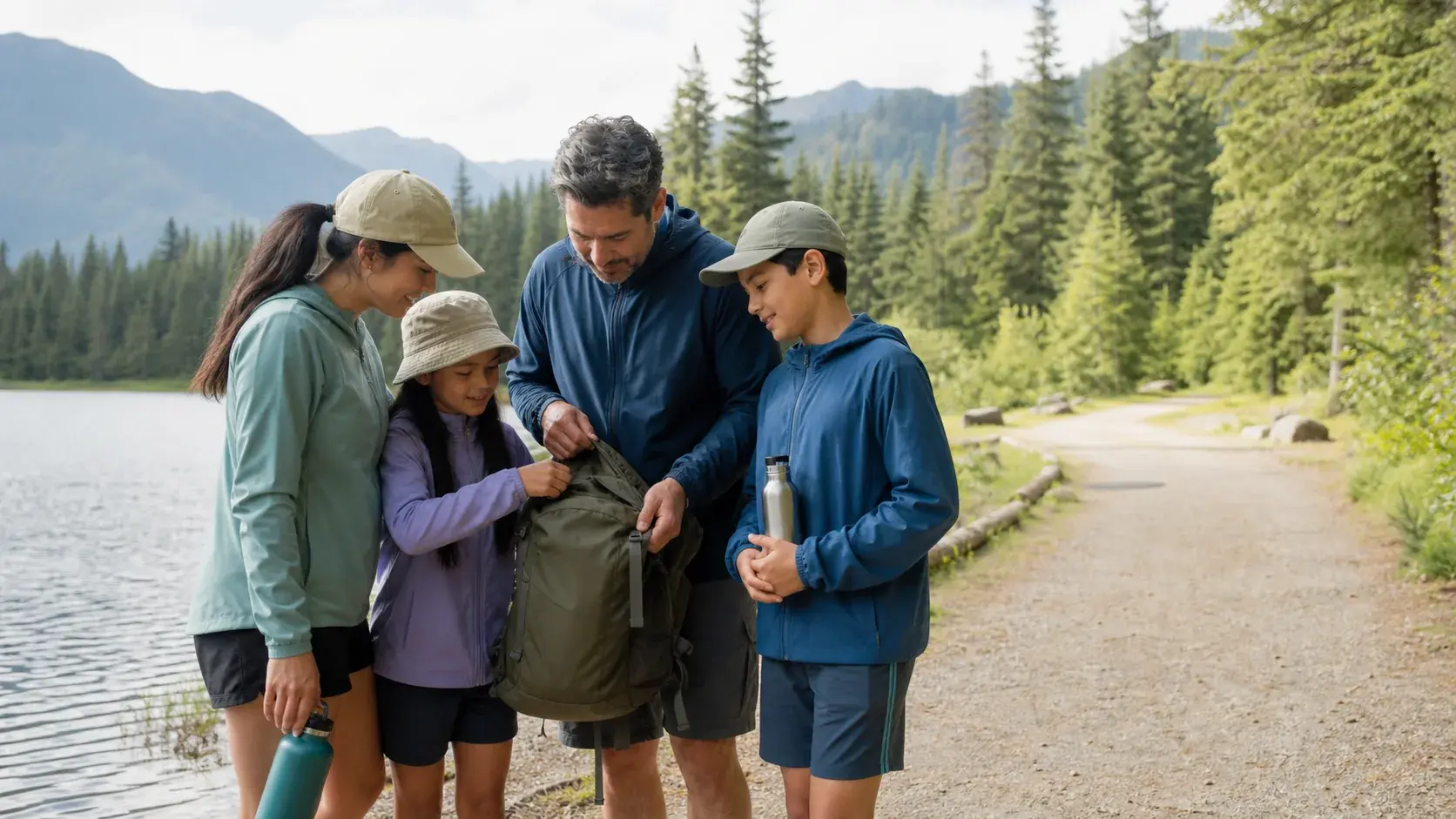
British Columbia · Family outdoor living
Your First Outdoor Summer in BC
A BC summer can mean a damp coast, a hot interior valley or lingering snow at higher elevations. Start close, keep the plan flexible and let the family finish wanting another day outside.
Open the guide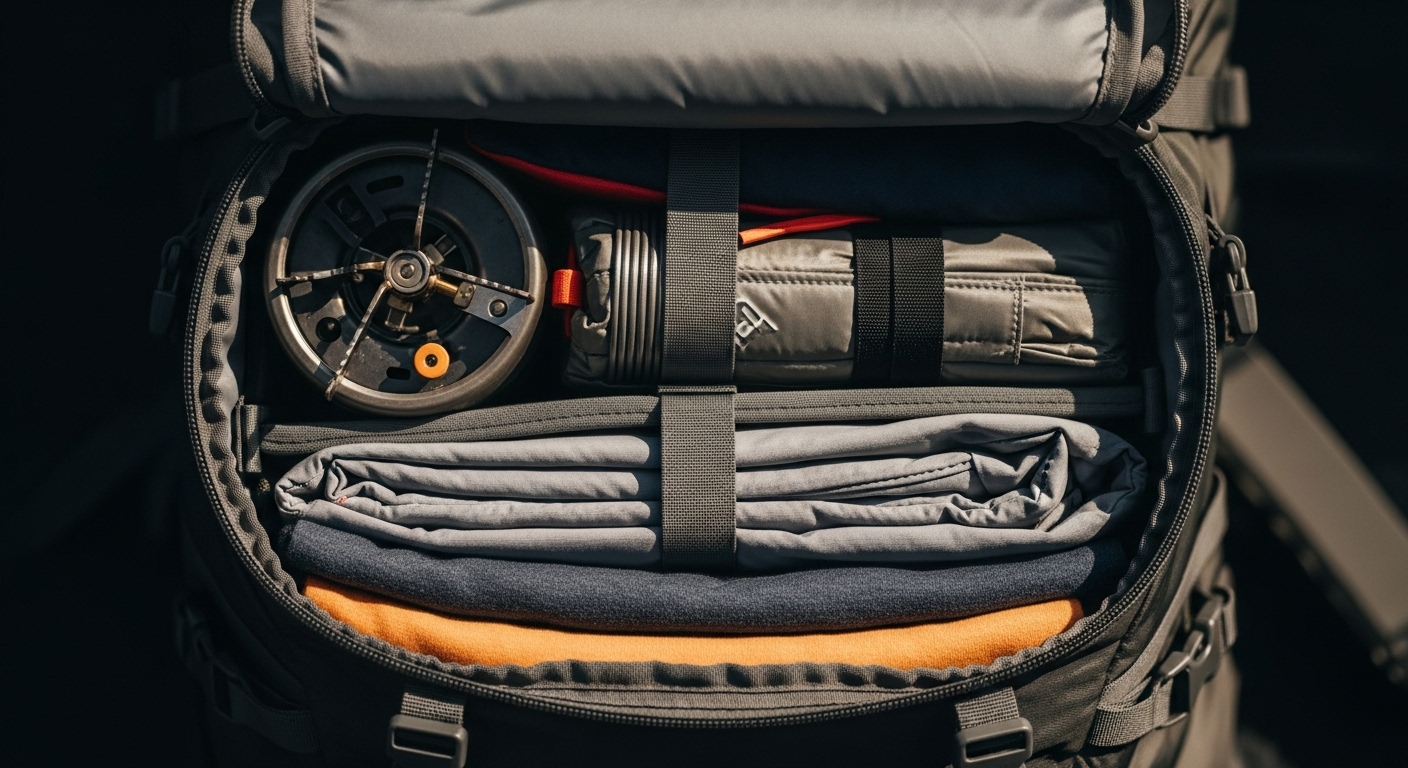
Printable planning guide
Canada Road Trip Packing Checklist
Start with the essentials that protect the trip, then remove anything your route, season and travelling party do not need.
Open the guide